

Maintenance therapy with the PARP inhibitor niraparib prolonged progression-free survival vs placebo in patients with newly diagnosed advanced ovarian cancer.
Maintenance therapy with the PARP inhibitor niraparib prolonged progression-free survival vs placebo in patients with newly diagnosed advanced ovarian cancer.
Circulating tumor DNA status at the time of postoperative minimal residual disease assessment was found to be a prognostic factor for disease-free survival in patients with radically resected stage II to IV colorectal cancer.
The European Medicines Agency has granted orphan drug designation to mitazalimab for use in patients with pancreatic cancer.
Logan Roof, MD, discusses the importance of investigating demographic disparities that exist in lung cancer mortality, expands on the results of the population-based CDC database analysis, and discusses potential next steps to address these disparities in the future.

The FDA has granted fast track designation to ALE.C04 for use as a potential therapeutic option in patients with recurrent or metastatic, Claudin-1–positive head and neck squamous cell carcinomas.

Qian (Janie) Qin, MD, discusses the current RCC treatment landscape, ongoing research with belzutifan combination therapies, and considerations for investigating CAR T-cell therapy in patients with solid tumors.

Press Release
A Fox Chase Cancer Center researcher has been awarded a $2.5 million grant from the National Institute of General Medical Sciences to investigate RNA structure and stability, work that has implications for cancer, Alzheimer’s, and other degenerative diseases and continues the Fox Chase legacy of basic research.

A supplemental biologics license application seeking the expanded approval of amivantamab-vmjw in combination with carboplatin plus pemetrexed for use in the frontline treatment of patients with locally advanced or metastatic non–small cell lung cancer harboring EGFR exon 20 insertion mutations has been submitted to the FDA.
The combination of pembrolizumab and lenvatinib demonstrated a statistically significant improvement in progression-free survival and objective response rate but failed to improve overall survival compared with pembrolizumab plus placebo as frontline therapy for patients with recurrent or metastatic head and neck squamous cell carcinoma.
Luciano J. Costa, MD, PhD, discussed extended follow-up data from the trial and explained how the results may affect frontline treatment decisions in multiple myeloma.
Hans Hammers, MD, PhD, outlines 3 cases of patients with renal cell carcinoma, detailing how each patient’s disease presented and how clinicians proceeded with treatment.
Interim data from the phase 3 CABINET trial demonstrated significant improvement in progression-free survival with cabozantinib vs placebo in patients with advanced pancreatic or extra-pancreatic neuroendocrine tumors following progression on prior systemic therapy.

Sovleplenib provided a statistically significant and clinically meaningful increase in durable response rate over placebo in adult patients with primary immune thrombocytopenia in China.

Pasi A. Jänne, MD, PhD, discusses the advantages of bispecific ADCs that target both HER3 and EGFR; preliminary efficacy and safety data seen with BL-B01D1 in patients with non–small cell lung cancer; and the activity of this agent in patients with head and neck squamous cell carcinoma, small cell lung cancer, and nasopharynx cancer.

Elias Jabbour, MD, outlines additional findings from PhALLCON and their clinical implications for patients with Philadelphia chromosome-positive ALL
An independent data monitoring committee has recommended that the phase 3 REGAL trial evaluating galinpepimut-S in patients with acute myeloid leukemia should continue without modifications.

Press Release
Sanoj Punnen, MD, the University of Miami Miller School of Medicine, is leading a $2.5 million, five-year National Cancer Institute grant to explore a new way to noninvasively detect prostate cancer.

The Japanese Ministry of Health, Labour, and Welfare has approved the combination of olaparib plus abiraterone acetate and prednisone or prednisolone for the treatment of adult patients with BRCA-mutated castration-resistant prostate cancer with distant metastasis.

Breelyn Wilky, MD, discusses the rationale for investigating the addition of doxorubicin to zalifrelimab and balstilimab in patients with advanced/metastatic soft tissue sarcoma, expands on results from the phase 2 trial, and emphasizes the need for continued research for the potential role of immunotherapy in this patient population.
Alessandro Santin, MD, discusses the rationale and design of a phase 2 trial of sacituzumab govitecan in patients with persistent or recurrent endometrial cancer; unmet needs for patients with this disease; and key findings from the stage 1 portion of the trial.

The National Medical Products Administration of China has approved sunvozertinib for use in adult patients with locally advanced or metastatic non–small cell lung cancer harboring EGFR exon 20 insertion mutations whose disease has progressed on or following platinum-based chemotherapy.
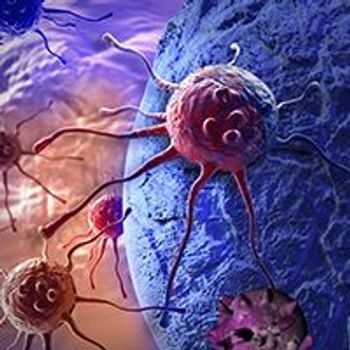
Treatment with erdafitinib resulted in clinical benefit for patients with advanced solid tumors harboring susceptible FGFR alterations who had exhausted all other treatment options, meeting the primary end point of overall response rate of the phase 2 RAGNAR trial.
The FDA has granted orphan drug designation to NXC-201 for use as a potential therapeutic option in patients with multiple myeloma.
Japan’s Ministry of Health, Labour, and Welfare has approved fam-trastuzumab deruxtecan-nxki for use in adult patients with unresectable advanced or recurrent, HER2-mutant non–small cell lung cancer that has progressed following chemotherapy.

Press Release
Fox Chase Cancer Center is pleased to announce the hiring of Christopher G. Cann, MD, as an assistant professor in the Department of Hematology/Oncology with a focus on gastrointestinal cancers.
The FDA has accepted and granted priority review to a supplemental new drug application seeking the approval of enzalutamide in patients with nonmetastatic castration-sensitive prostate cancer with high-risk biochemical recurrence.

The addition of the investigational anti-TIGIT immunotherapy tiragolumab to atezolizumab demonstrated a numerical but not statistically significant improvement in overall survival vs atezolizumab alone as frontline therapy for patients with PD-L1–high, locally advanced or metastatic non–small cell lung cancer.
Michael Cecchini, MD, expands on key updates in gastrointestinal cancer from the 2023 ASCO Annual Meeting, including the clinical significance of findings from the PROSPECT and phase 3 PRODIGE 23 trials of perioperative chemotherapy vs selective standard chemoradiation.

A neoadjuvant treatment regimen consisting of HER2-directed conventional dendritic cell intratumoral therapy plus paclitaxel, trastuzumab, and pertuzumab elicited pathologic complete responses in patients with stage I to III HER2-positive breast cancer.

The European Commission has approved single-agent nivolumab for use in the adjuvant treatment of adult and adolescent patients aged 12 years or older who have stage IIB or IIC melanoma and who have undergone complete resection.