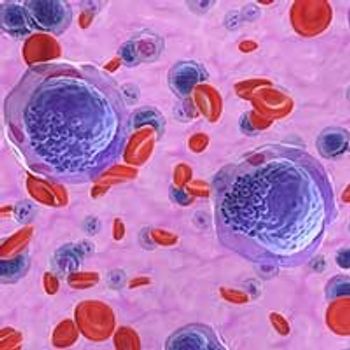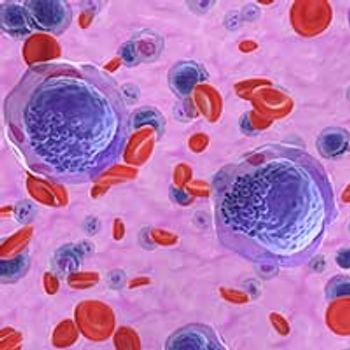
The phase 3 MATTERHORN trial examining roxadustat as an anemia treatment in patients with transfusion-dependent, lower-risk myelodysplastic syndrome did not meet its primary end point.

Your AI-Trained Oncology Knowledge Connection!


The phase 3 MATTERHORN trial examining roxadustat as an anemia treatment in patients with transfusion-dependent, lower-risk myelodysplastic syndrome did not meet its primary end point.

Aristotelis Bamias, MD, discusses the efficacy and safety data from the final OS analysis of the IMvigor130 trial and emphasizes the clinical implications of this research in metastatic urothelial cancer.

The gamma-delta T-cell therapies INB-400 and INB-410 have received orphan drug designations from the FDA for use as potential therapeutic options in patients with newly diagnosed glioblastoma.

Sia Daneshmand, MD, discusses the rationale for investigating TAR-200 for the treatment of patients with Bacillus Calmette-Guérin-unresponsive, high-risk non–muscle-invasive bladder cancer, expands on the preliminary efficacy and safety data from the SunRISe-1 trial, and more.

Research from Washington University School of Medicine in St. Louis suggests that transposable elements in various cancers potentially may be used to direct novel immunotherapies to tumors that don’t typically respond to immune-based treatments.

The FDA has granted 510K clearance to Bladder EpiCheck for use as a noninvasive method for surveillance of tumor recurrence in previously diagnosed patients with non–muscle invasive bladder cancer, in conjunction with cystoscopy.

Bently Doonan, MD, discusses how CA-4948 can penetrate the blood-brain barrier and interact with the tumor microenvironment, and how this approach may open doors for patients with melanoma who have brain metastases.

Bertrand F. Tombal, MD, PhD, explains how data on the clinically relevant drug-drug interactions and TRAEs with darolutamide, docetaxel and ADT support previously reported efficacy data from the ARASENS trial, and presents lingering questions and caveats from this trial that should be addressed through continued research.

Administration of aumolertinib until intracranial oligoprogression, followed by salvage stereotactic radiation therapy, produced central nervous system responses with acceptable tolerability in patients with intracranial oligometastatic EGFR-mutant non–small cell lung cancer.

The combination of gedatolisib and fulvestrant with or without palbociclib is under evaluation in the phase 3 VIKTORIA-1 trial for the treatment of patients with PIK3CA-mutated or wild-type hormone receptor–positive/HER2-negative breast cancer who have previously progressed on first-line therapy.

Ryan J. Sullivan, MD, discusses previous research on tebentafusp in uveal melanoma that led to the inception of the IMCgp100-202 trial and clinical implications for data confirming the predictive value of circulating tumor DNA levels.

Onco-nursing experts highlight the best practices and latest treatment regimens for patients presenting with the 3 most common myeloproliferative neoplasms: myelofibrosis, polycythemia vera, and essential thrombocythemia.

Fox Chase Cancer Center and Temple Health are pleased to announce the new Fox Chase-Temple Urologic Institute, a groundbreaking initiative that will concentrate on both benign and oncologic urology.

The FDA has approved FoundationOne® Liquid CDx as a companion diagnostic for mobocertinib in patients with locally advanced or metastatic non–small cell lung cancer harboring EGFR exon 20 insertion mutations.

OncLive®, the nation’s leading multimedia resource for oncology professionals and Pfizer (platinum sponsor) and Exelixis and Stemline (gold sponsors), are pleased to announce the inductees of the 11th Annual Giants of Cancer Care recognition program.

Balazs Halmos, MD, discusses factors to consider when selecting a biomarker assay for patients with non–small cell lung cancer, emphasizes the importance of secondary testing, provides recommendations for the treatment of patients with co-mutations, and highlights ongoing or future areas of interest for research within lung cancer.

Treatment with the combination of IMX-110 and tislelizumab resulted in 100% tumor shrinkage at 2 months in 2 of 2 evaluable patients with advanced metastatic colorectal cancer who received the regimen at the lowest dose level examined in the dose-escalation portion of the ongoing phase 1b/2a IMMINENT-01 trial

Treatment with adagrasib monotherapy led to clinically meaningful activity and a manageable safety profile in patients with KRAS G12C–mutated solid tumors.

Florida Cancer Specialists & Research Institute, LLC medical oncologist Richard McDonough, MD, is the recipient of the Florida Society of Clinical Oncology 2023 Dorothy Green Phillips Legacy Award.

Mirvetuximab soravtansine-gynx led to a clinically meaningful and statistically significant improvement in progression-free survival, overall survival, and objective response rate vs single-agent chemotherapy in patients with platinum-resistant ovarian cancer whose tumors express high levels of folate receptor alpha, according to topline findings from the phase 3 MIRASOL trial.

Ana Alfonso Piérola, MD, PhD, discusses the rationale for targeting retinoic acid receptor alpha in patients with higher-risk myelodysplastic syndrome, the goals of the SELECT MDS-1 trial investigating tamibarotene, and where the future of research and treatment for this patient population is headed.

The European Commission has approved lisocabtagene maraleucel for the treatment of adult patients with diffuse large B-cell lymphoma, high-grade B-cell lymphoma, primary mediastinal large B-cell lymphoma, and follicular lymphoma grade 3B who relapsed within 12 months from completion of, or are refractory to, first-line chemoimmunotherapy.

Karen L. Reckamp, MD, MS, discusses the rationale for evaluating patients with early-stage NSCLC who received adjuvant atezolizumab as part of the LCMC3 study and explains the significance and limitations of data from a retrospective analysis.

Manali Bhave, MD, discusses the effect of emerging therapies on the treatment landscape for patients with HR-positive, HER2-negative or -low breast cancer, highlighted her stance on sequencing decisions for these patients, and expanded on the additional work being done to optimize treatment sequencing from a growing list of options.

The FDA has granted a fast track designation to ERAS-801 for the treatment of adult patients with glioblastoma harboring EGFR gene alterations.

Perioperative toripalimab plus chemotherapy generated a median event-free survival benefit vs placebo plus chemotherapy in patients with resectable stage III non–small cell lung cancer.

Findings from the phase 3 ZIRCON trial showed that imaging with 89Zr-DFO-girentuximab could improve the identification and risk stratification of patients with renal tumors.

Apalutamide plus androgen deprivation therapy with or without abiraterone acetate and prednisone improved prostate-specific antigen progression-free survival in patients with biochemically relapsed prostate cancer, according to long-term follow-up data from the phase 3 PRESTO trial.

Siteman Cancer Center at Barnes-Jewish Hospital and Washington University School of Medicine in St. Louis announces several leadership changes, including a new Deputy Director, Associate Directors of Translational Research and Shared Resources, and a Deputy Associate Director of Shared Resources.

Health Canada has approved the combination of cemiplimab and platinum-based chemotherapy for the first-line treatment of patients with locally advanced or metastatic non–small cell lung cancer without EGFR, ALK, or ROS1 aberrations who are not candidates for definitive chemoradiation.