
Yelena Y. Janjigian, MD, further discusses the clinical significance of the FDA approval of nivolumab plus chemotherapy in the frontline treatment of patients with gastric cancer.
Yelena Y. Janjigian, MD, further discusses the clinical significance of the FDA approval of nivolumab plus chemotherapy in the frontline treatment of patients with gastric cancer.

Treatment with CD19-22.BB.z-CAR, a bispecific CAR T-cell therapy targeting CD19 and CD22, elicited high response rates and was well tolerated in adult patients with relapsed/refractory, CD19-positive B-cell acute lymphoblastic leukemia and large B-cell lymphoma.
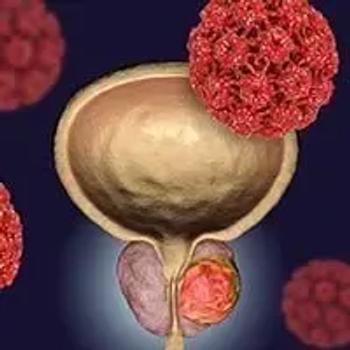
Olaparib in combination with abiraterone acetate demonstrated a significant and clinically meaningful improvement in radiographic progression-free survival vs abiraterone alone as a first-line treatment for patients with metastatic castration-resistant prostate cancer with or without homologous recombination repair gene mutations.
MUSC Hollings Cancer Center researchers received a grant from the Department of Defense to investigate how dietary fat affects the development of colon cancer and to find more effective methods of treatment.
The achievements of Roman Perez-Soler, MD, include studies of anti-EGFR therapies and topoisomerase inhibitors, extensive research on liposomal delivery systems, and early work on patient-derived xenografts in mice.

Ritu Salani, MD, MBA, discussed the clinical rationale to evaluate combination strategies with immunotherapy in ovarian cancer, as well as novel agents in clinical development that could further influence the treatment paradigm.

Fixed-dose eniluracil is being evaluated with escalating doses of capecitabine in patients with advanced, refractory gastrointestinal cancers, or in advanced GI cancers who are intolerant to fluoropyrimidine chemotherapy, as part of an open-label, phase 1b dose-escalation trial.
Albiruni Ryan Abdul Razak, discusses the rationale for examining durvalumab with either olaparib or cediranib in patients with LMS, key data reported with this approach, and next steps for the phase 2 DAPPER study.

Cedars-Sinai Cancer researchers have created a new system for classifying melanoma when the disease has spread to the lymph nodes.
R. Lor Randall, MD, discusses survey results in detail and what the sarcoma community can do to overcome clinical trial enrollment barriers for adolescent and young adult patients.
Data from the phase 2 ROCKstar trial demonstrated that belumosudil induced clinically meaningful, durable responses in patients with chronic graft-vs-host disease, irrespective of previous treatment received, severity of disease, and number of organs involved.

The addition of bevacizumab to erlotinib continued to provide a significant progression-free survival benefit over erlotinib alone when used in the frontline treatment of patients with EGFR-mutated, nonsquamous non–small cell lung cancer, according to data from the final analysis of the phase 3 BEVERLY trial.

The addition of TheraSphere™ Yttrium-90 Glass Microspheres to standard-of-care second-line chemotherapy in patients with colorectal cancer liver metastases led to a significant improvement in progression-free survival and hepatic PFS over chemotherapy alone, meeting both primary end points of the ongoing EPOCH trial.

Dawn Hershman, MD, a leading breast cancer physician-scientist and pioneer in the burgeoning field of cancer care delivery research, has been named to the Giants of Cancer Care Class of 2021.
The FDA has granted a fast track designation to the HER2-directed CAR macrophage CT-0508 for use as a potential therapeutic option in patients with solid tumors.
The FDA has authorized the marketing of Paige Prostate, an artificial intelligence–based software that was designed to help pathologists scan areas of the body for suspicious cancer as a supplement to the review of digitally-scanned slide images from prostate biopsies.
Regorafenib did not show a benefit with progression-free survival in patients with advanced or metastatic chordoma.
The FDA has approved ruxolitinib for the treatment of chronic graft-versus-host disease following failure of 1 or 2 lines of systemic therapy in adult and pediatric patients aged 12 years and older.
A rolling submission of a biologic license application to the FDA has been completed for betibeglogene autotemcel for use in adult, adolescent, and pediatric patients with beta-thalassemia who require regular red blood cell transfusions, across all genotypes.
Treatment with acalabrutinib as monotherapy or in combination with obinutuzumab improved quality-adjusted survival compared with chlorambucil plus obinutuzumab in patients with treatment-naïve chronic lymphocytic leukemia.
The phase 1/2 MANIFEST and phase 3 MANIFEST-2 trials are examining a complement to JAK inhibition that could improve responses and disease management up front in patients with myelofibrosis.

The median real-world progression-free survival with durvalumab was higher compared with the median progression-free survival reported in the durvalumab arm of the phase 3 PACIFIC trial in patients with stage III non–small cell lung cancer.
Fam-trastuzumab deruxtecan-nxki led to improved responses in patients with higher HER2 expression at baseline, whereas responses were seen irrespective of RAS- and PIK3CA mutation status and blood tumor mutational burden levels in patients with HER2-positive, metastatic colorectal cancer.

Michael Wang, MD, discusses the impact of acalabrutinib in patients with mantle cell lymphoma, the implications of the phase 2 ACE-LY-004 trial, and the challenges faced with treating those who harbor TP53 mutations.

Adavosertib demonstrated a 65% reduction in the risk of disease progression or death compared with active monitoring in patients with TP53-/RAS-mutant metastatic colorectal cancer following first-line chemotherapy.

The addition of durvalumab to platinum/etoposide chemotherapy continued to demonstrate an overall survival benefit over chemotherapy alone with a favorable safety profile in patients with extensive-stage small cell lung cancer.

Giredestrant resulted in a greater relative reduction in Ki67 score from baseline to week 2 of a window of opportunity phase vs anastrozole in patients with estrogen receptor–positive, HER2-negative early breast cancer, according to results from an interim analysis of the phase 2 coopERA Breast Cancer trial.
Personalized medicine has come to the forefront of breast cancer management, with genomic tools being utilized to avoid unnecessary chemotherapy in those with early-stage disease, PARP and PI3K inhibitors improving outcomes for those who harbor select mutations, and the emergence of highly active targeted agents shaking up the HER2-positive paradigm.
Sitravatinib, a spectrum-selective TKI targeting TAM receptors and VEGFR2, administered in combination with nivolumab induced durable response and robust survival outcomes for patients with non-small cell lung cancer who progressed after deriving benefit from treatment with a checkpoint inhibitor and/or platinum doublet chemotherapy.
The triplet combination of umbralisib, ublituximab, and pembrolizumab demonstrated durable responses with a tolerable safety profile in patients with relapsed/refractory chronic lymphocytic leukemia and Richter’s transformation.