
Patients with newly diagnosed mantle cell lymphoma who were 65 years of age or older had worse progression-free survival and overall survival at 1 and 2 years compared with patients under the age of 65 years.
Patients with newly diagnosed mantle cell lymphoma who were 65 years of age or older had worse progression-free survival and overall survival at 1 and 2 years compared with patients under the age of 65 years.
The FDA has approved the Ki-67 IHC MIB-1 pharmDx test to assist in determining which patients with early breast cancer who are at high risk of disease recurrence might benefit from adjuvant treatment with abemaciclib plus endocrine therapy.
Because the combination of pembrolizumab, lenvatinib, and platinum-based chemotherapy showed early evidence of antitumor activity with a manageable safety profile in previously untreated patients with metastatic nonsquamous non–small cell lung cancer examined in part 1 of the phase 3 LEAP-006 trial, the second part of the research has officially begun enrollment.
Toni Choueiri, MD, discusses key highlights from the 2021 Kidney Cancer Research Summit and exciting research efforts underway in renal cell carcinoma.
Communication and education of a patient with lung cancer and their family is only part of a nurse practitioner’s responsibility. Moreover, they often represent the primary point of contact for a patient when it comes to their diagnostic workup, treatment follow-up, and symptom management.

The European Medicines Agency has approved a shorter, 90-minute infusion time for obinutuzumab to be given in combination with chemotherapy in patients with previously treated or untreated advanced follicular lymphoma.
Expanded in-house testing capabilities enable faster and more accurate diagnosis, prognosis and treatment planning for a wide variety of cancers.
The initiation of the phase 3 ENHANCE trial looks to build on the generally early response to azacitidine with the addition of magrolimab, a first-in-class monoclonal antibody, for patients with intermediate-, high-, and very high–risk myelodysplastic syndrome.
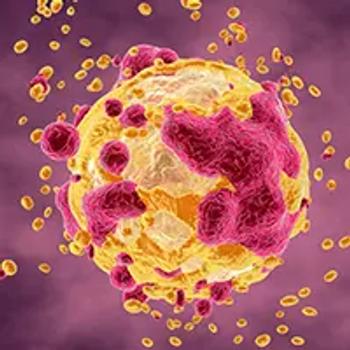
Patient Reported Outcomes Measurement Information System scoring indicated that preoperative and postoperative radiation therapy was associated with worse anxiety and physical function in patients with soft tissue sarcoma who had resulting wound complications compared with those who did not.
Alexey Danilov, MD, PhD, discussed the data on entospletinib/obinutuzumab in patients with R/R CLL and suggests further research directions with this drug combination.
Harry Paul Erba, MD, PhD, spotlights practice-changing data that emerged in recent years in hematologic malignancies and speaks to remaining questions, particularly with CAR T-cell therapy, in each paradigm.

The allogeneic CD19-targeted CAR T-cell therapy CTX110 was found to elicit encouraging responses with favorable tolerability in patients with relapsed or refractory B-cell malignancies, according to data from the phase 1 CARBON trial.
Corepoint Integration Engine chosen to Streamline Connectivity Across Care Teams, Affiliate Networks, and Cancer Community, Extending Access to World-class Care for Patients Everywhere.
The tide is starting to turn toward more effective frontline systemic therapies for patients with unresectable hepatocellular carcinoma as a result of the introduction of a novel immune-oncology combination.
The FDA has approved pembrolizumab for use in combination with chemotherapy, with or without bevacizumab, in patients with persistent, recurrent or metastatic cervical cancer whose tumors have a PD-L1 combined positive score of 1 or higher, as determined by an FDA-approved test.
The 18-month survival rates observed with axitinib plus pembrolizumab vs ipilimumab plus nivolumab in the frontline treatment of patients with metastatic renal cell carcinoma were not found to be statistically different.
The FDA has approved abemaciclib in combination with endocrine therapy for the adjuvant treatment of adult patients with hormone receptor–positive, HER2-negative, node-positive, early breast cancer at high risk of recurrence and a Ki-67 score of 20% or higher, as determined by an FDA-approved test.

Evan Y. Yu, MD, provided insight into treatment sequencing for patients with metastatic urothelial carcinoma, considerations for treatment decisions, and emerging therapies in the paradigm.
Vic-trastuzumab duocarmazine markedly improved progression-free survival vs physician’s choice of treatment in patients with HER2-positive metastatic breast cancer who had received 2 prior treatment regimens or ado-trastuzumab emtansine in the metastatic setting, according to data from the phase 3 TULIP trial.
Following a Type A meeting with the FDA to discuss deficiencies raised in a complete response letter pertaining to the new drug application for the use of oral paclitaxel encequidar in patients with metastatic breast cancer, the biopharmaceutical company Athenex, Inc. announced that their resources will be redeployed to focus on other studies examining oral paclitaxel.

The combination of atezolizumab and cabozantinib elicited encouraging responses, marked by an unprecedented disease control rate, in previously treated patients with locally advanced or metastatic castration-resistant prostate cancer, but most strikingly in patients with high-risk features.
The US Oncology Network, the largest organization of its kind dedicated to advancing local cancer care and better patient outcomes, announced today that it has appointed Jason Hammonds as its new president.
The FDA has removed the full clinical hold that had previously been placed on trials evaluating rusfertide.
The continued uncertainties of the current and future status of the COVID-19 pandemic have resulted in a lack of trust in the authority of the scientific establishment in the United States, and elsewhere, as it operates during these difficult times.
Across the paradigms of leukemias and lymphomas, novel therapies—such as BTK inhibitors, PI3K inhibitors, time-limited therapies, and even CAR T-cell therapies—have transformed the treatment of patients and prolonged survival without the need for chemotherapy.

Nivolumab plus cabozantinib continued to significantly improve overall response rate vs sunitinib in patients with previously untreated, advanced renal cell carcinoma, with meaningful response outcomes observed irrespective of dose modifications with cabozantinib and fewer responders in the doublet arm requiring subsequent treatment.

Spanning metastatic non–small cell lung cancer, castration-resistant prostate cancer, and HER2-low breast cancer, here are 4 must-know clinical trials in Tennessee that community oncologists can now enroll their patients on.
Autologous hematopoietic stem-cell transplantation maintained its long-term efficacy over interferon alfa in patients with mantle cell lymphoma, confirming its place as the standard frontline treatment in this population.
The Boston Society in collaboration with Harvard Medical School is bringing together the top Acute Myeloid Leukemia (AML) experts for a power-packed one day conference to deliberate upon AML from varied perspectives.
A new project led by researchers at MUSC Hollings Cancer Center could significantly decrease the side effects associated with CAR-T-cell therapy and make the treatment available to more patients who could benefit.