
The FDA approved lurbinectedin plus atezolizumab as first-line maintenance for ES-SCLC that has not progressed after frontline induction therapy.
The FDA approved lurbinectedin plus atezolizumab as first-line maintenance for ES-SCLC that has not progressed after frontline induction therapy.

Oncology experts and AI advocates discuss insights about how AI can help manage tasks, keep up with evolving treatment practices, and improve patient care.
Here is your snapshot of all oncologic therapeutic options that were approved by the EMA in September 2025.
Five new faculty members have joined the Roswell Park Care Network, with St. Joseph’s Health in Syracuse to begin thoracic surgery services.
The addition of the PD-1 inhibitor to platinum-based chemotherapy demonstrated proof of concept for the use of chemoimmunotherapy in patients with PSCC.
AMXT 1501 plus difluoromethylornithine has received orphan drug designation from the FDA in patients with neuroblastoma.

Four experts share their perspectives on the potential challenges and future directions for AI integration in the field of oncology.
Ahead of the 2025 ESMO Congress, OncLive spoke with experts in lung cancer care to preview the most anticipated meeting abstracts.
Significantly longer recurrence-free survival has been demonstrated with neoadjuvant daromun vs surgery alone in patients with locally advanced melanoma.

DFMO shows promise in reducing metastasis in osteosarcoma and Ewing sarcoma, with phase 2 trials underway to test its role as maintenance therapy.
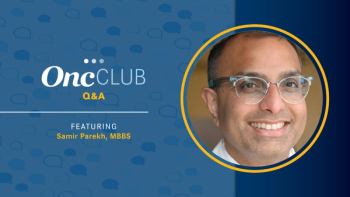
Samir Parekh, MBBS, discusses monitoring rare CAR T-cell complications, anti-CCR4 therapy, and future research to improve safety and prevent secondary cancers.
In case you missed any, below is a recap of every OncLive On Air episode that aired in September 2025.
This year’s ASTRO program highlights research and expert discussions from UCSF Radiation Oncology and the Helen Diller Family Comprehensive Cancer Center.
ETX-636, a selective PI3Kα inhibitor, has received FDA fast track designation for PIK3CA-mutant, HR-positive, HER2-negative advanced breast cancer.
The FDA accepted an sBLA seeking the approval of neoadjuvant T-DXd followed by THP for the management of high-risk, HER2-positive breast cancer.
ENPP3 offers a potentially attractive treatment target in patients with clear cell RCC.
Katie Goodman, RN, BSN, discusses the ways in which artificial intelligence can help speed up the pace of clinical trial accrual

Experts in the gynecologic cancer landscape highlight their most anticipated presentations ahead of the 2025 ESMO Congress.
The FDA approved Enoby and Xtrenbo, denosumab biosimilars referencing Prolia and Xgeva, respectively.

Michael J. Mauro, MD, discusses the evolution of TKIs for CML, factors for TKI selection, and ways that genetic mutations influence treatment efficacy.
Samir Parekh, MD, discusses managing a rare T-cell lymphoma post BCMA CAR T-cell therapy and how CCR4-targeted treatment achieved durable remission.
The Northwell Cancer Institute unveiled its Center for Women's Cancer at the R.J. Zuckerberg Cancer Center.
The FDA has received a BLA seeking the approval of pivekimab sunirine for the treatment of patients with blastic plasmacytoid dendritic cell neoplasm.
The in vivo CAR T-cell therapy UB-VV111 has received fast track designation from the FDA for the management of relapsed/refractory LBCL and CLL.
Higher response rates were shown with second-line ropeginterferon alfa-2b compared with anagrelide in patients with high-risk essential thrombocythemia.
A preview of the hematologic oncology abstracts and presentations to watch at the 2025 ESMO Congress in Berlin.

Although clinical trials are considered a “gold standard” in identifying the efficacy of treatments, real-world data help address unmet needs in colorectal cancer.

Kashyap Patel MD, ABIM, BCMAS, discusses the present challenges with integrating AI tools into community practice.

Crofelemer may receive ODD for diarrhea treatment in patients with breast cancer and brain metastases receiving targeted therapy with/without chemotherapy.
Acute GVHD was shown to be a risk factor for chronic GVHD, but factors such as organ involvement showed no correlation with long-term outcomes.