

The top 5 OncLive videos of the week cover insights in MCL, prostate cancer, plexiform neurofibromas, breast cancer, and follicular lymphoma.
The top 5 OncLive videos of the week cover insights in MCL, prostate cancer, plexiform neurofibromas, breast cancer, and follicular lymphoma.

PLD plus ifosfamide produced an ORR of 33% and a DCR of 83% in advanced soft tissue sarcoma, with manageable toxicity.

Vepdegestrant NDA under FDA review in ESR1-mutated breast cancer, Oncomine Dx Target Test gets greenlit as zongertinib companion diagnostic in NSCLC.

Ashish Saxena, MD, PhD, discusses how fellows can make the discussion of an initial cancer diagnosis as productive as possible for patients.

Neoadjuvant olaparib plus carboplatin led to a high RCB 0/1 rate in BRCA1/2-mutated, HRD+ TNBC.

TAR-200 was found to be highly effective in treating select patients with bladder cancer whose tumors were previously unresponsive to therapy.

Bortezomib plus mitoxantrone hydrochloride liposome and dexamethasone produced responses with manageable safety in relapsed/refractory myeloma

Nemvaleukin alfa produced a disease control rate of 50% in advanced melanoma and RCC.

The development of SGR-2921 in relapsed/refractory AML and higher-risk MDS was discontinued followed by 2 patient deaths.

Early data showing tolerability and improved OS with roginolisib in metastatic uveal melanoma support its ongoing evaluation in the phase 2 OCULE-01 trial.

Matthew Hadfield, DO, discusses how hematology/oncology fellows should approach the interpretation of clinical trial data.
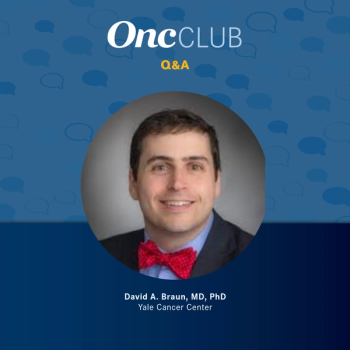
David A. Braun, MD, PhD, discusses the need for more tailored treatments that improve tumor-specific T-cell infiltration in chromophobe RCC.

Retrospective data showed CAR T-cell therapy is feasible in patients with aggressive lymphomas and active autoimmune diseases.

The antibody-drug conjugate SHR-A1811 demonstrated a comparable pCR rate to SHR-A1811/pyrotinib and PCbHP in HER2-positive breast cancer.

Ruby Arora, MD, discusses an analysis of SEER data on the declining MCL incidence and disparities that persist in Hispanic and American Indian patients.

Neoadjuvant vidutolimod plus pembrolizumab showed promising activity in stage III resectable melanoma.

HLD-0915 has received fast track designation from the FDA, allowing for more frequent communication with the agency regarding the drug’s candidacy for approval.

Huntsman Cancer Institute is expanding its proton therapy center, enhancing access to advanced cancer treatment for patients in the Mountain West region.

Sonam Puri, MD, discusses advances in small cell lung cancer that have expanded treatment options across disease stages.
David A. Braun, MD, PhD, outlines differences in the tumor biology and immune phenotypes of chromophobe and clear cell renal cell carcinoma.

Sigvotatug vedotin is being compared with docetaxel in patients with pretreated NSCLC in the phase 3 Be6A Lung-01 study.

Treatment with the combination of anlotinib and toripalimab produced durable efficacy in soft tissue sarcoma and bone sarcoma.

Genetic testing could help determine differences between rare forms of kidney cancer.

CD19 t-haNK demonstrated complete responses in 2 patients with heavily pretreated Waldenstrom macroglobulinemia.

Perioperative pembrolizumab has received the green light for use in combination with radiotherapy with or without cisplatin in PD-L1–positive HNSCC.

Real-world tucatinib-based regimens were effective in different lines for HER2-positive metastatic breast cancer, including after trastuzumab deruxtecan.

Zeynep Eroglu, MD, discusses the potential PFS benefit with encorafenib plus binimetinib and nivolumab in BRAF V600–mutant melanoma with symptomatic brain metastases.
Dalpiciclib plus pyrotinib and endocrine therapy was active with a manageable safety profile in patients with ER-positive, HER2-positive advanced breast cancer.

Real-world data supported the clinical effectiveness of first-line palbociclib plus endocrine therapy in HR-positive, HER2-negative breast cancer.

Domenica Lorusso, MD, PhD, discusses the use of relacorilant plus nab-paclitaxel for the treatment of patients with platinum-resistant ovarian cancer.