
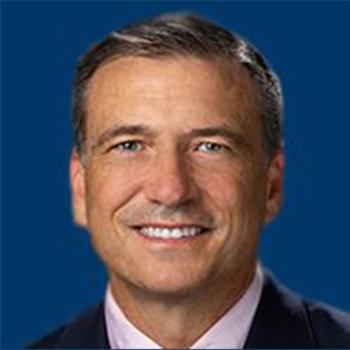
John V. Heymach, MD, PhD, discusses updated findings from the phase 1b Beamion LUNG-1 trial of zongertinib in HER2-mutated advanced NSCLC.
John V. Heymach, MD, PhD, discusses updated findings from the phase 1b Beamion LUNG-1 trial of zongertinib in HER2-mutated advanced NSCLC.
No recurrences, disease-free survival events, or deaths were reported in select patients with breast cancer who had surgery omitted.

Fox Chase Cancer Center researcher Adria Hasan honored with scholar-in-training award from American Association for Cancer Research.

A priority review was granted to zurletrectinib in China for the treatment of patients with NTRK gene fusion–positive advanced solid tumors.
An sBLA seeking the approval of epcoritamab plus rituximab and lenalidomide for relapsed/refractory FL is planned to be submitted to the FDA.

Experts from across oncology specialties shared some of the most talked-about abstracts and discussions from the 2025 AACR Annual Meeting.

Anna C. Pavlick, BSN, MSc, DO, MBA, discusses data for RP1 plus nivolumab and the evolving treatment landscape in advanced melanoma.

Alexis Chidi, MD, PhD, MSPH, details the evolution of surgical approaches in early-stage lung cancer, including wedge resections and segmentectomies.
Read a recap of the episodes of OncLive On Air that aired in April 2025.

Stergios Moschos, MD, discusses his approach to selecting from the available agents in metastatic melanoma after first-line PD-1 inhibition.
Results from the first-in-human phase I trial were presented at the 2025 AACR Annual Meeting.

The FDA issued a complete response letter to the new drug application seeking the approval of TLX101-CDx as an imaging agent for glioma.

KN026 plus chemotherapy significantly improves PFS in second-line and later HER2-positive advanced gastric/GEJ cancer.

The phase 3 CAPItello-280 trial of capivasertib plus docetaxel/ADT in metastatic castration-resistant prostate cancer is being discontinued.

Adjuvant anlotinib was safe and led to a DFS benefit vs surgery alone in completely resected high-grade soft tissue sarcoma.
Here is your snapshot for all therapeutic options that were cleared by the FDA in April 2025 spanning tumor types.
Experts revisit the most intriguing abstracts and data they saw presented at the 2025 American Urological Association Annual Meeting.

Adjuvant aumolertinib improved disease-free survival in complete resected stage II to IIIB non–small cell lung cancer harboring EGFR mutations.

Trifluridine/tipiracil showed a favorable safety profile and numerically improved DFS vs placebo in MRD-positive CRC.

First-line adagrasib monotherapy demonstrated preliminary efficacy and tolerability in patients with SK11- and KRAS G12C–mutant NSCLC.
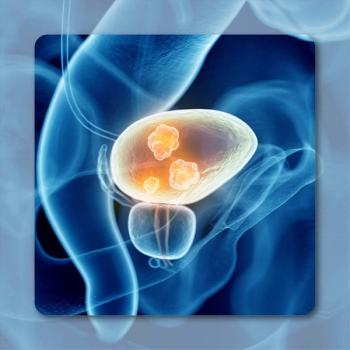
Among 3 subgroups of patients with BCG-unresponsive NMIBC, no significant clinical differences were identified regarding rates of high-grade recurrence.

Botensilimab and balstilimab proved active and safe as neoadjuvant therapy in patients with mismatch repair–deficient and –proficient solid tumors.

Jonathan Chernoff, MD, PhD, Cancer Center Director of Fox Chase Cancer Center, was recently elected to the Association of American Physicians (AAP).

The EMA’s CHMP has recommended at-home administration of pertuzumab, trastuzumab and hyaluronidase combination therapy for HER2+ breast cancer.

INX-315 has received FDA fast track designation for the treatment of patients with CCNE1-amplified, platinum-resistant or refractory ovarian cancer.
Patients with myelofibrosis who initiated ruxolitinib within 2 years of diagnosis achieved higher spleen response rates vs those with delayed initiation.
Adam Calaway, MD, MPH, highlights the need for early detection and education in testicular cancer.

Expert investigators discuss the current and future landscape of cancer vaccine development in various tumor types.

Avutometinib plus abemaciclib and fulvestrant had manageable toxicity in CDK4/6-resistant, HR+/HER2– metastatic breast cancer.

A phase 1b trial examining SYN818 plus olaparib in patients with solid tumors will be conducted in the second half of 2025.