
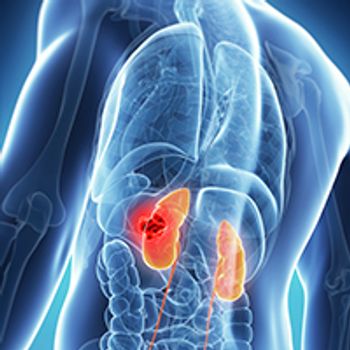
Molecular subtypes of clear-cell renal cell carcinoma were prognostic for outcomes after metastasectomy, with significant differences seen in overall survival and disease-free survival between groupings.
Molecular subtypes of clear-cell renal cell carcinoma were prognostic for outcomes after metastasectomy, with significant differences seen in overall survival and disease-free survival between groupings.

Results from a recent multicenter, retrospective analysis of 242 patients with advanced non–small cell lung cancer (NSCLC) found that 16% developed hyperprogression during anti–PD-1/PD-L1 treatment.

Although chemotherapy remains the mainstay of treatment for patients with triple-negative breast cancer, promising developments are unfolding on several fronts, including new ways of using existing therapies and the exploration of immunotherapy, novel antibodies, and agents targeting the PI3K/mTOR/AKT pathway.

Amid rapid-fire developments in non–small cell lung cancer (NSCLC) research, the role of checkpoint immunotherapy continues to mature.

Although gene fusions between the TMPRSS2 gene and ETS family of transcription factors in prostate cancer have been recognized for more than a decade, the clinical relevance of this fusion event continues to be debated among experts.

Increasing evidence suggests that immune responses against SCLC cells make immunotherapy a rational approach.

From the perspective of a patient and that patient’s family, it is completely understandable that the single most important goal of an antineoplastic strategy is to prolong survival and, if possible, produce a cure.
A2-step oncolytic virus has demonstrated promising signals against aggressive forms of brain cancers, including recurrent glioblastoma multiforme and anaplastic astrocytoma, in early clinical studies.
Controversy over the FDA’s role in regulating off-label marketing practices of pharmaceutical companies continues to reverberate in the medical community.

Larotrectinib, an oral inhibitor of tropomyosin receptor kinases, is being developed in a novel multifaceted clinical trial program that spans cancer types and age groupings.
Despite the promising developments in this arena, many patients with cancer respond inadequately to immune checkpoint monotherapy, and others develop serious (grade 3-4) toxicities that require treatment cessation.