

Sanjeet Singh Dadwal, MD, discusses the investigation of posoleucel as a prevention strategy for infections in patients following an allogenic hematopoietic cell transplant.
Sanjeet Singh Dadwal, MD, discusses the investigation of posoleucel as a prevention strategy for infections in patients following an allogenic hematopoietic cell transplant.

Tanya Dorff, MD, discusses remaining questions regarding sequencing in metastatic renal cell carcinoma.

Overall survival is a critically relevant end point in randomized oncology clinical trials, but its interpretation is often not as straightforward as some may wish to acknowledge.

The combination of selinexor and ruxolitinib significantly reduced spleen volume and total symptom score while achieving hemoglobin stabilization in an open-label dose-escalation/dose-expansion, phase 1 study of patients with treatment-naïve myelofibrosis.
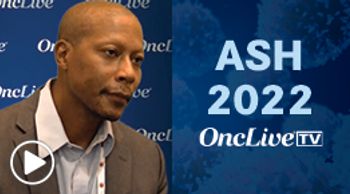
Tycel Phillips, MD, MPH, discusses the investigation of glofitamab monotherapy in relapsed/refractory mantle cell lymphoma.

Chemotherapy prior to treatment with endocrine therapy could increase the risk of cancer-related cognitive impairment compared with endocrine therapy alone in women with breast cancer, irrespective of menopausal status.
Several articles in a recent issue of the high-impact journal Science highlight areas of concern in the scientific community that may have detrimental effects on communications regarding the human papillomavirus vaccination as a cancer prevention strategy.

Murali Janakiram, MD, MS, discusses future targets and research strategies for CAR T-cell therapy in multiple myeloma.
A core component of any type of therapeutic research is to enhance clinical benefit.

With no approved agents for patients with malignant tumors harboring TSC1 or TSC2 inactivating alterations, investigators seek to establish a new pathway forward for patients with solid tumors in the PRECISION 1 trial.

Irene Morae Kang, MD, discusses key overall survival data from the phase 3 PALOMA-2 and PALOMA-3 trials, which evaluated the addition of palbociclib to standard endocrine therapy for patients with advanced breast cancer.
One of the more perplexing issues surrounding scientific questions is the extended time required to provide an answer. Even once a well-considered and vetted conclusion is obtained, an additional interval of time may be required to modify or reverse the answer because of new, relevant data.
Rana R. McKay, MD, discusses the evolution of frontline treatment options for metastatic RCC, and the key clinical trials that have shifted the treatment paradigms in metastatic castration-resistant prostate cancer, nonmetastatic castration-resistant prostate cancer, and advanced prostate cancer.
Targeted treatment options for patients with HER2-mutant non–small cell lung cancer have been slow to reach benchmarks for approval given the limited patient populations harboring this disease characteristic.
What is noteworthy is the process whereby this patient employs both objective data and his personal beliefs to declare what he values.

Haris Ali, MD, discusses a phase 1 dose-escalation trial investigating the administration of selinexor in combination with ruxolitinib for patients with treatment-naïve myelofibrosis.

Alexey V. Danilov, MD, PhD, discusses the next steps for researching noncovalent BTK inhibitors in mantle cell lymphoma.

Alexey V. Danilov, MD, PhD, discusses the key differences between covalent and noncovalent BTK inhibitors in mantle cell lymphoma.

Haris Ali, MD, discusses the investigation of ruxolitinib and navitoclax combination therapy in myelofibrosis.
Outcomes from randomized phase 3 cancer trials are the foundation for regulatory approvals of novel antineoplastic therapeutics and, when available, treatment guidelines.

Treatment with narsoplimab denoted high response rates and a significant improvement in laboratory thrombotic microangiopathy markers, translating to favorable overall survival in patients with hematopoietic stem cell transplantation–associated thrombotic microangiopathy.

Cevostamab generated responses and was well tolerated in younger and older patients with relapsed/refractory multiple myeloma.

Julian Schink, MD, discusses a study evaluating racial differences in the mutational landscape of serous endometrial cancer, underscores the need for appropriate genomic testing and treatment for Black women with the disease, and explains the importance of racial representation across clinical trials.

Amrita Krishnan, MD, discusses emerging data on bispecific antibodies, the exploration of the antibody-drug conjugate belantamab mafodotin, and the challenges of delivering CAR T-cell therapy in the right setting to the appropriate patients with multiple myeloma.
In the opinion of this commentator, one of the more exciting developments in clinical investigation over the past several years is the increasing recognition of the importance of real-world data and its role for physicians, regulators, policy makers, patients, and society.

A combination comprised of selinexor (Xpovio) and ruxolitinib (Jakafi) induced rapid spleen responses at week 12 and showcased a manageable toxicity profile in patients with treatment-naïve myelofibrosis.

Single-agent mosunetuzumab produced a complete response rate that was greater than what has been observed with historical controls in patients with relapsed/refractory follicular lymphoma who had received at least 2 prior lines of therapy, meeting the primary end point of the expansion portion of the phase 1/2 GO29781 trial.
Peer-reviewed articles continue to challenge the recognition of progression-free survival as an acceptable primary end point in randomized cancer trials or insist on labeling this objectively measured outcome as nothing more than a potential surrogate for effects representing actual clinically meaningful results.

Edward S. Kim, MD, MBA, discusses the importance of trastuzumab deruxtecan in HER2-mutated non–small cell lung cancer.
From evaluating clinical outcomes to determining payment for services, measurements are important in health care.