

Closing out their segment on metastatic hormone-sensitive prostate cancer, panelists review other treatment modalities being investigated in clinical trials.
Closing out their segment on metastatic hormone-sensitive prostate cancer, panelists review other treatment modalities being investigated in clinical trials.
Expert insight on methods to educate patients on available treatment options in the setting of metastatic hormone-sensitive prostate cancer.

Karen S. Anderson, MD, PhD, discusses the evolution of antibody-drug conjugates in the treatment of different subgroups of patients with metastatic breast cancer.

Thomas M. Habermann, MD, discusses the evolving treatment landscape of mantle cell lymphoma.

Karen S. Anderson, MD, PhD, discusses emerging data and role for CDK4/6 inhibitors in the treatment of patients with hormone receptor–positive, HER2-negative breast cancer, along with the growing use of antibody-drug conjugates across the breast cancer spectrum and updates in triple-negative breast cancer.
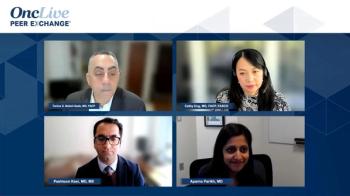
Fielding questions from the audience, expert oncologists discuss clinical trials, molecular testing, and early-stage disease in the context of HER2-amplified colorectal cancer.
Key opinion leaders reflect on data from the TITAN and PEACE-1 clinical trials, respectively, in the setting of metastatic hormone-sensitive prostate cancer.
Shared insight on the ENZAMET and ARCHES clinical trials, which utilized combination enzalutamide strategies in patients with metastatic hormone-sensitive prostate cancer.
Looking toward the future management of HER2-amplified colorectal cancer, panelists reflect on ongoing clinical trials and evolving treatment strategies.
Expert perspectives on the real-world use of HER2-directed therapies in patients with HER2-amplified colorectal cancer.
Experts in prostate cancer consider patient suitability for triplet therapy in the setting of metastatic hormone-sensitive disease.
A focused discussion on HER2-amplified colorectal cancer and respective clinical trials that inform use of targeted agents in this setting.
Broadening their conversation, expert oncologists define the treatment algorithm for patients diagnosed with colorectal cancer.
A focused review of patient and disease factors that inform selection of therapy for patients with metastatic hormone-sensitive prostate cancer.
Centering discussion on metastatic hormone-sensitive prostate cancer (mHSPC), key opinion leaders identify core goals of treatment.
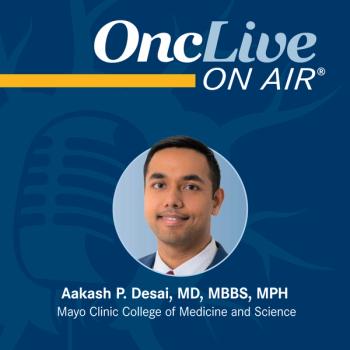
Dr Desai discusses the aspects of his oncology fellowship experience that have had the greatest influence on his career growth, the role of mentorship throughout his fellowship and transition to a full-time faculty position, and his advice for current and future oncology fellows.
In the context of colorectal cancer clinical trials, panelists reflect on the role of liquid biopsies to help inform treatment decisionmaking.
A brief review of HER2 amplification and how it may impact the treatment pathway for patients with a diagnosis of colorectal cancer.
Before shifting focus away from non-metastatic castration-resistant prostate cancer, medical oncologists reflect on means to optimize care and look to future directions in the field.
Experts on non-metastatic castration-resistant prostate cancer share insight on patient monitoring strategies to improve outcomes.
Shared insight on appropriate molecular lab testing options that should be explored following a diagnosis of colorectal cancer.
Opening their discussion on colorectal cancer, expert panelists consider its growing prevalence and highlight key molecular subtypes.
A brief discussion on the role of quality of life in selecting best therapy for patients with non-metastatic castration-resistant prostate cancer.
Key opinion leaders reflect on the real-world use and data behind AR inhibitors in non-metastatic castration-resistant prostate cancer.
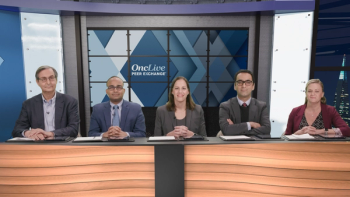
Expert panelists identify key takeaways and share their excitement for future directions in the management of metastatic colorectal cancer.
Shared insight on the SPARTAN, PROSPER, and ARAMIS studies with androgen receptor (AR) inhibitors in non-metastatic castration-resistant prostate cancer.
Expert oncologists provide a focused review on goals of therapy for patients with non-metastatic castration-resistant prostate cancer (nmCRPC).
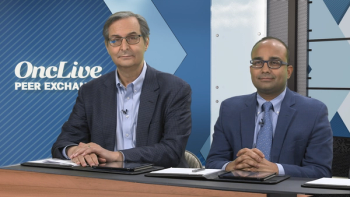
Before closing out their review of combination therapy in metastatic colorectal cancer, panelists discuss the STELLAR-303 and SUNLIGHT clinical trials.

A comprehensive review on combination strategies with immune checkpoint and tyrosine kinase inhibitors in patients with metastatic colorectal cancer.
Before centering discussion on subsets of prostate cancer, panelists consider general challenges and unmet needs within the treatment landscape.