
The clinical learning environment for medical trainees is the foundation of medical training programs.
The clinical learning environment for medical trainees is the foundation of medical training programs.
The combination of tislelizumab and chemotherapy demonstrated a superior overall survival benefit compared with chemotherapy alone in patients with metastatic or unresectable esophageal squamous cell carcinoma
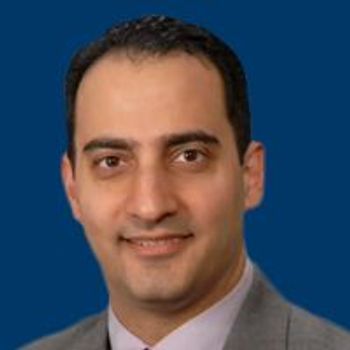
Sikander Ailawadhi, MD, discusses early efficacy observed with iopofosine I-131, the rationale of investigating the agent in the CLOVER WaM trial in patients with Waldenström macroglobulinemia, and how the radiotherapeutic could affect the treatment paradigm.
Treatment with tafasitamab plus lenalidomide demonstrated trends toward improved overall survival vs systemic regimens across key subgroups of patients with high-risk relapsed or refractory diffuse large B-cell lymphoma who are not eligible for transplant, according to findings from an observational, retrospective analysis of the cohort RE-MIND2 study.
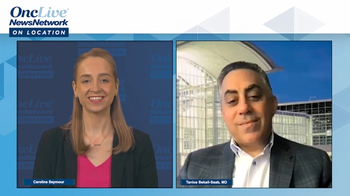
OncLive® will be LIVE with OncLive® News Network: On Location at the 2022 ASCO Annual Meeting. Each day, we will broadcast a series of interviews with top thought leaders, to learn their thoughts and reactions to data presented across oncology during the conference.
Brentuximab vedotin plus doxorubicin, vinblastine, and dacarbazine demonstrated a significant reduction in the risk of death vs doxorubicin, bleomycin, vinblastine, and dacarbazine, with a manageable safety profile consistent with prior findings in patients with previously untreated stage III/IV classical Hodgkin lymphoma.
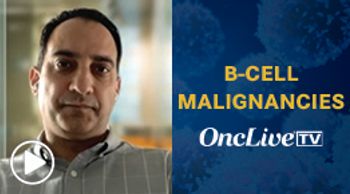
Sikander Ailawadhi, MD, discusses the examination of iopofosine I-131 (CLR 131) in Waldenström macroglobulinemia.
Treatment regimens that include ovarian suppression with a gonadotropin-releasing hormone agonist have gained momentum in recent years as a potential solution to address treatment-related early menopause for women with breast cancer.

Kathryn Ruddy, MD, discusses the use of GnRH agonists in breast cancer.

The addition of abemaciclib to endocrine therapy improved invasive disease-free survival and distant relapse-free survival vs endocrine therapy alone in patients with high-risk, hormone receptor–positive, HER2-negative, early-stage breast cancer, irrespective of menopausal status.
Evandro D. Bezerra, MD, discusses barriers to enrollment in clinical trials for patients with aggressive B-cell non-Hodgkin lymphoma who have progressed on anti-CD19 CAR T-cell therapy.
Shaji K. Kumar, MD, discusses key takeaways from each presentation on chronic lymphocytic leukemia, myelofibrosis, relapsed/refractory diffuse large B-cell lymphoma, CAR T-cell therapy, and multiple myeloma.
Stephen M. Ansell, MD, PhD, discusses the evolving treatment landscape in diffuse large B-cell lymphoma.
Charles L. Loprinzi, MD, discusses some of the most common treatment-related toxicities in breast cancer and provided insight into various current and investigational approaches available to patients.
Tanios S. Bekaii-Saab, MD, FACP, discusses the promise of non–VEGF inhibitor platforms in hepatocellular carcinoma.
Tanios S. Bekaii-Saab, MD, FACP, discusses the addition of bevacizumab to trifluridine/tipiracil in patients with metastatic colorectal cancer

Joleen M. Hubbard, MD, discusses the design of the ongoing phase 2/3 NRG-GI005 trial in patients with stage IIA colorectal cancer after surgery.
The combination of tafasitamab and lenalidomide prolonged median overall survival compared with other standard options for autologous stem cell transplant-ineligible patients with relapsed/refractory diffuse large B-cell lymphoma.
Joleen M. Hubbard, MD, discusses minimal residual disease assessment to inform treatment decisions in patients with resected metastatic colorectal cancer.
Julie K. Heimbach, MD, discusses the need for multidisciplinary care in patients with hepatocellular carcinoma.
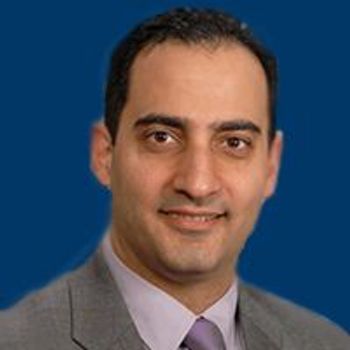
Sikander Ailawadhi, MD, discusses the unique pharmacodynamic profile of lisaftoclax, the similar responses seen across cohorts, and the favorable tolerability of the drug.
Sikander Ailawadhi, MD, discusses the rationale for evaluating lisaftoclax in chronic lymphocytic leukemia in an early phase 1 study.
Sikander Ailawadhi, MD, discusses the next steps with lisaftoclax in chronic lymphocytic leukemia and other hematologic malignancies.
Daniel H. Ahn, DO, discusses the increased understanding of cholangiocarcinoma.
As novel therapies, new treatment strategies, and ongoing clinical trials continue to steer the path forward in lung cancer, treatment patterns for patients with non–small cell lung cancer, small cell lung cancer, and mesothelioma are continuing to evolve.
Aaron S. Mansfield, MD, discusses ongoing trials with chemoimmunotherapy in mesothelioma.

Joleen M. Hubbard, MD, discusses the barriers of implementing circulating tumor DNA into widespread clinical practice in colorectal cancer.
Sikander Ailawadhi, MD, discusses patient considerations for BTK inhibitors in Waldenström macroglobulinemia.
Stephen M. Ansell, MD, PhD, discusses the utility of non–CAR T-cell therapy options in non-Hodgkin lymphoma.
Stephen M. Ansell, MD, PhD, discusses recent progress made with non–CAR T-based approaches in the non-Hodgkin lymphoma treatment paradigm, opportunities for sequencing available options, and ongoing efforts that are picking up momentum.