

The addition of pelabresib to ruxolitinib generated a significant improvement in spleen response in patients with JAK inhibitor–naive myelofibrosis.
The addition of pelabresib to ruxolitinib generated a significant improvement in spleen response in patients with JAK inhibitor–naive myelofibrosis.
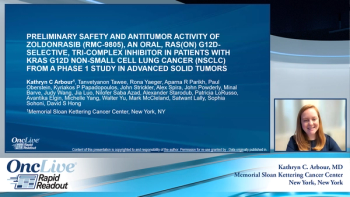
Dr. Kathryn C. Arbour presents preliminary findings from a Phase 1 study showing that zoldonrasib, a selective RAS(ON) G12D inhibitor, demonstrates encouraging antitumor activity and a manageable safety profile in patients with previously treated KRAS G12D–mutant non–small cell lung cancer.

Yelena Y. Janjigian, MD, discusses the safety of nivolumab plus chemotherapy for the first-line treatment of patients with gastric/GEJ/esophageal cancer.
Dr Mauro discusses ways that the newest formulation of nilotinib for Ph-positive CML addresses treatment adherence issues by reducing the need for fasting.
Michael A. Postow, MD, and Chenyang Zhan, MD, PhD, discuss ongoing research to watch in advanced melanoma.
Michael A. Postow, MD, and Chenyang Zhan, MD, PhD, discuss where RP1 plus nivolumab could fit in the advanced melanoma treatment paradigm.
Michael A. Postow, MD, and Chenyang Zhan, MD, PhD, break down data from the IGNYTE trial of RP1 plus nivolumab in advanced melanoma after PD-1 inhibition.
Michael A. Postow, MD, and Chenyang Zhan, MD, PhD, dive into research behind oncolytic viruses in advanced melanoma.
Michael A. Postow, MD, and Chenyang Zhan, MD, PhD, discuss the role of interventional radiologists in melanoma management.
Michael A. Postow, MD, and Chenyang Zhan, MD, PhD, discuss unmet needs in advanced melanoma after checkpoint inhibition.

The top 5 OncLive videos of the week cover insights in myelodysplastic syndrome, lung cancer, hepatocellular carcinoma, colorectal cancer, and ovarian cancer.
Dr Arbour discusses the mechanisms of action of zoldonrasib and daraxonrasib and shares early data with these agents in RAS-mutant NSCLC.

James J. Harding, MD, discusses efficacy data with nivolumab plus ipilimumab that led to this regimen’s FDA approval for unresectable or metastatic hepatocellular carcinoma

Alexis Chidi, MD, PhD, MSPH, emphasizes the importance of having more available targeted therapies and explains NSCLC screening eligibility criteria.

Alexis Chidi, MD, PhD, MSPH, details the evolution of surgical approaches in early-stage lung cancer, including wedge resections and segmentectomies.
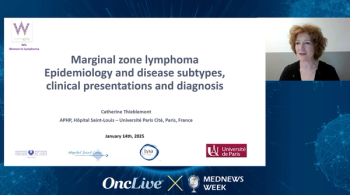
Catherine Thieblemont, MD, PhD, and Paola Ghione, MD, MSEpi, discuss insights into marginal zone lymphoma.

Eighty percent of patients with early-stage dMMR solid tumors given neoadjuvant dostarlimab underwent nonoperative management of their disease.
Experts from across oncology specialties highlight research being presented at the 2025 AACR Annual Meeting.
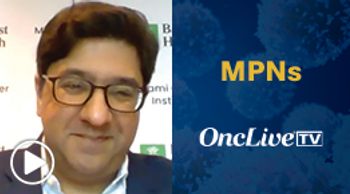
Raajit Rampal, MD, discusses treatment decision-making factors, such as JAK inhibitor efficacy and signs of treatment failure, for myelofibrosis.

Isabel Preeshagul, DO, MBS, discusses frontline treatment selection for patients with SCLC and significant FDA approvals in this disease.

Komal Jhaveri, MD, FACP, discusses the success of the INAVO120 trial of inavolisib/palbociclib/fulvestrant in PIK3CA-mutated metastatic breast cancer.

D-VRd has the potential to significantly improve clinical outcomes in transplant-ineligible or -deferred patients with newly diagnosed multiple myeloma.
The top 5 OncLive videos of the week cover insights in myelofibrosis, chronic lymphocytic leukemia, colorectal cancer, breast cancer, and ovarian cancer.

Treatment with cilta-cel led to improvements across several QOL subscales compared with SOC therapy in patients with lenalidomide-refractory myeloma.

Michael J. Morris, MD, discusses data from the PSMAfore trial that supported the FDA expanded approval of lutetium Lu 177 vipivotide tetraxetan in mCRPC.
Raajit Rampal, MD, discusses typical clinical applications of the 4 FDA-approved JAK inhibitors for the treatment of patients with myelofibrosis.
The top 5 OncLive videos of the week cover insights in multiple myeloma, AL amyloidosis, ovarian cancer, prostate cancer, breast cancer, and follicular lymphoma.
Rachel N. Grisham, MD, discusses the preliminary results of avutometinib plus defactinib in mesonephric and mesonephric-like cancers.
Here is your snapshot for all therapeutic options that were approved by the FDA in March 2025 spanning tumor types.
Experts from across oncology specialties discuss the long-term effects of the COVID-19 pandemic on patient care.