

Acimtamig plus AlloNK was associated with high objective response rates in heavily pretreated patients with relapsed/refractory Hodgkin lymphoma.
Acimtamig plus AlloNK was associated with high objective response rates in heavily pretreated patients with relapsed/refractory Hodgkin lymphoma.
Raajit Rampal, MD, PhD, discusses current JAK inhibitor treatment options for myelofibrosis and additional therapies being evaluated in clinical trials.

The top 5 OncLive videos of the week cover insights in gynecologic cancer, multiple myeloma, urothelial cancer, MPNs, and prostate cancer.
Raajit Rampal, MD, discusses the variety of agents in phase 3 trials for the treatment of patients with myelofibrosis.
Rachel N. Grisham, MD, discusses the efficacy of avutometinib plus defactinib in patients with advanced or recurrent gynecologic mesonephric cancer.
The top 5 OncLive videos of the week cover insights in TGCT, NSCLC, TNBC, AML, and MDS.

William D. Tap, MD, discusses the FDA approval of vimseltinib for patients with symptomatic TGCT and this agent's role in the treatment paradigm.
Dr Jhaveri discusses advice for managing inavolisib-related adverse effects and best practices for biomarker testing in patients with HR+ breast cancer.
Drs Geyer and Jabbour discuss ponatinib in Ph+ ALL, data with this agent plus blinatumomab, and how the safety profile of ponatinib affects its use.

Leveraging synthetic lethal approaches in lung cancer with new targets and agents may be a promising avenue of investigation.

Michael Foote, MD, discusses the use of EGFR inhibitors in the first vs subsequent lines of therapy for patients with metastatic colorectal cancer.
Frontline nivolumab plus chemotherapy elicited clinically meaningful long-term survival benefits vs chemotherapy alone in advanced gastric/GEJ cancer.
Dr Schram discusses the significance of the FDA approval of zenocutuzumab for NRG1 fusion–positive NSCLC and pancreatic adenocarcinoma.
Dr Harding discusses the significance of the FDA approval of zanidatamab for patients with HER2-positive metastatic biliary tract cancer.
Here is your snapshot of all therapeutic options greenlit by the FDA in December 2024 spanning tumor types.
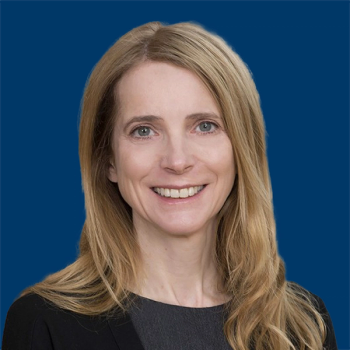
Carol Aghajanian, MD, has stayed at the forefront of innovation in gynecologic oncology—and she credits her patients and their conversations in retaining that role.
Sandra P. D’Angelo, MD, discusses data from substudy 2 of the phase 2 IGNYTE-ESO trial evaluating lete-cel in SyS and MRCLS.
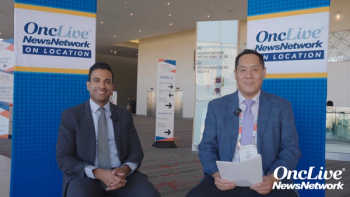
Sara Hurvitz, MD, of Fred Hutch Cancer Center, and Neil Iyengar, MD, of Memorial Sloan Kettering Cancer Center, sit down with Chandler Park, MD, FACP, to discuss the latest abstracts in breast cancer presented during the 2024 San Antonio Breast Cancer Symposium.
Eytan M. Stein, MD, discusses efficacy findings from the phase 1/2 AUGMENT-101 study of revumenib in KMT2A-rearranged relapsed/refractory acute leukemia.
James J. Harding, MD, details the significance of the approval of zanidatamab and how the agent could fill unmet needs in biliary tract cancers.

Imlunestrant with or without abemaciclib improved PFS in select patients with ER-positive, HER2-negative advanced breast cancer after endocrine therapy.
Eytan M. Stein, MD, discusses the significance of the FDA approval of revumenib for relapsed/refractory acute leukemia with KMT2A rearrangements.
Eytan M. Stein, MD, discusses how the FDA approval of revumenib could improve survival outcomes in KMT2A-rearranged relapsed/refractory acute leukemia.
Michael A. Postow, MD, discusses the potential role for triplet regimens in melanoma management.
Alison Schram, MD, discusses the FDA approval of zenocutuzumab in non–small cell lung cancer and pancreatic cancer harboring NRG1 fusions.
James J. Harding, MD, discusses the significance of the FDA approval of zanidatamab for pretreated, unresectable or metastatic HER2+ biliary tract cancer.
Diane Reidy-Lagunes, MD, discusses key trials that have expanded the treatment paradigm for patients with neuroendocrine tumors.
James J. Harding, MD, discusses how immunotherapy could play a role in earlier stages in hepatocellular carcinoma.
Here is your snapshot of all therapeutic options that the FDA approved in October 2024 spanning tumor types.
Gregory J. Riely, MD, PhD, and Benjamin Besse, MD, discuss unmet needs and future research directions in ALK-positive and ROS1-positive NSCLC.