

Pedro Barata, MD, MSc, and Benjamin Garmezy, MD, open the discussion with an overview of renal cell carcinoma.
Pedro Barata, MD, MSc, and Benjamin Garmezy, MD, open the discussion with an overview of renal cell carcinoma.
Precision medicine and personalized medicine are 2 concepts that have pushed their way to the forefront of oncology practice.
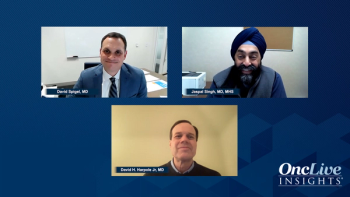
Looking to the future, a panel of experts offer closing remarks on promising developments and unmet needs in the treatment of NSCLC.
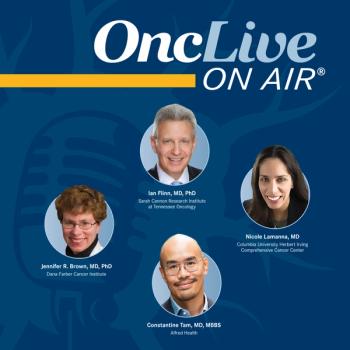
Drs Flinn, Lamanna, Brown, and Tam discuss the FDA approval of zanubrutinib in chronic lymphocytic leukemia and small lymphocytic lymphoma.
Experts discuss the role of neoadjuvant therapy and other emerging therapies in the treatment of early-stage NSCLC.
Jaspal Singh, MD, MHS, shares insights on treatment strategies for patients with stage II-IIIA NSCLC.
With 2 KRAS G12C inhibitors showing encouraging results in combination with anti-EGFR agents, there is a ray of hope for patients with recurrent colon cancer–a treatment that may offer patients the chance to make it to important milestones.
David H. Harpole Jr, MD, presents a case of a former smoker diagnosed with NSCLC, and David Spigel, MD, offers his initial impressions.
An expert panel shares perspectives on how to choose the appropriate patients with non-small cell lung cancer for lung resection.
Michael Maris, MD, discusses key efficacy and safety data from the phase 2 OUTREACH trial in diffuse large B-cell lymphoma.
A panel of distinguished experts discuss how detection of actionable mutations affect their treatment choices in non-small cell lung cancer.
David Spigel, MD, and David H. Harpole Jr, MD, describe when adjuvant therapy is recommended in early stage NSCLC and discuss data from recent clinical trials of adjuvant therapy.
Ian Flinn, MD, PhD, discusses the significance of the FDA approval of zanubrutinib in chronic lymphocytic leukemia and small lymphocytic lymphoma.
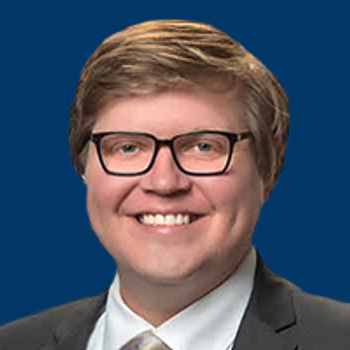
Andrew McKenzie, PhD, discusses biomarkers to test for in breast and lung cancers, the value of multicancer early detection, and how biomarker testing can better direct targeted treatment across solid tumors.
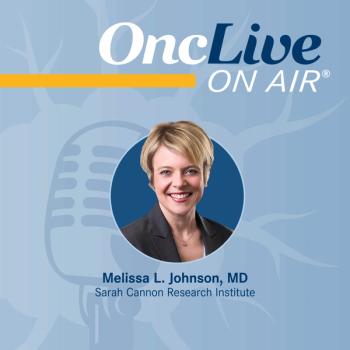
Dr Johnson discusses the FDA approval of tremelimumab plus durvalumab and chemotherapy in non–small cell lung cancer, key data from the POSEIDON trial, and the combination’s efficacy and tolerability in various patient populations.
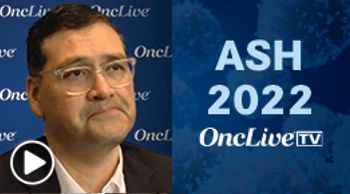
Jesus G. Berdeja, MD, discusses the investigation of BMS-986393 in patients with relapsed/refractory multiple myeloma.

Melissa L. Johnson, MD, shares key insights from the meeting, including pertinent findings in KRAS G12C¬–mutated NSCLC from the phase 3 CodeBreak 200 study and positive findings with atezolizumab in platinum-ineligible patients with NSCLC.

Melissa L. Johnson, MD, discusses the paradigm-shifting results of the phase 3 IPSOS trial of atezolizumab in patients with metastatic non–small cell lung cancer.

Andrew McKenzie, PhD, discusses the variety of molecular testing modalities in patients with metastatic non–small cell lung cancer.

Melissa L. Johnson, MD, expands on the updated data from the POSEIDEN trial, the rationale for investigating the combination, and what these results mean for the treatment of metastatic non–small cell lung cancer.

Melissa L. Johnson, MD, discusses the evolution of frontline treatment in non–small cell lung cancer.
Ribociclib plus endocrine therapy elicited statistically significant progression-free survival and overall survival benefits vs placebo plus endocrine therapy in patients with hormone receptor–positive/HER2-negative advanced breast cancer with visceral metastases, including those with liver metastases and multiple metastatic sites.
The frontline combination of tremelimumab plus durvalumab and chemotherapy generated a long-term overall survival benefit in patients with metastatic non–small cell lung cancer.

Erika P. Hamilton, MD, discusses testing used to identify patients with HER2-positive and HER2-low breast cancer.
Erika P. Hamilton, MD, shares how multidisciplinary collaboration between pathologist and breast oncologists is key to staying abreast of not only the classification-actionable HER2 mutations in metastatic breast cancer but also the evolving definition of expression.
Benjamin Garmezy, MD, discussed the positive trajectory of antibody-drug conjugates and immunotherapy in urothelial carcinoma, highlighting the importance of considering individual patient eligibility for treatments like first-line chemotherapy.
HPN328, a novel half-life extended DLL3-targeting T-cell engager, demonstrated clinical activity and tolerability in patients with pretreated small cell lung cancer and other neuroendocrine tumors, according to findings from a phase 1/2 study (NCT04471727).

Erika P. Hamilton, MD, discusses the updated analysis of the phase 3 EMERALD trial in estrogen receptor–positive, HER2-negative breast cancer.
Updated data from a safety analysis of the phase 3 DESTINY-Breast03 study confirmed the tolerability of trastuzumab deruxtecan among patients with with HER2-positive unresectable or metastatic breast cancer.

The addition of nivolumab to trastuzumab deruxtecan did not result in a marked clinical benefit in patients with locally advanced unresectable or metastatic HER2-positive breast cancer.