
New prostate cancer imaging technique is a ‘game changer’ that should become the standard of care, say researchers from UCLA and UCSF who validated its effectiveness.
New prostate cancer imaging technique is a ‘game changer’ that should become the standard of care, say researchers from UCLA and UCSF who validated its effectiveness.

Sara A. Hurvitz, MD, discusses the expanding HER2-positive metastatic breast cancer treatment arsenal.

Paul C. Boutros, PhD, MBA, discusses the utility of genetic testing in prostate cancer.

Ritu Salani, MD, MBA, discusses therapeutic advances in endometrial cancer.
Gottfried E. Konecny, MD, discusses potential strategies to overcome PARP resistance, future combinations with PARP inhibitors, and other unmet needs in ovarian cancer.
Ritu Salani, MD, MBA, discusses updates to PARP inhibition and FRα-targeting agents in ovarian cancer, the role of bevacizumab across all lines of ovarian cancer therapy, and immunotherapy highlights in cervical and endometrial cancer.
Mae Zakhour, MD, discusses the rise of PARP inhibitors as frontline maintenance therapy in advanced ovarian cancer and the key data that supported these regulatory decisions.

Paul C. Boutros, PhD, MBA, discusses processes that predict disease lethality in men with prostate cancer.

Edward B. Garon, MD, discusses remaining questions with fam-trastuzumab deruxtecan-nxki in the field of lung cancer.

Edward B. Garon, MD, discusses unique challenges of the coronavirus disease 2019 in lung cancer.
Edward B. Garon, MD, discusses the expanding treatment landscape in lung cancer.
Grace Cherry, RN, MSN, NP, discusses recent advances in melanoma.

Researchers at the UCLA Jonsson Comprehensive Cancer Center analyze gene-expression patterns in the most aggressive prostate cancer grade group—known as Gleason grade group 5—and found that this grade of cancer can actually be subdivided into four subtypes with distinct differences.

In our exclusive interview, Dr. Karlan shares the rewarding moments and challenges she has encountered in the cancer space as a female oncologist, pivotal research she has been spearheaded that has lasting impacts on the field, and other developments in gynecologic cancers that are poised to change the landscape forever.

Investigators of the first global adaptive phase 2/3 GBM Adaptive Global Innovative Learning Environment platform trial are implementing a multiarm, 2-stage approach to concurrently evaluate single-agent and combination regimens in glioblastoma.
Investigators of the first global adaptive phase 2/3 GBM Adaptive Global Innovative Learning Environment platform trial are implementing a multiarm, 2-stage approach to concurrently evaluate single-agent and combination regimens in glioblastoma.
For the first time in over a decade, scientists have identified a first-line treatment that significantly improves survival for people with hepatocellular carcinoma, the most common type of liver cancer.
For the first time in over a decade, scientists have identified a first-line treatment that significantly improves survival for people with hepatocellular carcinoma, the most common type of liver cancer.
Although fewer patients are undergoing cytoreductive nephrectomy as systemic treatments for renal cell carcinoma improve, the modality still has a vital role to play in the treatment paradigm—even in the modern age of immune checkpoint inhibitors.
Wolfgang Fendler, MD, discusses the rationale for creating the 68Ga-PSMA-11 PET in prostate cancer.

Jonathan W. Goldman, MD, health sciences clinical instructor, Department of Medicine, and Hematology/Oncology member, Jonsson Comprehensive Cancer Center Signal Transduction and Therapeutics Program, UCLA, discusses the use of immunotherapy in patients with oncogene-driven non–small cell lung cancer (NSCLC).
Alexandra Drakaki, MD, discusses the design of the MORPHEUS-mUC trial in advanced/metastatic urothelial carcinoma.
Sara A. Hurvitz, MD, associate professor at the David Geffen School of Medicine, University of California, Los Angeles (UCLA) medical director of the Jonsson Comprehensive Cancer Center Clinical Research Unit, co-director of the Santa Monica-UCLA Outpatient Oncology Practices, and director, Breast Cancer Clinical Trials Program, UCLA, discusses the steps that can be taken to reduce potential exposure to coronavirus disease 2019 (COVID-19).
Wolfgang Fendler, MD, discusses the utility of 68Ga-PSMA-11 PET in prostate cancer.
Richard S. Finn, MD, the burst of available treatment options, the ongoing hunt for actionable biomarkers, and the importance of multidisciplinary care in hepatocellular carcinoma.
Sara A. Hurvitz, MD, discusses the need for additional research with fam-trastuzumab deruxtecan-nxki in HER2-positive breast cancer.
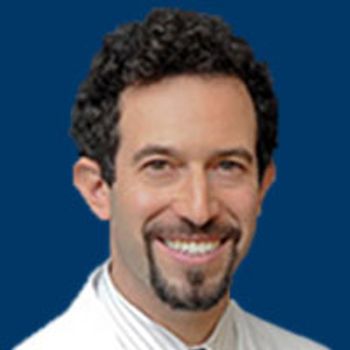
Jonathan W. Goldman, MD, discusses the current landscape of biomarker-driven lung cancer.

Jonathan W. Goldman, MD, discusses targeted therapy options for patients with EGFR-, ALK-, and ROS1-mutated non–small cell lung cancer.
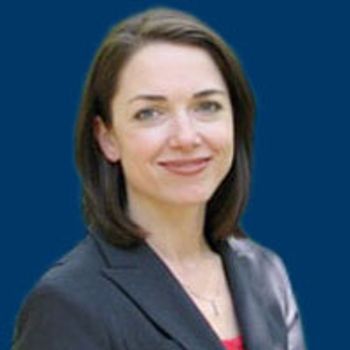
Sara A. Hurvitz, MD, Neelima Denduluri, MD, and Madelaine Kuiper, MSN, RN, discuss the rise of HER2-targeted therapies and their implications on the field.

Sara A. Hurvitz, MD, associate professor at the David Geffen School of Medicine, University of California, Los Angeles (UCLA) medical director of the Jonsson Comprehensive Cancer Center Clinical Research Unit, co-director of the Santa Monica-UCLA Outpatient Oncology Practices, and director, Breast Cancer Clinical Trials Program, UCLA, discusses the evolution of treatment in metastatic HER2-positive breast cancer.