

Udai S. Kammula, MD, FACS, discusses TIL therapy outcomes, the UMIS biomarker, and treatment implications in metastatic uveal melanoma.
Udai S. Kammula, MD, FACS, discusses TIL therapy outcomes, the UMIS biomarker, and treatment implications in metastatic uveal melanoma.

Charles E. Geyer, MD, discusses data from the DESTINY-Breast05 safety analysis evaluating ILD and radiation pneumonitis outcomes in HER2+ breast cancer.

Charles E. Geyer, MD, discusses ILD and radiation pneumonitis incidence by radiotherapy timing with T-DXd in a DESTINY-Breast05 safety analysis.
Dr Brufsky discusses the FDA approval of gedatolisib plus fulvestrant ± palbociclib for hormone receptor–positive, PIK3CA wild-type advanced breast cancer.

Read a refresh of breast cancer FDA news from July, including the first approval of a pan-PI3K/mTOR inhibitor combination and a pegfilgrastim biosimilar.
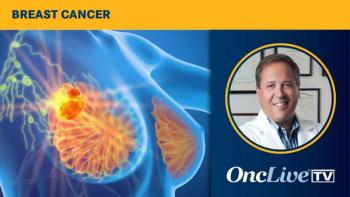
Adam M. Brufsky, MD, PhD, discusses the FDA approval of gedatolisib/fulvestrant/palbociclib for PIK3CA wild-type hormone receptor–positive breast cancer.

Breast cancer experts share insights on how recently approved indications for 3 ADCs will affect clinical practice.

Priya Rastogi, MD, discusses a substudy evaluating a whole-exome sequencing, tumor-informed ctDNA MRD assay in TNBC after neoadjuvant chemotherapy.

Charles E. Geyer, MD, discusses the FDA approvals of trastuzumab deruxtecan for the management of early-stage HER2-positive breast cancer.
Charles E. Geyer, MD, discusses the significance of the FDA approval of neoadjuvant T-DXd followed by THP for patients with HER2-positive breast cancer.
Charles E. Geyer, MD, highlights data that led to the FDA approval of post-neoadjuvant T-DXd for patients with HER2-positive breast cancer.
Priya Rastogi, MD, discusses findings from a sub-study of the GeparDouze trial evaluating the effects of ctDNA positivity on treatment outcomes in TNBC.

Read a refresh of the top FDA news in breast cancer from May 2026, including several key approvals across ER-positive and triple-negative disease.

Breast cancer experts discuss the nuances of ESR1 mutations and oral SERD use in hormone receptor–positive breast cancer.

The top 5 OncLive TV videos of the week cover insights in kidney cancer, myeloproliferative neoplasms, breast cancer, systemic mastocytosis, and pancreatic cancer.

Vikram C. Gorantla, MD, discusses future directions for sequencing available therapies for patients with breast cancer who develop brain metastases.

Vikram C. Gorantla, MD, discusses real-world treatment patterns with T-DXd vs tucatinib-based therapy in HER2-positive breast cancer with brain metastases.
Vikram C. Gorantla, MD, notes real-world treatment patterns and outcomes with second-line T-DXd vs tucatinib-based therapy in HER2-positive breast cancer.

Vikram C. Gorantla, MD, discusses an analysis of T-DXd vs tucatinib plus trastuzumab and capecitabine in HER2-positive breast cancer with brain metastases.

Post-operative lymphatic ctDNA results exceeded plasma assays in detecting residual disease and predicting recurrence in HPV-independent HNSCC.
Kathleen A. Dorritie, MD, discusses data that inform the use of pirtobrutinib and liso-cel for the treatment of patients with chronic lymphocytic leukemia.

Kathleen A. Dorritie, MD, highlights important NCCN guideline updates and research to watch in hematologic malignancies.
Kathleen A. Dorritie, MD, discusses 2 clinical scenario cases to showcase differences in the management of newly diagnosed vs relapsed/refractory CLL.

Alexander B. Olawaiye, MD, discusses key efficacy and safety findings from the ROSELLA trial and the future of relacorilant in platinum-resistant ovarian cancer.

Bria-IMT plus checkpoint inhibition displayed a potential overall survival benefit in heavily pretreated, hormone receptor–positive breast cancer.

Alexander B. Olawaiye, MD, discusses future research that could inform the use of afuresertib plus paclitaxel in platinum-resistant ovarian cancer.
Yvonne Mowery, MD, PhD, discusses the SU2C-SARC032 trial of pembrolizumab plus radiotherapy followed by surgery in soft tissue sarcoma.

The addition of pembrolizumab to preoperative radiation therapy followed by surgery prolonged DFS in patients with soft tissue sarcoma of the extremity.

Charles E. Geyer, Jr., MD, discusses the efficacy and safety of perioperative atezolizumab plus chemotherapy in stage II/III triple-negative breast cancer.
Dr Mowery discusses the SU2C-SARC032 trial of pembrolizumab plus preoperative radiotherapy and surgery in patients with soft-tissue sarcoma.