


Videos
Advertisement

Women harboring a loss-of-function mutation in the PALB2 gene demonstrated an increased risk of developing breast cancer that was similar to the predisposition seen with mutations in the infamous BRCA gene

Sara Hurvitz, MD, medical oncologist, UCLA Medical Center, gives an overview of treatment hypotheses for triple-negative breast cancer (TNBC).

Halle Moore, MD, medical oncologist, Cleveland Clinic, discusses the results of the phase III POEMS study, which was presented at the 2014 ASCO Annual Meeting.
Advertisement







A phase III trial analyzing sorafenib for the treatment of patients with advanced breast cancer did not meet its primary endpoint of improving progression-free survival.
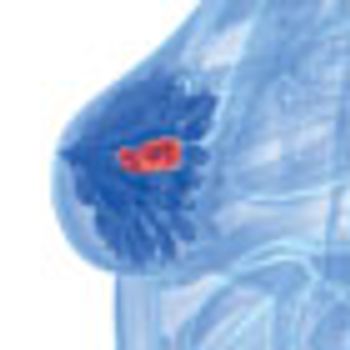
Extended adjuvant treatment with neratinib (PB272, HKI-272) significantly extended improved disease-free survival (DFS) compared with placebo for patients with HER2-positive breast cancer who received prior adjuvant trastuzumab

Lori Goldstein, MD, director, The Naomi and Phil Lippincott Breast Evaluation Center, deputy associate director, Clinical Research, Fox Chase Cancer Center, discusses mechanisms of resistance to endocrine therapy.

Debu Tripathy, MD, discusses a decision-making framework for sequencing therapies for HER2-positive metastatic breast cancer.

A gel formulation of tamoxifen is equally as effective with fewer side effects when compared with oral tamoxifen in women with ductal carcinoma in situ.
Joyce A. O'Shaughnessy, MD, discusses the evolving area of breast cancer subtype-specific cytotoxic agents.

The 2nd Annual Giants of Cancer Careâ„¢ Awards were presented at a ceremony held on May 30 in Chicago. The event recognized 16 oncology heroes whose groundbreaking contributions to the field have improved the lives of patients with cancer.

Patients with small, node-negative, HER2-positive breast cancer tumors had a low risk of invasive recurrence after 5 years

The antibody-drug conjugate T-DM1 (ado-trastuzumab emtansine; Kadcyla) will have an impact on the entire spectrum of care for patients with metastatic HER2-positive breast cancer, resulting in a greater emphasis on patient selection protocols and testing.

Cardiac events associated with trastuzumab are mostly reversible and outweighed by significant extensions in OS and PFS for patients with HER2-positive breast cancer, according to analyses from several clinical trials exploring the drug.
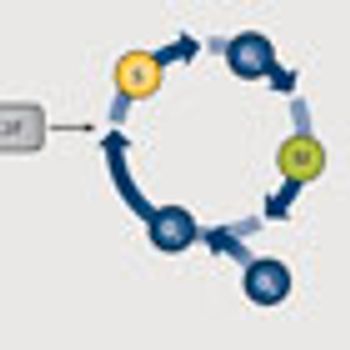
As gatekeepers of the cell cycle, the cyclin-dependent kinases are often implicated in the progression of cancer and make prime targets for therapy.
Adam M. Brufsky, MD, PhD, discusses the effect of prior trastuzumab on eribulin mesylate in combination with trastuzumab as first-line treatment for HER2-positive locally recurrent or metastatic breast cancer.
Robert L. Kirkman, MD, President and CEO, Oncothyreon, discusses the evaluation of ONT-380, an oral HER2-specific inhibitor, for the treatment of patents with HER2-positive metastatic breast cancer.

The FDA has issued a drug safety communication regarding the risk of intoxication with the intravenous ethanol-containing chemotherapy docetaxel.
Edith A. Perez, MD, discusses a genomic analysis of immune function genes and clinical outcome in the NCCTG (Alliance) N9831 adjuvant trastuzumab trial.
Julie R. Gralow, MD, director, Breast Medical Oncology, Seattle Cancer Care Alliance, clinical research division, member, Fred Hutchinson Cancer Care Center, professor, Medical Oncology Division, University of Washington School of Medicine, discusses toxicities observed in the SWOG S0307 trial, which examined bisphosphonates as adjuvant therapy in primary breast cancer.

The first time Christina T. Giuliano, MD, saw a digital mammogram, she knew the extra clarity and detail would profoundly improve the diagnostic process.

Charles M. Perou, PhD, discusses a trial (CALGB 40601) presented at the 2014 ASCO Annual Meeting that analyzed gene expression signatures in patients with HER2-positive breast cancer treated with weekly paclitaxel and trastuzumab with or without lapatinib.
Advertisement
Advertisement
Trending on OncLive
1
Single-Center, Retrospective Data Show Low Rate of Lifileucel Infusion Following Referral in Advanced Melanoma
2
Outcomes With Bridging Therapy Correlate With Cilta-Cel Efficacy, Safety in Multiple Myeloma
3
Real-World Data Support Clinical Benefit With Lifileucel in Previously Treated Advanced Melanoma
4
Long-Term Cilta-Cel Data Show Low Rates of PFS Events in Standard-Risk R/R Myeloma
5