
An updated guideline from ASCO regarding the use of sentinel lymph node (SLN) biopsy in early stage breast cancer supports the use of the procedure over axillary lymph node dissection (ALND) in a larger group of patients than previously recommended.

Your AI-Trained Oncology Knowledge Connection!
An updated guideline from ASCO regarding the use of sentinel lymph node (SLN) biopsy in early stage breast cancer supports the use of the procedure over axillary lymph node dissection (ALND) in a larger group of patients than previously recommended.

Julia White, MD, professor, director, Breast Radiation Oncology, vice chair, Clinical Research, The Ohio State University Comprehensive Cancer Center, discusses the potential to cure patients with metastatic breast cancer.

Donald A. Berry, PhD, is a leader in the development of innovative statistical methodology for the improvement of clinical trial design and analysis, especially the Bayesian methods used in the I-SPY program.
Judy C. Boughey, MD, associate professor of surgery, director, Breast Surgical Oncology Training Program, Mayo Clinic, discusses implications for axillary radiation following review of the ACOSOG Z11 trial.

The adaptive I-SPY 2 trial has found that a neoadjuvant regimen of neratinib and standard chemotherapy is beneficial for high-risk patients with hormone receptor (HR)-negative, HER2-positive stage II/III breast cancer

The combination of palbociclib and letrozole more than doubled PFS and showed a non–statistically significant 4.2-month improvement in OS for patients with ER-positive, HER2-negative metastatic breast cancer.

The CDK4/6 inhibitor LY2835219 demonstrated promising single-agent activity in heavily pretreated patients with HR-positive metastatic breast cancer.

Breast cancer patients whose chemotherapy is initiated >60 days following surgery experience worse survival outcomes
Hyman B. Muss, MD, professor of oncology, University of North Carolina, director, Geriatric Oncology, Lineberger Comprehensive Cancer Center, discusses maximizing cardiac function in patients with breast cancer.
Amid a growing recognition of the need to improve the process of developing oncology drugs, the novel I-SPY 2 clinical trial in breast cancer has demonstrated the potential to deliver new, effective treatment options more rapidly to patients who would most benefit while dramatically reducing the time and costs currently required to evaluate experimental therapies.
Melvin J. Silverstein, MD, FACS, director, Breast Program Hoag Memorial Hospital, professor of surgery, Keck School of Medicine, University of Southern California, gives an overview of the Van Nuys Prognostic Index for DCIS.
Now that targeted therapies are available for the treatment of various subtypes of breast cancer, and many novel agents are under investigation, it is important for the oncology community to follow the latest advancements to give patients the best available options.
Henry M. Kuerer, MD, PhD, FACS, professor of surgery, Department of Surgical Oncology, The University of Texas MD Anderson Cancer Center, discusses sentinel node clipping for post-chemotherapy identification.

Breast cancer survivors who took two yoga classes a week for 3 months after treatment were less fatigued and demonstrated less systemic inflammation than their counterparts who did not take the classes
Grant W. Carlson, MD, professor of surgery, Emory University School of Medicine, chief, Division of Plastic Surgery, Emory University Hospital, explains why more women with breast cancer are electing to get contralateral prophylactic mastectomies (CPMs)
Human epidermal growth factor receptor 2 (HER2)-positive disease accounts for 20% to 25% of breast cancers, as represented by amplification of the HER2 gene and/or HER2 protein overexpression
Debu Tripathy, MD, co-leader, Women's Cancer Program, University of Southern California Norris Comprehensive Cancer Center, discusses new personalized therapies on the horizon for advanced breast cancer.
Lawrence J. Schneiderman, MD, professor emeritus, Medicine/Family & Preventive Medicine, University of California, San Diego (UCSD), discusses futility policies in relation to cancer drugs.
The first results from the I-SPY 2 trial, which is evaluating novel agents in the neoadjuvant treatment of breast cancer, show encouraging possibilities for veliparib (ABT-888) and neratinib (PB272).
Julia White, MD, professor, director, Breast Radiation Oncology, vice chair, Clinical Research, The Ohio State University Comprehensive Cancer Center, discusses the use of ablative radiotherapy in patients with metastatic breast cancer.
Judith A. Salerno, MD, MS, president, CEO, Susan G. Komen, discusses federal funding for research and the importance of gaining funds though private philanthropy to support clinical researchers.
The benefits of trastuzumab, pertuzumab, lapatinib, and ado-trastuzumab emtansine (T-DM1) have all been well studied, but each drug also has its own set of complications and toxicities.

New models have emerged for examining novel breast cancer treatments in the neoadjuvant setting that avoid the lengthy process of standard, large adjuvant trials.

In the last decade, there have been tremendous improvements in the treatment of HER2-positive breast cancer with new HER2-targeted agents improving survival in both the adjuvant and metastatic settings.

The first-line combination of trastuzumab and eribulin mesylate demonstrated an ORR of 71.2% with a median PFS of 11.6 months in patients with HER2-positive advanced breast cancer.
Sunil Verma, MD, MSEd, FRCPC, associate professor, University of Toronto, chair, Breast Medical Oncology, Sunnybrook Odette Cancer Centre, provides an outlook on the treatment of HER2-positive breast cancer.

Success rates for lumpectomies or mastectomies are high with respect to survival, with up to 98% long-term survival rates for surgery and/or radiotherapy, but what if similar results could be achieved by substituting targeted medications for therapy?

The US Supreme Court's landmark decision last June, mandating that an individual's genes cannot be patented, transformed the genetic testing landscape and opened the marketplace to a host of new and complicated testing options.
The most promising novel therapeutics in development for patients with breast cancer focus primarily on targeting activating mutations in combinations that are based on findings from next-generation sequencing.
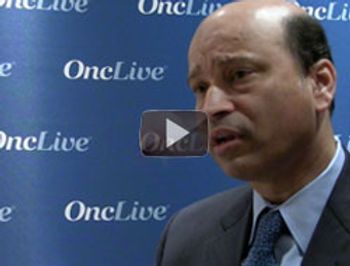
Debu Tripathy, MD, co-leader, Women's Cancer Program, University of Southern California Norris Comprehensive Cancer Center, discusses using adjuvant bisphosphonates as a treatment option for patients with breast cancer.