
Rebecca C. Arend, MD, discusses several ongoing trials exploring the use of immunotherapy in patients with advanced ovarian cancer.

Managing Editor, OncLive®
Caroline Seymour is your initial point of contact for the OncLive® podcast, OncLive On Air™. She joined the company in 2018 as an assistant editor, with expertise in video production and print/digital publication. Email: cseymour@onclive.com
Rebecca C. Arend, MD, discusses several ongoing trials exploring the use of immunotherapy in patients with advanced ovarian cancer.
Debra Richardson, MD, FACOG, FACS, discusses the current indications for PARP inhibitors in the recurrent setting and ongoing work being done to broaden their utility in the field.
Parminder Singh, MD, discusses ongoing research in advanced urothelial cancer and the focus on incorporating precision medicine in the field.
Manish Kohli, MD, discusses the agents that have redefined the treatment paradigm of metastatic prostate cancer and details ongoing work to elucidate genomic classifiers.

Alexander Olawaiye, MD, discusses the trials that led to the expanded approvals of PARP inhibitors as maintenance therapy in women with platinum-sensitive ovarian cancer.
Jessica L. Berger, MD, evaluates the treatment approaches available for patients with newly diagnosed advanced ovarian cancer.
Madeleine B. Courtney Brooks, MD, MPH, sheds light on the current treatment paradigm of recurrent ovarian cancer.
David D. Thiel, MD, provides perspective on the CARMENA findings in metastatic renal cell carcinoma.
Hans-Christian Kolberg, MD, discusses the design of the LILAC study, the cardiac safety profiles of ABP 980 and reference trastuzumab, and patient and provider comfort with ABP 980 in practice.
Badi El-Osta, MD, discusses the targeted agents that are showing the most promise for patients with non–small cell lung cancer who have rare alterations and variants.
Simon Rule, MD, PhD, discusses the current treatment options in mantle cell lymphoma and explained how anticipated research results could be integrated into the field.
Rathi N. Pillai, MD, discusses the basis for frontline combinations of chemotherapy and immunotherapy in advanced nonsquamous non–small cell lung cancer and questions surrounding the optimal sequence of these agents.
Winston Tan, MD, discusses the influx of treatment options in nonmetastatic castration-resistant prostate cancer and the modalities that are being used in an effort to ensure their optimal use.
Richard W. Joseph, MD, discusses the factors that must be considered when selecting the appropriate frontline treatment for patients with metastatic renal cell carcinoma, the need for clarity regarding the role of cytoreductive nephrectomy, as well as the research that is being done in those with rarer subtypes of kidney cancer.
Tessa Cigler, MD, MPH, discusses the agents that are improving survival for women with early-stage and metastatic HER2-positive breast cancers.
Taofeek Owonikoko, MD, PhD, MSCR, discusses the results of the NLST and NELSON trials and the next steps that need to be addressed with lung cancer screening.
Alan B. Astrow, MD, discusses the latest efforts to personalize patient care in early-stage, HR-positive, HER2-negative breast cancer.
Payal D. Shah, MD, discusses the paradigm shift in metastatic HR-positive, HER2-negative breast cancer, now largely defined by the use of CDK4/6 inhibitors.
Mian M. Shahzad, MD, PhD, discusses the use of checkpoint inhibition in advanced ovarian cancer.
Jeannie Chern, MD, discusses developments with genetic testing in ovarian cancer and key trials in patients with recurrent disease.
Aditya Bardia, MD, MPH, discusses the recent momentum in metastatic triple-negative breast cancer treatment.
Robert M. Wenham, MD, discusses frontline management strategies for patients with newly diagnosed advanced ovarian cancer as well as the complexities of maintenance therapy.
C. Ola Landgren, MD, PhD, shares his expert insight on recent shifts in multiple myeloma management.
Kenneth C. Anderson, MD, discusses available and emerging frontline treatment regimens for patients with newly diagnosed multiple myeloma and evaluated the utility of minimal residual disease in the paradigm.
Mohammad Razaq, MD, discusses how the detection of driver mutations has changed the way treatment is approached in advanced non–small cell lung cancer.
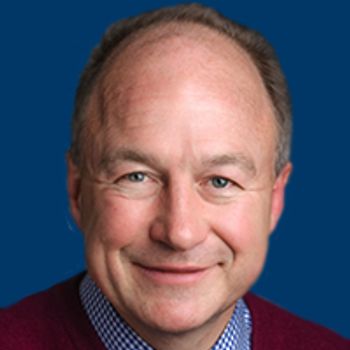
Paul G. Richardson, MD, reviews the results of the phase III ICARIA-MM trial as well as preliminary data regarding melflufen in relapsed/refractory multiple myeloma.
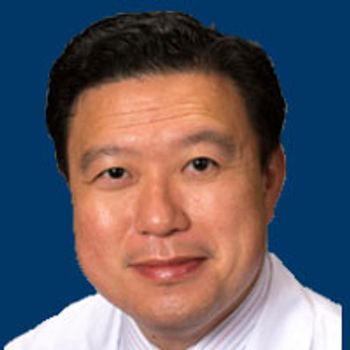
Stephen V. Liu, MD, discusses the impact of immunotherapy in the first-, second-, and third-line settings of small cell lung cancer, as well as novel agents and targets on the horizon.
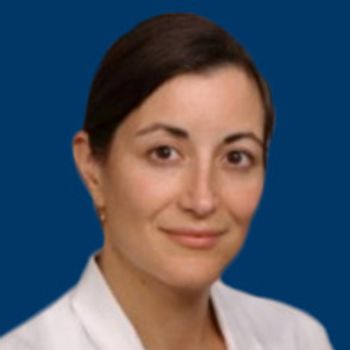
Angeles Alvarez Secord, MD, discusses the available treatment modalities for patients with platinum-sensitive and -resistant recurrent ovarian cancer.
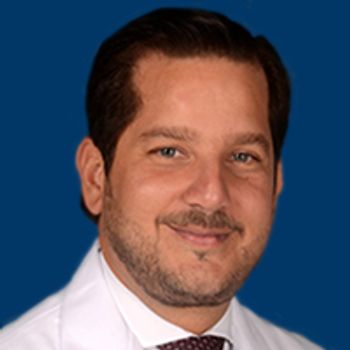
Michel Velez, MD, provides perspective on the clinical experience with neratinib in patients with early-stage HER2-positive breast cancer as well as promising data that may lead to an indication in the metastatic setting.
Matthew Powell, MD, discusses the trials that are generating excitement for combination immunotherapy as well as the impact of PARP inhibitors in the treatment of patients with ovarian cancer.