
Michael Wang, MD, provides insight on recent advances in mantle cell lymphoma as well as research efforts for patients with a high risk of relapse.

Managing Editor, OncLive®
Caroline Seymour is your initial point of contact for the OncLive® podcast, OncLive On Air™. She joined the company in 2018 as an assistant editor, with expertise in video production and print/digital publication. Email: cseymour@onclive.com
Michael Wang, MD, provides insight on recent advances in mantle cell lymphoma as well as research efforts for patients with a high risk of relapse.
Jessica Jiyeong Lin, MD, discusses rare oncogenic drivers and elaborates on the updated efficacy analyses that were presented at the 2019 ASCO Annual Meeting.
R. Wendel Naumann, MD, discusses the criteria for primary debulking versus neoadjuvant chemotherapy in patients with advanced ovarian cancer.
Alice T. Shaw, MD, PhD, provides an overlay of current treatment strategies in ALK-positive NSCLC and highlights research on the horizon.
Anna F. Farago, MD, PhD, discusses recent advances in the field of small cell lung cancer.
Mounzer E. Agha, MD, discusses the approaches that are leading to prolonged survival in patients with relapsed/refractory multiple myeloma.
Georgina V. Long, BSc, PhD, MBBS, FRACP, discusses the activity of the combination of dabrafenib and trametinib alone as well as in combination with spartalizumab in patients with advanced BRAF V600E-mutant melanoma.
Rafic Farah, MD, provides an in-depth look at the trials that now define standards of care among patients with newly diagnosed and relapsed/refractory chronic lymphocytic leukemia.
Kari B. Wisinski, MD, highlights modern day approaches for treating patients with metastatic triple-negative breast cancer.
Vivian G. Oehler, MD, discusses the important aspects of TKI discontinuation and the patient factors that would warrant such an approach.
Chaitra S. Ujjani, MD, discusses the various therapeutic classes and agents that are showing the most promise in the field of follicular lymphoma.
Mary-Elizabeth Percival, MD, discusses advances and challenges with targeted agents in acute myeloid leukemia and remaining questions in the field.
Mazyar Shadman, MD, MPH, discusses earlier use of CAR T-cell therapy in lymphoma, the impact of approved products on future development, and recent data with chemotherapy-free and time-limited therapy in chronic lymphocytic leukemia.
Jerald P. Radich, MD, the methods that are used to measure minimal residual disease and the work being done to standardize its use in acute lymphoblastic leukemia.
Karim Fizazi, MD, PhD, discusses the impact of darolutamide on pain progression and quality of life in patients with nonmetastatic castration-resistant prostate cancer.
Yee Chung Cheng, MD, discusses the importance of integrating neoadjuvant and adjuvant trial data into practice in order to optimize outcomes for patients with early-stage HER2-positive breast cancer.
Christopher R. Chitambar, MD, FACP, discusses the research that led to the development of CDK4/6 inhibitors in metastatic HR-positive, HER2-negative breast cancer and the significance of the PI3K inhibitor alpelisib.
Jared Weiss, MD, discusses key trials in nonsquamous non–small cell lung cancer in depth and their impact on the field.
Ruth O'Regan, MD, discusses current approaches to treatment escalation and de-escalation, as well as the use of retrospective molecular profiling, which may help address some unanswered questions in the field.
Allen L. Cohn, MD, discusses how the increased incidence of pancreatic cancer has spurred an abundance of novel treatment approaches to combat the disease.
Scott J. Antonia, MD, PhD, discusses the pivotal data that renewed interest in stage III unresectable non–small cell lung cancer and anticipated data that are expected to advance the field even further.
Jeffrey M. Clarke, MD, discusses the optimal targeted therapies for the frontline treatment of patients with EGFR-positive NSCLC and sequencing beyond progression.
Nelson Jen An Chao, MD, discusses current understandings of minimal residual disease and the therapies that have helped promulgate its utility in acute lymphoblastic leukemia.
Wells A. Messersmith, MD, discusses the evolving standards of care in colorectal cancer and the importance of molecular testing in guiding treatment decisions.
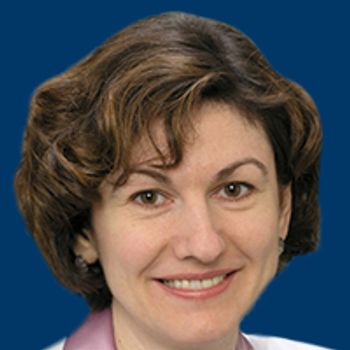
Mihaela C. Cristea, MD, emphasizes the use of molecular testing over tumor testing in ovarian cancer.
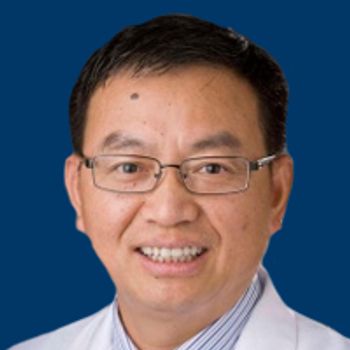
Yubin Kang, MD, discusses how progress made in frontline therapy has impacted the outlook of multiple myeloma and the remaining work that needs to be done across settings.
Mihaela C. Cristea, MD, discusses the impact of the SOLO-1 trial on current approaches to frontline maintenance therapy as well as the trials that are underway with niraparib, rucaparib, and the investigational PARP inhibitor veliparib.
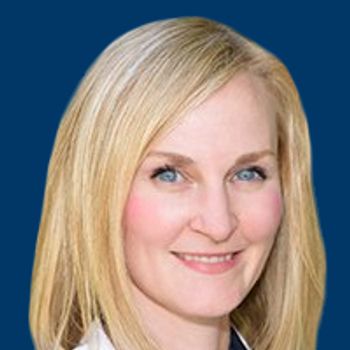
Daphne B. Stewart, MD, discusses the progress that has been made with immunotherapy in ovarian cancer, provides insight into the focus on combination therapy with checkpoint inhibitors, and explains the impact of negative trials on the field.
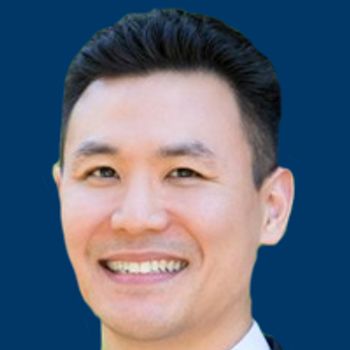
Stephen J. Lee, MD, discusses the trials that have added to existing controversies regarding the optimal management of patients with newly diagnosed advanced ovarian cancer and highlights best practices for deciding between the approaches.
Gottfried E. Konecny, MD, shares the known aspects of PARP inhibition in recurrent ovarian cancer.