

Dostarlimab plus carboplatin/paclitaxel improved overall survival vs placebo plus chemotherapy in primary advanced or recurrent endometrial cancer.

Vice President of Content, OncLive and Cancer Network
Gina Mauro is your lead editorial contact for OncLive. She joined the company in 2015 and has held various positions on OncLive; she is also the on-air correspondent for OncLive News Network: On Location. Prior to joining MJH Life Sciences, she worked at Gannett as a full-time reporter with the Asbury Park Press. Email: gmauro@onclive.com
Dostarlimab plus carboplatin/paclitaxel improved overall survival vs placebo plus chemotherapy in primary advanced or recurrent endometrial cancer.

A high rate of disease control was seen with the novel MDM2 inhibitor APG-115-alrizomadlin in patients with p53 wild-type salivary gland cancer.

The burst of translational research leading to PARP inhibitors in prostate cancer, along with imaging and diagnostic advances, has been a monumental evolution for the management of this disease.

Encouraging data with RFS, OS, and NRM for Orca-T was also matched in a population of patients with hematologic cancers aged 55 years and older.

The FDA has approved a supplemental Biologics License Application for teclistamab-cqyv (Tecvayli) at a reduced dose of 1.5 mg/kg every 2 weeks in patients with relapsed/refractory multiple myeloma who have achieved and maintained a complete response or greater for at least 6 months.

Frontline pembrolizumab plus lenvatinib continues to show benefit vs historical controls in advanced non–clear cell renal cell carcinoma.

Neoadjuvant camrelizumab plus nab-paclitaxel and cisplatin improved pCR vs chemotherapy alone in patients with esophageal squamous cell carcinoma.
The FDA has approved an on-body injector (OBI) presentation of the biosimilar pegfilgrastim-cbqv biosimilar (Udencya), known as Udencya Onbody, which is administered to patients with cancer the day after chemotherapy in order to decrease infection incidence from febrile neutropenia.

The presence of ESR1 coabnormalities, including TP53 and PIK3CA mutations, and CCND1 and FGFR1 amplification, did not demonstrate a negative impact on the efficacy with lasofoxifene and abemaciclib in patients with estrogen receptor–positive, ESR1-mutant metastatic breast cancer.

Quality of life and adverse effects are key components most patients with estrogen receptor–positive, HER2-negative metastatic breast cancer weigh when choosing an anticancer therapy, according to patient-reported results of an ESR1 QUAlity of Life Survey 3 survey.

The FDA has approved eflornithine (Iwilfin) as a treatment to reduce the risk of relapse in adult and pediatric patients with high-risk neuroblastoma who have achieved at least a partial response to prior multi-agent, multimodality therapy including anti-GD2 immunotherapy.

The high-precision cellular product Orca-Q demonstrated early signals of clinical activity as well as an acceptable safety profile for patients undergoing haploidentical stem cell transplantation without posttransplant cyclophosphamide.

Pelabresib plus ruxolitinib demonstrated a 35% or greater reduction in spleen volume and trended toward reducing mean absolute total symptom score (TSS) as well as improving TSS reduction by 50% at 24 weeks in patients with JAK inhibitor–naive myelofibrosis.

The high-precision cell therapy Orca-T demonstrated high rates of relapse-free survival, overall survival, and graft-vs-host disease RFS at 1 year, as well as a low incidence of GVHD in patients with intermediate- to high-risk myelodysplastic syndrome.

Revumenib, decitabine/cedazuridine, plus venetoclax elicited an objective response rate of 100% with acceptable safety in patients with relapsed/refractory acute myeloid leukemia enrolled in the small phase 1/2 SAVE study.

Neoadjuvant pembrolizumab combined with chemotherapy followed by adjuvant pembrolizumab compared with placebo plus chemotherapy continued to show a clinically meaningful improvement in event-free survival in patients with high-risk, early-stage triple-negative breast cancer.

Pembrolizumab plus olaparib did not improve progression-free or overall survival vs pembrolizumab plus chemotherapy in patients with locally recurrent inoperable or metastatic triple-negative breast cancer who received induction pembrolizumab plus chemotherapy.

While there are considerable barriers to incorporating comprehensive genotyping, the use of circulating tumor DNA offers an improvement in molecular testing—and doing so earlier can accelerate the time to treatment and improve survival for patients with lung cancer.

Howard I. Scher, MD, sheds light on various research programs he has led or has been heavily involved with that have helped change the course of prostate cancer treatment over the years.
The FDA has approved fruquintinib (Fruzaqla) for the treatment of adult patients with metastatic colorectal cancer who have been previously treated with fluoropyrimidine-, oxaliplatin-, and irinotecan-based chemotherapy, an anti-VEGF therapy, and, if RAS wild-type and medically appropriate, an anti-EGFR therapy.
The FDA has approved fruquintinib (Fruzaqla) for the treatment of adult patients with metastatic colorectal cancer who have been previously treated with fluoropyrimidine-, oxaliplatin-, and irinotecan-based chemotherapy, an anti-VEGF therapy, and, if RAS wild-type and medically appropriate, an anti-EGFR therapy.

Treatment with the oral innate immune activator BXCL701 combined with pembrolizumab demonstrated prolonged overall survival in patients with metastatic castration-resistant prostate cancer of adenocarcinoma phenotype.

The FDA has approved ivosidenib (Tibsovo) for the treatment of adult patients with relapsed/refractory myelodysplastic syndromes with a susceptible IDH1 mutation, as detected by an FDA-approved test.

Selpercatinib resulted in a statistically significant improvement in progression-free survival and overall response rate compared with cabozantinib or vandetanib in patients with advanced, multikinase inhibitor–naïve, RET-mutant medullary thyroid cancer, according to interim findings from the phase 3 LIBRETTO-531 trial.

Mezigdomide in combination with either bortezomib and dexamethasone or carfilzomib and dexamethasone showed encouraging responses across multiple dose levels in patients with relapsed/refractory multiple myeloma.

The combination of lenvatinib and pembrolizumab continued to show clinical activity in patients with metastatic renal cell carcinoma, including in subsets of patients who had received or were naïve to checkpoint inhibitors.
The FDA has approved glofitamab-gxbm (Columvi) for the treatment of adult patients with relapsed/refractory diffuse large B-cell lymphoma (DLBCL) not otherwise specified or large B-cell lymphoma arising from follicular lymphoma, after two or more lines of systemic therapy.

Vinay Edlukudige Keshava, MD, shares the story of his fellowship and provides advice on how to best transition to the next step in an oncologic career.
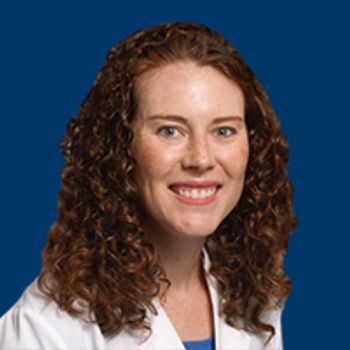
Amy Jones, MD, details the socioeconomic challenges with patients coming into the Dallas County clinics and how oncology fellows become equipped to address them.
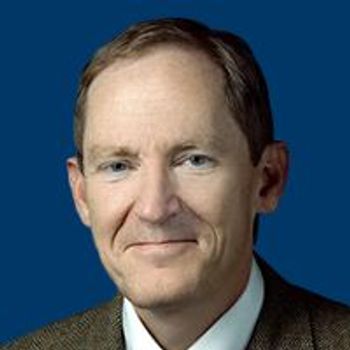
Gilteritinib led to a 48% reduction in disease recurrence for patients with FLT3-ITD–mutant acute myeloid leukemia and detectable minimal residual disease pre and post hematopoietic stem cell transplant compared with placebo, highlighting a role for treatment in this subgroup of patients.