

Ruxolitinib was found to improve spleen volume and tumor symptom score in patients with myelofibrosis, irrespective of their anemia and transfusion status, according to data from a post-hoc analysis of the phase 3 COMFORT-I and -II trials.

Vice President of Content, OncLive and Cancer Network
Gina Mauro is your lead editorial contact for OncLive. She joined the company in 2015 and has held various positions on OncLive; she is also the on-air correspondent for OncLive News Network: On Location. Prior to joining MJH Life Sciences, she worked at Gannett as a full-time reporter with the Asbury Park Press. Email: gmauro@onclive.com
Ruxolitinib was found to improve spleen volume and tumor symptom score in patients with myelofibrosis, irrespective of their anemia and transfusion status, according to data from a post-hoc analysis of the phase 3 COMFORT-I and -II trials.
The addition of atezolizumab to cabozantinib did not improve progression-free survival or overall survival vs cabozantinib alone in patients with advanced renal cell carcinoma who previously received treatment with an immune checkpoint inhibitor, missing the primary end points of the phase 3 CONTACT-03 trial.
Mirvetuximab soravtansine-gynx demonstrated a 35% reduction in the risk of disease progression or death compared with investigator’s choice of chemotherapy in patients with folate receptor alpha-high, platinum-resistant ovarian cancer.

Obecabtagene autoleucel was associated with a 76% complete response (CR)/CR with incomplete count recovery rate in adult patients with relapsed/refractory B-cell acute lymphoblastic leukemia.

Simple hysterectomy was found to be noninferior to radical hysterectomy and pelvic node dissection in patients with low-risk, early-stage cervical cancer, according to results of the Canadian Cancer Trials Group CX.5/SHAPE trial.

Experts in the field share the abstracts they found to be the most practice changing at this year’s ASCO Annual meeting.

Minimally invasive distal pancreatectomy was found to be a safe and effective alternative to that of open distal pancreatectomy in patients with resectable pancreatic cancer, confirmed by a noninferior radical resection rate, lymph node yield, and comparable survival data.

A new drug application has been submitted to the FDA for the combination of rivoceranib and camrelizumab as a first-line treatment option for patients with unresectable hepatocellular carcinoma.
Darolutamide given in an extended duration was linked with long-term clinical benefit and safety in patients with nonmetastatic castration-resistant prostate cancer.

The allogeneic anti-CD70 CAR T-cell therapy ALLO-316 elicited signals of antitumor activity and showed a tolerable safety profile in patients with advanced or metastatic clear cell renal cell carcinoma.

mRNA-4157 in combination with pembrolizumab improved recurrence-free survival compared with pembrolizumab alone when used as an adjuvant treatment in patients with resected high-risk melanoma, regardless of tumor mutational burden.

Improvements in graft-vs-host disease and transplant-related mortality have created a wave of hope for clinicians treating their patients with hematologic malignancies, stemming from the encouraging data seen with Orca-T and other novel therapeutics in the pipeline.

89Zr-DFO-girentuximab demonstrated sensitivity and specificity thresholds that were exceeded by 3 independent readers for PET/CT imaging of clear cell renal cell carcinoma, according to findings from the phase 3 ZIRCON study.

Because of an economic burden on the healthcare system occurring through the per-patient cost of allogeneic hematopoietic cell transplant, novel treatments to replace transplant and prevent graft-vs-host disease are necessary.

Brexucabtagene autoleucel demonstrated a survival benefit in patients with relapsed/refractory B-cell acute lymphoblastic leukemia regardless of prior lines of treatment or exposure to blinatumomab or allogeneic stem cell transplant, according to data from subgroup analyses of the ZUMA-3 trial.

Caspian Oliai, MD, discusses how treatment with Orca-T demonstrated a reduction in graft-vs-host disease and non-relapse mortality rates, while also producing higher than expected graft-vs-leukemia and graft-vs-infection effects, in patients with hematologic cancers at more than 1 year of follow-up.
The FDA has approved pembrolizumab (Keytruda) as an adjuvant treatment following resection and platinum-based chemotherapy for patients with stage IB (T2a ≥4 cm), II, or IIIA non–small cell lung cancer.

Frontline zolbetuximab plus mFOLFOX6 significantly improved progression-free and overall survival vs placebo/mFOLFOX6 in patients with CLDN18.2-positive, HER2-negative locally advanced unresectable or metastatic gastric/gastroesophageal junction adenocarcinoma, according to primary phase 3 data from the SPOTLIGHT trial.

Amandeep Salhotra, MD, provides insight on the data with Orca-Q shared during the 2022 ASH Annual Meeting.

Blinatumomab followed by consolidation chemotherapy led to a 58% reduction in the risk of death compared with standard consolidation chemotherapy alone in adult patients with newly diagnosed minimal residual disease–negative B-cell acute lymphoblastic leukemia.
The FDA has granted accelerated approval to adagrasib (Krazati) for the treatment of adult patients with KRAS G12C–mutated locally advanced or metastatic non–small cell lung cancer, as determined by an FDA-approved test, who have received at least 1 prior systemic therapy.

Momelotinib elicited durable symptom, transfusion independence, and splenic responses through 48 weeks of treatment in patients with myelofibrosis who have anemia and previously received a JAK inhibitor.

Crovalimab led to rapid and stable hemolysis control and transfusion avoidance, with no new safety signals, in Chinese patients with paroxysmal nocturnal hemoglobinuria.

Olverembatinib was found to uphold clinical benefit and continued to have an acceptable safety profile in patients with BCR-ABL1 T315I-mutant chronic myeloid leukemia -chronic phase or -acute phase that is resistant to TKIs.

The addition of cemiplimab and REGN3767 to paclitaxel improved pathologic complete response vs paclitaxel alone in patients with triple-negative and hormone receptor–positive, HER2-negative breast cancer, according to data from the phase 2 I-SPY2 trial.

S. Vincent Rajkumar, MD, previews his top 5 abstracts in multiple myeloma ahead of the 2022 ASH Annual Meeting.

The combination of NT-I7 and pembrolizumab showed significant clinical activity in checkpoint inhibitor–naïve, relapsed/refractory microsatellite stable colorectal cancer and pancreatic cancer without liver metastasis.

PDS0101 given in conjunction with chemoradiation elicited an 100% overall response rate, along with tumor shrinkage greater than 60%, in 9 patients with high-risk, locally advanced cervical cancer, according to results of the phase 2 IMMUNOCERV trial.

The combination of sotigalimab and pembrolizumab showed encouraging antitumor activity and was well tolerated in the frontline setting of patients with metastatic melanoma.
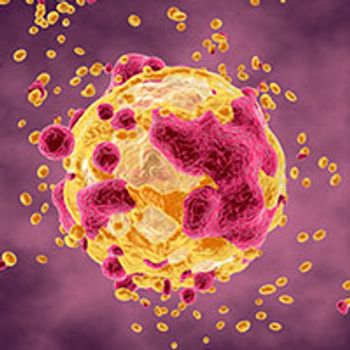
CYNK-101 demonstrated synergistic activity when used in combination with avelumab through antibody-dependent cellular cytotoxicity against PD-L1–positive non–small cell lung cancer, triple-negative breast cancer, and bladder cancer cell lines, according to preclinical data.