

AFM13, an innate cell engager, demonstrated an objective response rate of 100% in adult patients with CD30-positive, relapsed/refractory Hodgkin lymphoma.

Vice President of Content, OncLive and Cancer Network
Gina Mauro is your lead editorial contact for OncLive. She joined the company in 2015 and has held various positions on OncLive; she is also the on-air correspondent for OncLive News Network: On Location. Prior to joining MJH Life Sciences, she worked at Gannett as a full-time reporter with the Asbury Park Press. Email: gmauro@onclive.com
AFM13, an innate cell engager, demonstrated an objective response rate of 100% in adult patients with CD30-positive, relapsed/refractory Hodgkin lymphoma.
The combination of the selective MCL-1 inhibitor AMG 176 plus gilteritinib was found to synergistically target preclinical models of FLT3 internal tandem duplication–mutated acute myeloid leukemia.

Nivolumab in combination with paclitaxel showed clinical activity and a manageable safety profile when used as second-line therapy for patients with Epstein-Barr virus–related, microsatellite instability–high/mismatch repair deficient or PD-L1–positive advanced gastric cancer.

The combination of copanlisib and rituximab was associated with a 48% reduction in the risk of disease progression or death compared with rituximab plus placebo in patients with relapsed indolent non-Hodgkin lymphoma.
The CDK9 inhibitor voruciclib demonstrated early activity as a single agent in KRAS-mutant cancer cell lines, and synergistically inhibited growth of KRAS-mutant cancers when used in combination with sotorasib and adagrasib in preclinical models.

A supplement biologics license application has been submitted to the FDA for brexucabtagene autoleucel as a treatment for adult patients with relapsed/refractory B-cell precursor acute lymphoblastic leukemia.

More patients with stage III non–small cell lung cancer received sequential chemoradiation and delayed the time to durvalumab treatment in a real-world setting compared with those enrolled on the phase 3 PACIFIC trial.

The FDA has approved idecabtagene vicleucel as the first BCMA-directed CAR T-cell therapy for patients with relapsed/refractory multiple myeloma after 4 or more prior lines of therapy, including an immunomodulatory agent, a proteasome inhibitor, and an anti-CD38 monoclonal antibody.

The half-life extended, DLL3-targeting bispecific T-cell engager AMG 757 demonstrated early signals of efficacy and a favorable safety profile in patients with small cell lung cancer.

The exploration of mirvetuximab soravtansine as a potentially efficacious treatment in patients with advanced, high-grade, platinum-resistant epithelial ovarian, primary peritoneal, or fallopian tube cancers with high folate receptor–alpha expression continues with the ongoing, single-arm, phase 3 SORAYA trial.

Intravenous cetirizine showed comparable efficacy to IV diphenhydramine for the prevention of infusion reactions in patients with cancer who are undergoing treatment with an anti-CD20 antibody or paclitaxel.

José Baselga, MD, PhD, a breast cancer pioneer and executive vice president of oncology R&D at AstraZeneca, passed away on Sunday at the age of 61.

Anthracyclines and taxanes remain a backbone in the early-stage setting of triple-negative breast cancer as further evaluations of immunotherapy in the neoadjuvant and adjuvant settings needs to be conducted—efforts that will continue to shape the treatment paradigm.

The combination of pembrolizumab and lenvatinib improved progression-free and overall survival, as well as response rates, compared with chemotherapy in patients with advanced endometrial cancer who received prior platinum-based chemotherapy, irrespective of mismatch repair status, according to phase 3 findings of the Study-309/KEYNOTE-775 trial.
Most patients with extremity sarcoma are willing to participate in a randomized clinical trial exploring various postoperative cancer surveillance regimens.

The FDA has approved TheraSphere™ Yttrium-90 Glass Microspheres for the treatment of patients with hepatocellular carcinoma.

Although the majority of the patient population is made up of women, males represent 1 in 100 cases diagnosed in the United States each year.

Lisocabtagene maraleucel was successfully administered in patients with relapsed/refractory aggressive large B-cell lymphoma who were at nonuniversity medical centers in both the outpatient and inpatient settings through the use of standard operating procedures and multidisciplinary teams
The engineered cord endothelial cell product AB-205 showed an encouraging safety profile along with robust effects in eliminating oral/gastrointestinal severe regimen-related toxicities in patients with systemic lymphoma undergoing high-dose therapy and autologous hematopoietic stem cell transplantation.

Omidubicel was associated with a significantly improved median time to neutrophil engraftment compared with standard umbilical cord blood transplantation in patients with high-risk hematologic malignancies.
Ibrutinib as a frontline treatment led to sustained efficacy and impressive 4-year progression-free and overall survival rates in patients with chronic lymphocytic leukemia who have TP53 aberrations.
Teclistamab demonstrated encouraging clinical activity, along with a tolerable safety profile, in patients with relapsed/refractory multiple myeloma.

Off Our Chests: A Candid Tour Through the World of Cancer is a memoir that dives into Liza Marshall’s breast cancer journey.

Targeted agents and chemotherapy regimens are at the crux of systemic research efforts focused on improving outcomes for patients with breast cancer who have brain metastases and/or leptomeningeal disease.
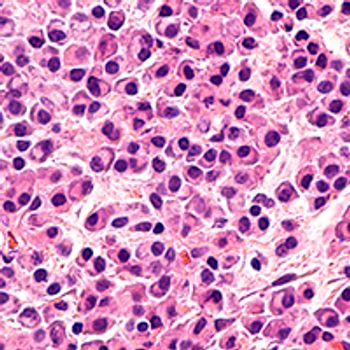
Maintenance treatment with lenalidomide was found to be a safe treatment for patients with multiple myeloma who are diagnosed with COVID-19, supporting use of the immunomodulatory drug in this patient population.

The triplet regimen of melphalan flufenamide with dexamethasone and either daratumumab or bortezomib demonstrated encouraging clinical activity and was well tolerated in patients with heavily pretreated relapsed/refractory multiple myeloma.
Ixazomib-based triplet regimens as induction therapy elicited higher rates of efficacy compared with ixazomib/dexamethasone alone, followed by single-agent ixazomib maintenance, in patients with transplant-ineligible newly diagnosed multiple myeloma.
Chemoimmunotherapy has maintained its role as a go-to frontline approach in patients with indolent non-Hodgkin lymphoma.
The progress made with novel combination regimens coupled with their game-changing data in both frontline and relapsed/refractory chronic lymphocytic leukemia is unprecedented.

February 26, 2021 - The European Medicines Agency’s Committee for Medicinal Products for Human Use granted a positive opinion to dostarlimab as a treatment for patients with recurrent or advanced microsatellite instability–high/mismatch repair deficient endometrial cancer who have progressed on or following platinum-based chemotherapy.