
OncLive® speaks with Drs. Jonathan Rosenberg and Guru Sonpavde on the groundbreaking research being presented in bladder cancer.

Vice President of Content, OncLive and Cancer Network
Gina Mauro is your lead editorial contact for OncLive. She joined the company in 2015 and has held various positions on OncLive; she is also the on-air correspondent for OncLive News Network: On Location. Prior to joining MJH Life Sciences, she worked at Gannett as a full-time reporter with the Asbury Park Press. Email: gmauro@onclive.com
OncLive® speaks with Drs. Jonathan Rosenberg and Guru Sonpavde on the groundbreaking research being presented in bladder cancer.

The frontline maintenance combination of avelumab plus best supportive care continued to show an improvement in overall survival compared with BSC alone in patients with metastatic urothelial cancer who receive first-line chemotherapy.
OncLive speaks with Drs. Tanya Dorff and Jathin Bandari on some exciting prostate cancer studies.

Olaparib in combination with abiraterone acetate led to a 34% reduction in the risk of radiographic disease progression or death compared with placebo and abiraterone as a first-line treatment for patients with metastatic castration-resistant prostate cancer, according to results of the phase 3 PROpel trial.

R. Lor Randall, MD, discusses the importance of collaborations between orthopedic surgeons and interventional radiologists, and how they are beginning to pick up steam in the United States for patients with metastatic bone cancer.

Thomas G. Martin, MD, discusses some of the exciting clinical trials open at UCSF Helen Diller Family Comprehensive Cancer Center in multiple myeloma, especially for those in the relapsed/refractory setting.

Repeat histologic evaluation and molecular testing in patients with EGFR-mutant non–small cell lung cancer who develop acquired resistance to osimertinib can deliver pertinent information that can help guide subsequent treatment decisions.

Arpita Gandhi, MD, discusses a subgroup analysis of patients with myelofibrosis who received Orca-T and how this type of therapy could be a game-changer for this patient population.

Arpita Gandhi, MD, discusses the background of Orca-T in further detail and how this type of treatment could revolutionize outcomes for patients with serious hematologic malignancies.

R. Lor Randall, MD, speaks to the findings from a report that said multiple sex-related, racial/ethnic, and socioeconomic status disparities are associated with an increased incidence of metastatic bone disease originating from cancers in the prostate, renal, colon, lung, and breast.

Fam-trastuzumab deruxtecan-nxki demonstrated a 40% reduction in the risk of death compared with standard chemotherapy in patients with HER2-positive gastric cancer or gastroesophageal junction adenocarcinoma.

The FDA has granted Fast Track Designation to CYNK-001, a non-genetically modified cryopreserved human placental hematopoietic stem cell-derived natural killer cell therapy, for the potential treatment of patients with acute myeloid leukemia.

The FDA has approved the imaging product TLX591-CDx as a radioactive diagnostic agent for PET of prostate-specific membrane antigen positive lesions in patients with prostate cancer who have suspected metastasis who are candidates for initial definitive therapy, and in those with suspected recurrence based on elevated serum prostate-specific antigen level.

Treatment with pacritinib, when administered at 200 mg twice daily, had a comparable safety profile to best available therapy in patients with cytopenic myelofibrosis, including those with severe thrombocytopenia.

Luspatercept-aamt produced more durable responses compared with placebo in patients with lower-risk myelodysplastic syndrome and anemia that is refractory to or ineligible for erythropoiesis-stimulating agent therapy.

OncLive® speaks with Dr. Srdan Verstovsek on the pivotal data in myeloproliferative neoplasms, and Dr. Naval Daver on some intriguing findings in acute myeloid leukemia.

Ciltacabtagene autoleucel elicited a 97.9% objective response rate and an 82.5% stringent complete response rate in patients with relapsed/refractory multiple myeloma at a median of approximately 2 years of follow-up.
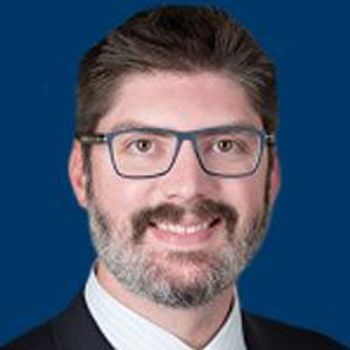
Axicabtagene ciloleucel led to a 60% improvement in event-free survival compared with standard-of-care chemotherapy as second-line treatment for patients with relapsed/refractory large B-cell lymphoma.
OncLive® speaks with Dr. Nina Shah on some practice-changing multiple myeloma abstracts, and Dr. Jacqueline Barrientos on the latest in chronic lymphocytic leukemia.
OncLive speaks with Dr. Loretta Nastoupil on some exciting non-Hodgkin lymphoma studies and Dr. Michael Pulsipher on some intriguing pediatric cancer research.

Mortality rates in patients with acute myeloid leukemia, acute lymphoblastic leukemia, and myelodysplastic syndrome who were diagnosed with COVID-19 were higher compared with non-cancer populations who were infected with the virus.

Orca-T significantly improved graft-vs-host disease–free relapse-free survival and time to engraftment, significantly reduced acute and chronic GVHD, and showed a trend toward improved overall survival vs standard of care in patients with serious hematologic malignancies

Not only is the 2021 ASH Annual Meeting bursting with more than 5000 abstracts unveiling pivotal data across a range of hematologic malignancies and disorders, but the conference will be held as a hybrid format after going fully virtual in 2020.

The combination of entinostat and exemestane led to a significant improvement in progression-free survival compared with placebo and exemestane in Chinese patients with advanced hormone receptor–positive breast cancer.

The selective estrogen receptor degrader elacestrant (RAD1901) led to a 30% reduction in the risk of disease progression or death compared with standard of care in patients with estrogen receptor–positive, HER2-negative metastatic breast cancer who previously received CDK4/6 inhibition.
The FDA has extended the review period for the new drug application for pacritinib as a treatment for adult patients with intermediate- or high-risk primary or secondary (post-polycythemia vera or post-essential thrombocythemia) myelofibrosis and severe thrombocytopenia with a baseline platelet count of 50 x 109/L.

The FDA has scheduled a meeting of the Oncologic Drugs Advisory Committee (ODAC) to review the pending biologics license application/supplemental new drug application for the combination of ublituximab and umbralisib (Ukoniq; U2) for the treatment of adult patients with chronic lymphocytic leukemia (CLL)/small lymphocytic lymphoma.

The FDA has approved pafolacianine sodium injection (Cytalux) for adult patients with ovarian cancer as an adjunct for intraoperative identification of malignant lesions.

The European Commission has approved the combination of pembrolizumab and lenvatinib for the treatment of patients with advanced renal cell carcinoma.

The European Commission has granted an approval to the combination of pembrolizumab and lenvatinib for the treatment of patients with advanced or recurrent endometrial carcinoma who have disease progression on or following prior platinum-containing therapy in any setting and who are not eligible for curative surgery or radiation.