

Nearly half of oncologists use AI tools for document and communication/editing purposes in their practice, and most foresee an increase in AI integration.

Vice President of Content, OncLive and Cancer Network
Gina Mauro is your lead editorial contact for OncLive. She joined the company in 2015 and has held various positions on OncLive; she is also the on-air correspondent for OncLive News Network: On Location. Prior to joining MJH Life Sciences, she worked at Gannett as a full-time reporter with the Asbury Park Press. Email: gmauro@onclive.com
Nearly half of oncologists use AI tools for document and communication/editing purposes in their practice, and most foresee an increase in AI integration.
The neoadjuvant/adjuvant pembrolizumab and chemotherapy combination was approved by the FDA in October 2023 for use in this patient population.

Rates of invasive cancer were noninferior when patients with low-risk ductal carcinoma in situ received active monitoring vs guideline concordant care.
Cilta-cel without induction therapy in high-risk smoldering myeloma marked the first study of CAR T-cell therapy in a precursor cancer setting.

Elacestrant was partnered with multiple targeted agents across varying dose levels and schedules for patients with estrogen receptor–positive advanced breast cancer.
Results of the EA4151/BMT-CTN 1601 trial showed similar progression-free and overall outcomes with the addition of autologous transplant to rituximab in mantle cell lymphoma.
The GPRC5D-targeting CAR T-cell therapy arlocabtagene autoleucel also yielded a 53% complete response rate in relapsed/refractory multiple myeloma.
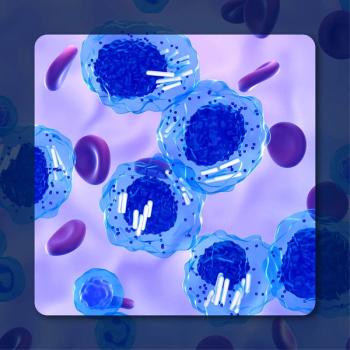
Single-agent, subcutaneous epcoritamab generated deep responses in patients with relapsed/refractory chronic lymphocytic leukemia.
FS118, an investigational LAG-3/PD-L1 bispecific antibody, demonstrated an encouraging objective response rate in the relapsed/refractory DLBCL setting.

IGV-001, an autologous cell immunotherapy, demonstrated an acceptable safety profile in patients with newly diagnosed glioblastoma.

The biomarker analysis of patients enrolled on part B of the CheckMate 914 trial explored the effects of PD-L1 and KIM-1 expression.

The Nectin-4/CD137 Bicycle–targeted immune cell agonist BT7480 had antitumor activity in patients with Nectin-4– and CD137-expressing tumors.

The data are part of the largest reported cohorts of consecutive and uniformly treated real-world patients with newly diagnosed multiple myeloma.
AMG 193, an MTA-cooperative PRMT5 inhibitor, demonstrated responses and an acceptable safety profile across patients with MTAP-deleted solid tumors.
The CheckMate 067 trial of patients with advanced melanoma is the longest follow-up of a checkpoint inhibitor in any tumor type.

Adjuvant pembrolizumab and chemotherapy with or without radiation showed mixed findings in patients with high-risk endometrial cancer.
Neoadjuvant durvalumab plus chemotherapy and adjuvant durvalumab improves event-free survival in stage IIA-IIIB resectable non–small cell lung cancer vs. placebo.

Golcadomide given at 0.4 mg plus R-CHOP elicited a high rate of metabolic responses in patients with previously untreated aggressive B-cell lymphoma.
Most patients included in the post-hoc pooled analysis who were treated with belzutifan experienced an all-cause adverse effect.

Botensilimab and balstilimab demonstrated pathological responses across subsets of patients with resectable colon cancer.
Liso-cel continued to show improved disease control and EFS and PFS vs SOC in the second-line treatment of patients with large B-cell lymphoma.

Frontline treatment with acalabrutinib and bendamustine/rituximab (BR) improved PFS over BR alone in older patients with mantle cell lymphoma.

Arsenic trioxide plus all-trans retinoic acid & idarubicin improved EFS vs standard ATRA and anthracycline-based chemotherapy in high-risk APL.

Englumafusp alfa plus glofitamab showed activity and tolerability in patients with relapsed/refractory aggressive B-cell non-Hodgkin lymphoma.
Neoadjuvant nivolumab/chemotherapy, followed by surgery and adjuvant nivolumab, significantly improved EFS in stage III N2 and stage III non-N2 NSCLC.

Zanidatamab continued to show confirmed responses, disease control, and prolonged overall survival in pretreated HER2+ biliary tract cancer.

The COMBI-AD dataset is the longest follow-up to date of adjuvant treatment for patients with stage III melanoma.

Adagrasib plus cetuximab elicited a 34% objective response rate in patients with previously treated KRAS G12C-mutant advanced colorectal cancer.

Fifty-seven percent of drugs granted accelerated approval for a cancer indication failed to show clinical benefit in confirmatory studies.
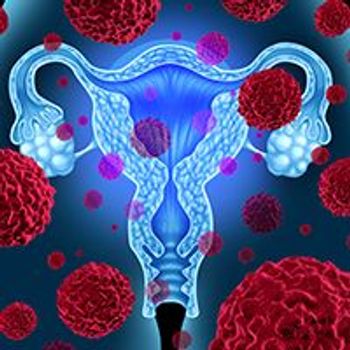
Durvalumab plus carboplatin and paclitaxel, followed by maintenance durvalumab with or without olaparib, showed improved efficacy vs chemotherapy alone in endometrial cancer.