
The use of transvaginal ultrasonography to measure the need for diagnostic testing of endometrial cancer missed almost 5 times more endometrial cancer cases in Black women compared with those in White women.

Your AI-Trained Oncology Knowledge Connection!


Vice President of Content, OncLive and Cancer Network
Gina Mauro is your lead editorial contact for OncLive. She joined the company in 2015 and has held various positions on OncLive; she is also the on-air correspondent for OncLive News Network: On Location. Prior to joining MJH Life Sciences, she worked at Gannett as a full-time reporter with the Asbury Park Press. Email: gmauro@onclive.com

The use of transvaginal ultrasonography to measure the need for diagnostic testing of endometrial cancer missed almost 5 times more endometrial cancer cases in Black women compared with those in White women.

Average cumulative relative dose was found to be associated with survival over average relative dose intensity in patients with colorectal cancer, highlighting that obese patients receive lower cumulative doses of adjuvant chemotherapy and therefore may be attributed to their poorer survival outcomes.

Five-year survival rates in renal cell carcinoma are drastically improving due to recent regulatory approvals of combination therapies involving checkpoint blockade and VEGF TKIs.

Bispecific antibodies have become an interesting new class of agents in the lung cancer pipeline, most recently with the developments of amivantamab-vmjw, zenocutuzumab, and tarlatamab.

Eighty-five percent of patients with nonmetastatic castration-resistant prostate cancer who crossed over from placebo to darolutamide in the phase 3 ARAMIS trial experienced a maximum prostate-specific antigen decline of at least 50% at any time of crossover.

Sequential combination treatment with mytomicin chemotherapy and Bacillus Calmette-Guérin (BCG) showed comparable safety compared with BCG alone in patients with high-risk non-muscle–invasive bladder cancer.

Longitudinal circulating tumor DNA positivity detected at 4, 12, and 24 weeks after surgery in patients with stage I to IV colorectal cancer was significantly associated with inferior disease-free survival.

The FDA has approved asparaginase erwinia chrysanthemi (recombinant)-rywn (Rylaze) as part of a chemotherapy regimen to treat pediatric and adult patients with acute lymphoblastic leukemia and lymphoblastic lymphoma who are allergic to the E. coli-derived asparaginase products.

A phase 1 study evaluating the off-the-shelf cell therapy CYNK-001 has expanded to include patients with relapsed/refractory acute myeloid leukemia after a case of conversion to minimal residual disease negativity at its highest dose level.

The European Commission has granted approval to cemiplimab for the treatment of patients with locally advanced or metastatic non–small cell lung cancer whose tumor cells have at least 50% PD-L1 expression and no EGFR, ALK, or ROS1 aberrations and are ineligible for definitive chemoradiation.

R. Lor Randall, MD, discusses the data from the population-based registry and provided more insight on prognostic factors and survival outcomes for patients with spinal sarcomas.

Iodoine apamistamab, a radiotherapy that targets CD45-expressing cells, demonstrated a 100% bone marrow transplant and engraftment rate in patients with relapsed/refractory acute myeloid leukemia vs 18% for those who received a physician’s choice of salvage treatment.

Luspatercept-aamt achieved a 77.1% mean hemoglobin increase of 1.0 g/dL or higher from baseline over a continuous 12-week interval during weeks 13 to 24 in the absence of red blood cell transfusions vs 0% with placebo in patients with non-transfusion–dependent β-thalassemia.

Treatment with the allogeneic CAR T-cell product ALLO-501A elicited encouraging signals of clinical activity when used with ALLO-647 lymphodepletion in patients with relapsed/refractory large B-cell lymphoma who did not previously receive autologous CAR T-cell therapy.

OncLive sits down with Sandy Wong, MD; Neal Shore, MD; and Loretta Nastoupil, MD, to share the the insight on data in multiple myeloma, prostate cancer, and non-Hodgkin lymphoma at the 2021 ASCO Annual Meeting.

The heat shock protein 90 inhibitor pimitespib led to a significant improvement in progression-free survival and prolongation in overall survival compared with placebo in patients with advanced gastrointestinal stromal tumor that is refractory to imatinib, sunitinib, and regorafenib.

The combination of pertuzumab and trastuzumab elicited a 37% disease control in patients with ERBB2/ERBB3-expressed, mutated, or -amplified uterine cancer.

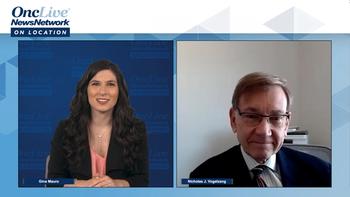
OncLive sits down with Nicholas J. Vogelzang, MD, and Erin K. Crane, MD, MPH to discuss the biggest abstracts in genitourinary cancers and gynecologic cancers, respectively, at the 2021 ASCO Annual Meeting.

OncLive sits down with Erika P. Hamilton, MD, and Milind Javle, MD, on the pivotal studies in breast cancer and gastrointestinal cancers, respectively, at the 2021 ASCO Annual Meeting.

Nivolumab monotherapy, or in combination with ipilimumab, continued to demonstrate durable improvements in overall survival compared with ipilimumab alone in patients with previously untreated advanced melanoma.

OncLive sits down with Edward S. Kim, MD, and Anthony R. Mato, MD, on the pivotal studies in lung cancer and leukemia at the 2021 ASCO Annual Meeting.

Selumetinib did not elicit clinical activity in pediatric and young adult patients with refractory cancers who had actionable mutations in the RAS/RAF/MAPK1/2-ERK pathway.

Sotorasib provided continued durable clinical benefit in patients with pretreated KRAS p.G12C–mutated non–small cell lung cancer.

Avelumab as frontline maintenance plus best supportive care demonstrated a survival benefit compared with BSC alone across several previously unreported subgroups of patients with advanced urothelial cancer who have progressed on first-line platinum-containing chemotherapy.

Pembrolizumab was associated with a 32% reduction in the risk of disease recurrence or death compared with placebo as an adjuvant treatment for patients with clear cell renal cell carcinoma.

Due to its rarity, there will likely never be a television advertisement for Merkel cell carcinoma. Yet, several opportunities to help raise awareness and conduct an array of clinical trials are building, due to the disease’s response to checkpoint blockade.

The FDA has approved infigratinib for the treatment of patients with previously treated locally advanced or metastatic cholangiocarcinoma harboring an FGFR2 fusion or rearrangement.

Experts in breast cancer, gynecologic malignancies, lung cancer, multiple myeloma, gastrointestinal cancers, and genitourinary cancers shared their perspectives on the biggest abstracts being presented at the 2021 ASCO Annual Meeting.

The European Commission has approved osimertinib for the adjuvant treatment of adult patients with early-stage EGFR-mutated non–small cell lung cancer following complete resection with curative intent.

The investigational PD-L1 inhibitor sugemalimab prolonged progression-free survival in patients with locally advanced, unresectable stage III non–small cell lung cancer without disease progression after concurrent or sequential chemoradiation.