
Experts unpack second-line HER2+ breast cancer choices, why T-DXd leads, and when T-DM1 or tucatinib matters—especially with brain mets.

Jason Mouabbi, MD, is an assistant professor in the Department of Breast Medical Oncology in the Division of Cancer Medicine at The University of Texas MD Anderson Cancer Center in Houston.
Experts unpack second-line HER2+ breast cancer choices, why T-DXd leads, and when T-DM1 or tucatinib matters—especially with brain mets.
Experts discuss the sequencing of antibody-drug conjugates in breast cancer treatment, exploring optimal strategies and emerging clinical data.
Explore the promising role of trastuzumab deruxtecan in treating HER2-low triple-negative breast cancer, highlighting key trial findings and expert insights.
In this segment, Dr. Jason Mouabbi and Dr. Bardia explore the growing importance of ESR1 mutations in the management of ER-positive, HER2-negative metastatic breast cancer, particularly after progression on CDK4/6 inhibitor–based therapy.
Dr. Aditya Bardia provides an overview of the current standard of care in the first-line setting, emphasizing the established role of endocrine therapy combined with CDK4/6 inhibitors.
It seems there is no text provided for summarization. Please share the content you'd like summarized, and I'll be happy to help!
Dr. Tarantino discusses the promising results of the Trodelvy breast cancer study, highlighting its impact on treatment for high-risk patients.
Dr. Yuan discusses the ASCENT-03 trial's efficacy, crossover implications, and safety data for sacituzumab govitecan in cancer treatment.
It seems there is no text provided for summarization. Please provide the text you'd like summarized, and I'll be happy to help!
It seems there is no text provided for summarization. Please provide the text you'd like summarized, and I'll be happy to help!
Explore the latest advancements in clinical trials for early-stage triple-negative breast cancer, focusing on promising antibody-drug conjugates (ADCs).
Discover the promising advancements in TROP2-targeted antibody-drug conjugates for treating triple-negative and hormone-positive breast cancer.
Explore the evolving treatment landscape for early-stage triple-negative breast cancer, highlighting innovative therapies and clinical trial insights.
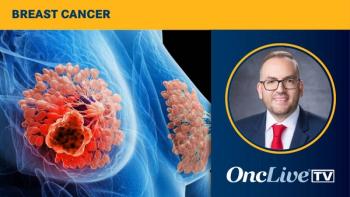
Jason Aboudi Mouabbi, MD, discussed the importance of using ctDNA testing to inform treatment decision-making across breast cancer populations.
Explore the evolving treatment landscape for early-stage triple-negative breast cancer, highlighting innovative therapies and clinical trial insights.
Explore the latest advancements in antibody-drug conjugates for treating triple-negative breast cancer, addressing critical challenges and innovations.
Jason A. Mouabbi, MD, discusses the role of FES-PET/CT imaging in the diagnosis of lobular breast cancer.
Dr Mouabbi highlights the ways that ctDNA has evolved from a research tool to a potential clinical decision-making aid in breast cancer.
Experts discuss the transformative impact of antibody-drug conjugates (ADCs) in cancer treatment, emphasizing their growing role and the need for oncologists to adapt.
Experts discuss the need for better biomarker testing in ADC trials to ensure more patients benefit from targeted therapies.
Experts discuss the potential of maintenance strategies for antibody-drug conjugates in breast cancer, aiming to enhance patient outcomes and manage toxicity.
Explore the innovative world of antibody-drug conjugates, revolutionizing cancer treatment with targeted therapies and reduced side effects.
Explore the evolving landscape of antibody-drug conjugates (ADCs) for breast cancer treatment and the strategic sequencing of therapies.
Explore the latest findings on Phase 3 trials for metastatic triple-negative breast cancer, highlighting treatment efficacy and toxicity profiles.
A new drug shows promise in treating triple-negative breast cancer, significantly improving survival rates and offering hope for better treatment options.
Discover how novel antibody-drug conjugates effectively target brain metastases, offering hope for reducing CNS recurrences in cancer patients.
Jason Aboudi Mouabbi, MD, discusses neoadjuvant multi-agent chemotherapy in HER2+ breast cancer.
Jason A. Mouabbi, MD, discusses unmet needs and areas requiring further investigation in HER2-positive advanced breast cancer.
Panelists note that detecting low-level circulating tumor DNA (ctDNA) despite normal imaging presents a clinical challenge, requiring personalized management that balances early intervention with patient-centered communication, as this molecular signal offers a valuable window to detect and treat microscopic disease before overt recurrence.
Panelists highlight that advances in circulating tumor DNA (ctDNA) testing now enable detection of cancer at ultralow levels far earlier than traditional methods, offering new opportunities for timely intervention while emphasizing that negative results, though increasingly reliable, still require cautious interpretation to guide personalized treatment decisions.