




Biosimilars
Latest News
Advertisement
Video Series
Latest Videos
CME Content































Advertisement
More News
The market for biosimilar introduction is “extremely unstable,” but the FDA is working to ease the launch of more affordable cancer medicines with a strategy that includes an attempt to reduce anticompetitive behavior.
Michael A. Savin, MD, assistant professor of medicine, School of Medicine, Oregon Health and Science University, discusses the evolution of biosimilars.
Haythem Y. Ali, MD, discusses the state of biosimilar development and implementation in the field of oncology.
The pathologic complete response rate associated with the trastuzumab biosimilar ABP 980 was equivalent to that of reference trastuzumab based on central laboratory evaluation in patients with HER2-positive early breast cancer enrolled in the phase III LILAC study.
MYL-1401O (Ogivri; trastuzumab-dkst) added to a taxane as initial therapy followed by MYL-1401O monotherapy as maintenance resulted in a nearly identical rate of progression-free survival compared with trastuzumab (Herceptin) in patients with HER2-positive metastatic breast cancer.
The bevacizumab biosimilar PF-06439535 demonstrated similarity to the European Union bevacizumab reference product for overall response rate, with similar pharmacokinetic and immunogenicity profiles for patients with advanced non-squamous non-small cell lung cancer.
Elisavet Paplomata, MD, discusses ABP 980 and the impact that biosimilars may have on global access to cancer care.

The FDA has approved epoetin alfa-epbx (Retacrit) as a biosimilar to epoetin alfa (Epogen/Procrit) for the treatment of anemia caused by chronic kidney disease, chemotherapy, or use of zidovudine in patients with HIV infection.
The FDA has issued a complete response letter to Sandoz (Novartis) regarding a biologics license application for the rituximab biosimilar GP2013.
Dennis J. Slamon, MD, PhD, director, Clinical/Translational Research, Revlon/University of California, Los Angeles (UCLA) Women's Cancer Research Program, Jonsson Comprehensive Cancer Center, UCLA, discusses the future of biosimilars in oncology.
Sara Hurvitz, MD, director of the Breast Oncology Program, medical director of the Clinical Research Unit, University of California, Los Angeles Jonsson Comprehensive Cancer Center, discusses when to use a biosimilar over the originator drug.

Rena D. Callahan, MD, assistant clinical professor of medicine, University of California, Los Angeles Jonsson Comprehensive Cancer Center, discusses the potential benefit of using biosimilars in the treatment of patients with breast cancer.
Sara A. Hurvitz, MD, director of the Breast Oncology Program at the University of California, Los Angeles, Jonsson Comprehensive Cancer Center, discusses the clinical use of biosimilars in oncology.
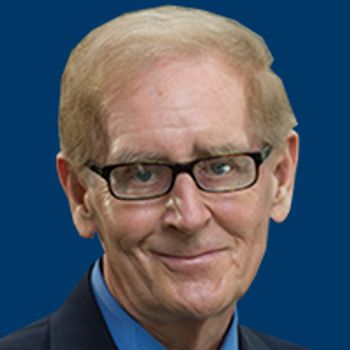
Gary H. Lyman, MD, FASCO, discusses ASCO's statement outlining the organization’s commitment to education and guidance regarding the use of biosimilars in the treatment of patients with cancer.
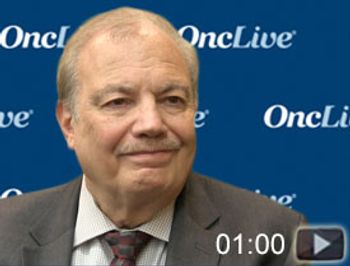
Dennis J. Slamon, MD, PhD, director, Clinical/Translational Research, Revlon/University of California, Los Angeles (UCLA) Women's Cancer Research Program, Jonsson Comprehensive Cancer Center, UCLA, discusses the use of biosimilars in clinical practice.

Sara A. Hurvitz, MD, discusses the development of biosimilars and their potential use in the breast cancer field.
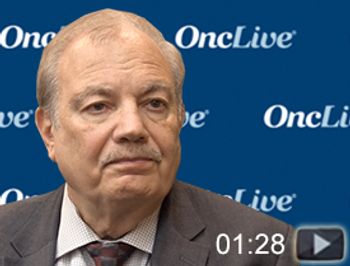
Dennis J. Slamon, MD, PhD, director, Clinical/Translational Research, Revlon/University of California, Los Angeles (UCLA) Women's Cancer Research Program, Jonsson Comprehensive Cancer Center, UCLA, discusses the approval process for biosimilars.
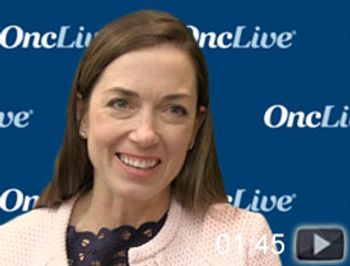
Sara Hurvitz, MD, director of the Breast Oncology Program, medical director of the Clinical Research Unit, University of California, Los Angeles Jonsson Comprehensive Cancer Center, discusses biosimilars in breast cancer.
Citing the need for additional technical information, the FDA has issued a complete response letter to Pfizer regarding a biologics license application for the trastuzumab (Herceptin) biosimilar PF-05280014.
Adam M. Brufsky, MD, PhD, professor of medicine, associate chief, Division of Hematology/Oncology, co-director, Comprehensive Breast Cancer Center, associate director, Clinical Investigation, University of Pittsburgh, discusses the development and approval of biosimilars in oncology.
Sunil Verma, MD, professor and head of the Department of Oncology at the University of Calgary, medical director of the Tom Baker Cancer Centre, discusses the possibility of combining biosimilars.
Adam M. Brufsky, MD, PhD, professor of medicine, associate chief, Division of Hematology/Oncology, co-director, Comprehensive Breast Cancer Center, associate director, Clinical Investigation, University of Pittsburgh, discusses biosimilars currently being explored in cancer.
EP2006, a filgrastim biosimilar, produced safety results equivalent to those observed with referent filgrastim in a combined analysis of 2 phase III breast cancer studies from the United States and Europe.
Sunil Verma, MD, professor and head of the Department of Oncology at the University of Calgary, medical director of the Tom Baker Cancer Centre, discusses biosimilars in the oncology sphere.

The European Medicines Agency’s Committee for Medicinal Products for Human Use has adopted a positive opinion for the marketing authorization of ABP 980, a biosimilar to trastuzumab.
Advertisement
Advertisement
Trending on OncLive
1
Long-Term Cilta-Cel Data Show Low Rates of PFS Events in Standard-Risk R/R Myeloma
2
FDA Updates Axi-Cel Label to Remove Limitation of Use in R/R PCNSL
3
Real-World Data Support Clinical Benefit With Lifileucel in Previously Treated Advanced Melanoma
4
Nonresponse to Bridging Therapy and Peak ALC After Cilta-Cel Are Associated With Neurotoxicity, NRM in Myeloma
5