


Breast Cancer
Latest News
Advertisement
Latest Videos



































































Advertisement
More News

The addition of pertuzumab (Perjeta) to standard postoperative trastuzumab (Herceptin) therapy for patients with HER2-positive early breast cancer slightly improved the rate of recurrence overall but had a greater benefit for individuals with higher-risk disease, particularly as more time elapsed, according to early results from the phase III APHINITY trial.
Pembrolizumab (Keytruda) showed durable antitumor activity in patients with heavily pretreated metastatic triple-negative breast cancer (TNBC), according to findings from cohort A of the phase II KEYNOTE-086 trial presented at the 2017 ASCO Annual Meeting.
Sara M. Tolaney, MD, MPH, instructor of medicine, Harvard Medical School, attending physician of medical oncology, Dana-Farber Cancer Institute, discusses the results of a phase II trial exploring the efficacy of abemaciclib as a treatment of brain metastases that are secondary in patients with hormone receptor (HR)-positive,HER2-negative breast cancer.

The PARP inhibitor olaparib (Lynparza) reduce the risk of disease progression by 42% versus standard chemotherapy in patients with BRCA-positive, HER2-negative breast cancer, according to findings from the phase III OLYMPIAD trial.

Adding the CDK4/6 inhibitor abemaciclib to fulvestrant reduced the risk of disease progression or death by 45% versus fulvestrant alone in pretreated patients with HR+/HER2-negative breast cancer, according to findings presented at the 2017 ASCO Annual Meeting.

Women who have had early breast cancer, along with their doctors, often worry that pregnancy could cause disease recurrence. But according to the results of a new study, that’s not the case.

Psychological intervention can substantially lower fear of cancer recurrence in survivors, improving their quality of life, anxiety, and cancer-specific distress, according to a phase II randomized clinical trial presented at the 2017 ASCO Annual Meeting.
Hope S. Rugo, MD, clinical professor, Department of Medicine, director, Breast Oncology Clinical Trials Program, of UCSF Helen Diller Family Comprehensive Cancer Center, discusses the significance of the MONARCH I study in hormone receptor-positive, HER2-negative breast cancer.

Frontline treatment with ribociclib plus letrozole improved progression-free survival by 9.3 months compared with letrozole plus placebo for patients with postmenopausal HR-positive, HER2-negative advanced breast cancer.
Sara Hurvitz, MD, Associate Professor of Medicine at UCLA, discusses treatment options for patients with HER2-positive breast cancer.
Martine J. Piccart, MD, PhD, professor, Université Libre de Bruxelles, director, Medicine Department, Institut Jules Bordet, discusses personalized care for patients with breast cancer.

Daniel F. Hayes, MD, professor of University of Michigan Comprehensive Cancer Center, discusses anti-estrogen therapy beyond 5 years in breast cancer.
Giuseppe Curigliano, MD, PhD, head of the Division of Early Drug Development at European Institute of Oncology, in Milan, Italy, discusses immunotherapy trials in triple-negative breast cancer.
Fatima Cardoso, MD, coordinator, European School of Oncology Breast Cancer Program, Secretary General, European Organization for Research and Treatment of Cancer, director, Breast Unit, Champalimaud Clinical Cancer Center, discusses the Global mBC Vision 2025 Call-to-Action.

Key opinion leaders spoke with OncLive to share the top-5 abstracts they find to be the most exciting and/or potentially practice-changing across breast cancer, lung cancer, genitourinary cancers, gastrointestinal cancers, hematologic malignancies, and supportive care being presented at the 2017 ASCO Annual Meeting.

Updated guidelines for the management of invasive breast cancer, issued by the National Comprehensive Cancer Network, define indications for radiation therapy, the use of biomarkers and multigene assays in clinical decision making, and new concepts in endocrine therapy in early-stage and advanced-stage estrogen receptor-positive breast cancer.
Matthew J. Ellis, MD, PhD, professor of Oncology and Medicine at Baylor College of Medicine, discusses neoadjuvant endocrine therapy for patients with breast cancer.
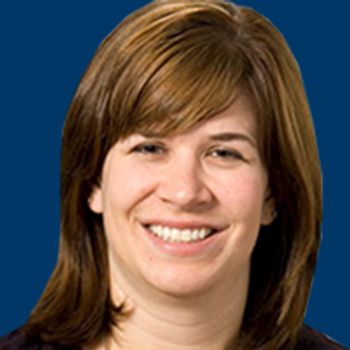
Kari B. Wisinski, MD, discusses the evolving but challenging field of TNBC and what therapies are moving through the pipeline in TNBC and other breast cancer subtypes.

The FDA’s Oncologic Drugs Advisory Committee voted 12-4 recommending approval of neratinib (Nerlynx) for the extended adjuvant treatment of patients with early stage, HER2-positive breast cancer following postoperative trastuzumab.

Mark Burkard, MD, PhD, discusses the steps researchers are taking to address questions on genomics in breast cancer and what subtypes pose the greatest challenges.
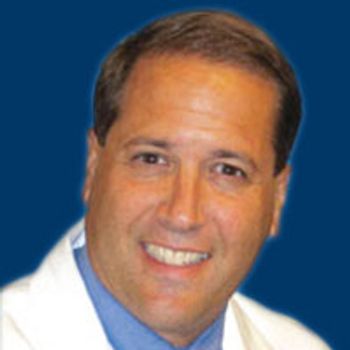
Adam M. Brufsky, MD, PhD, discusses neratinib, overcoming resistance to HER2-targeted therapy, and the impact of newer agents in HER2-positive breast cancer.

In phase I results from China published in the Journal of Clinical Oncology, oral pyrotinib (HTI-1001) was well-tolerated and showed antitumor activity in women with HER2-positive breast cancer.
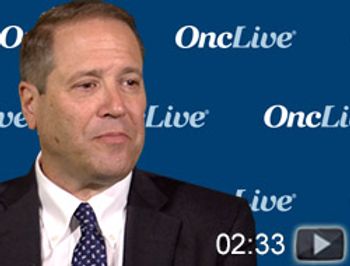
Adam M. Brufsky, MD, PhD, professor of Medicine, associate chief of Hematology/Oncology, co-director of the Comprehensive Breast Care Center, associate director of Clinical Investigation, University of Pittsburgh, discusses resistance to HER2-targeted therapy in breast cancer.
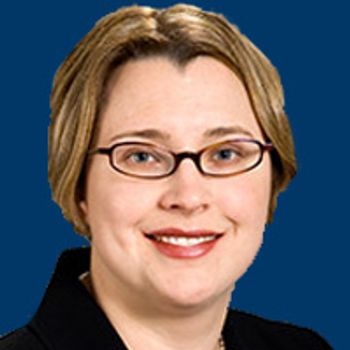
Amye J. Tevaarwerk, MD, discusses how physicians decide on extending endocrine therapy beyond 5 years for patients with ER-positive breast cancer, the tools she hopes will soon become available to help clarify this decision, and the clinical research in this population she is eagerly awaiting.
Advertisement
Advertisement
Trending on OncLive
1
FDA Approves Tucatinib Plus Trastuzumab/Pertuzumab as First-Line Maintenance in Advanced HER2+ Breast Cancer
2
FDA Grants Breakthrough Device Designation to Natera’s Multi-Cancer Early Detection Assay
3
VIR-5500 Receives FDA Fast Track Designation in mCRPC
4
Iberdomide Plus Daratumumab/Dexamethasone Yields Significant PFS Benefit in R/R Myeloma
5