



Breast Cancer
Latest News
Advertisement
Latest Videos







































































Advertisement
More News
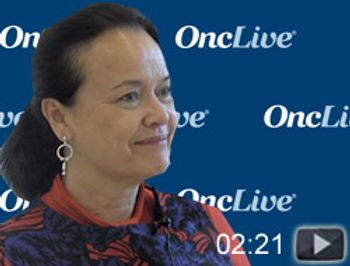
Martine J. Piccart, MD, PhD, professor, Université Libre de Bruxelles, director, Medicine Department, Institut Jules Bordet, discusses biomarkers in early breast cancer.
Ruth O’Regan, MD, division head of Hematology and Oncology in the Department of Medicine at the University of Wisconsin School of Medicine and Public Health, discusses the potential of future treatments for patients with HER2-positive breast cancer.
Harold J. Burstein, MD, PhD, senior physician, associate professor of Medicine, Harvard Medical School, Dana-Farber Cancer Institute, discusses adjuvant endocrine therapy for postmenopausal women with ER-positive breast cancer.

The FDA has approved co-packaging of the oral medications ribociclib (Kisqali) and letrozole (Femara) for the treatment of postmenopausal women with HR-positive, HER2-negative advanced breast cancer.

Wolfgang Janni, MD, PhD, discusses toxicity management with neratinib and other agents for HER2-positive breast cancer, as well as emerging treatments and impactful trials in the field.
Lisa A. Carey, MD, professor, UNC Lineberger Comprehensive Cancer Center, discusses de-escalating treatments for patients with triple-negative breast cancer (TNBC).

The University of Virginia Cancer Center has developed a new method for delivering radiation therapy along with less invasive surgery in a more precise and personalized manner.

Debu Tripathy, MD, discusses current and emerging treatment strategies in the neoadjuvant setting for patients with HER2-postive breast cancer.

Targeted therapies have improved outcomes for HER2-positive breast cancer, which is characterized by an aggressive tumor phenotype and lower overall survival. However, questions remain on how to predict which patients will benefit from neoadjuvant or extended HER2-targeted therapies and how to treat patients with triple-positive breast cancer.
Wolfgang Janni, MD, PhD, University of Ulm, discusses the future of treatments for patients with HER2-positive breast cancer.

Kent Osborne, MD, director, Dan L. Duncan Comprehensive Cancer Center, Baylor College of Medicine, discusses pertuzumab (Perjeta) in HER2-positive breast cancer.

Adding abemaciclib to letrozole or anastrozole improved progression-free survival compared with either aromatase inhibitor alone in women with HR+/HER2-negative breast cancer enrolled in the phase III MONARCH 3 study, according to Eli Lilly and Company, the manufacturer of the CDK4/6 inhibitor.

Veliparib failed to meet the primary endpoint in phase III non-small cell lung cancer and triple-negative breast cancer trials.

C. Kent Osborne, MD, sheds light on the current and future treatment of HER2-positive breast cancer.
The 34th Annual Miami Breast Cancer Conference® featured a recap of significant research from the 2016 ASCO Annual Meeting and the 2016 San Antonio Breast Cancer Symposium.
Advertisement
Advertisement
Trending on OncLive
1
FDA Approves Tucatinib Plus Trastuzumab/Pertuzumab as First-Line Maintenance in Advanced HER2+ Breast Cancer
2
FDA Grants Breakthrough Device Designation to Natera’s Multi-Cancer Early Detection Assay
3
VIR-5500 Receives FDA Fast Track Designation in mCRPC
4
FDA Approves Atezolizumab Plus Chemo for Stage III dMMR Colon Cancer
5