


Breast Cancer
Latest News
Advertisement
Latest Videos
































































Advertisement
More News

Even with advancements in technology, the prospect of artificial intelligence treating patients with cancer still remains out of reach. At least, for now.

Extra vigilance, careful management, and an emphasis on empathy makes treating cancer pain more effective during an opioid addiction epidemic.
William F. Symmans, MD, professor of Pathology, The University of Texas MD Anderson Cancer Center, discusses the staging system for patients with breast cancer.

Judith Paice, PhD, RN, director of the Cancer Pain Program, Division of Hematology-Oncology, and research professor of Medicine, Northwestern University, discusses the pain management for patients with breast cancer.

The addition of abemaciclib to anastrozole or letrozole reduced the risk of progression or death by 46% compared with the non-steroidal aromatase inhibitors alone for previously untreated patients with HER2-negative, HR-positive advanced breast cancer.

Turning a nonimmunogenic (“cold”) tumor into an immunogenic (“hot”) tumor appears feasible in patients with metastatic triple negative breast cancer, thereby improving sensitivity to immune therapy with nivolumab.
Francisco J. Esteva, MD, PhD, medical oncologist, NYU Langone Medical Center, discusses next-generation sequencing in metastatic breast cancer.
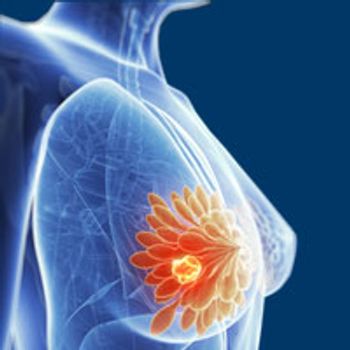
Taselisib added to standard letrozole (Femara) improved the objective response rate compared to letrozole with a placebo in postmenopausal women with estrogen receptor-positive and HER2-negative early breast cancer.
Sara M. Tolaney, MD, MPH, instructor of medicine, Harvard Medical School, attending physician of medical oncology, Dana-Farber Cancer Institute, discusses pertuzumab (Perjeta) in patients with HER2-positive breast cancer.

Sara M. Tolaney, MD, MPH, instructor of medicine, Harvard Medical School, attending physician of medical oncology, Dana-Farber Cancer Institute, discusses the current treatment landscape for patients with HER2-positive breast cancer.

Z-endoxifen, a potent derivative of the drug tamoxifen, induced tumor shrinkage in women with ER-positive metastatic breast cancer who had progressed on standard anti-estrogen therapies.
Although drugs that target HER2 have transformed the prognosis for many patients with breast cancer, the development of resistant disease remains a significant clinical challenge.

Sylvia Adams, MD, discusses ongoing clinical developments with immunotherapy in breast cancer.
Mark D. Pegram, MD, director of the Breast Cancer Oncology Program at Stanford Medicine, discusses challenges facing the treatment of patients with HER2-positive breast cancer.
Frankie Ann Holmes, MD, a physician at Texas Oncology, discusses neoadjuvant endocrine therapy for patients with breast cancer.

Eleftherios (Terry) P. Mamounas, MD, discusses whether 10 years was superior to the widely practiced 5 years of adjuvant hormone therapy for patients with breast cancer.
Eleftherios (Terry) P. Mamounas, MD, medical director of the Comprehensive Breast Program at the University of Florida Health Cancer Center, discusses adjuvant endocrine therapy for patients with breast cancer.
Francisco J. Esteva, MD, PhD, medical oncologist, NYU Langone Medical Center, discusses the clinical implications of genomic testing in breast cancer.

Supported by research, there have been recent developments in using scalp cooling to combat chemotherapy-induced alopecia for patients with breast cancer.
Sara M. Tolaney, MD, MPH, instructor of medicine, Harvard Medical School, attending physician of medical oncology, Dana-Farber Cancer Institute, discusses neoadjuvant HER2-directed therapy for patients with breast cancer.

Katherine Nathanson, MD, discusses how the genetics of BRCA1/2-associated tumors impacts tumor development in breast and ovarian cancer and response to treatment.
The FDA has extended its decision deadline by 3 months on a biologics license application for MYL-1401O, a trastuzumab biosimilar co-developed by Mylan and Biocon. A final decision is expected on or before December 3, 2017.

The investigational HER2-targeting antibody-drug conjugate DS-8201 has received an FDA breakthrough therapy designation for the treatment of patients with HER2-positive, locally advanced, or metastatic breast cancer.
Hope S. Rugo, MD, a professor of medicine and director of the Breast Oncology Clinical Trials Program, Helen Diller Family Comprehensive Cancer Center, University of California, San Francisco discusses the future of extended adjuvant hormone therapy for patients with breast cancer.

The FDA has approved fulvestrant for use in hormone receptor-positive, HER2-negative locally-advanced or metastatic breast cancer in postmenopausal women not previously treated with endocrine therapy.
Advertisement
Advertisement
Trending on OncLive
1
FDA Approves Tucatinib Plus Trastuzumab/Pertuzumab as First-Line Maintenance in Advanced HER2+ Breast Cancer
2
FDA Grants Breakthrough Device Designation to Natera’s Multi-Cancer Early Detection Assay
3
VIR-5500 Receives FDA Fast Track Designation in mCRPC
4
Iberdomide Plus Daratumumab/Dexamethasone Yields Significant PFS Benefit in R/R Myeloma
5