


Breast Cancer
Latest News
Advertisement
Latest Videos






























































Advertisement
More News

Melanie E. Royce, MD, PhD, discusses the recent progress in the landscape of HER2-positive breast cancer and what she envisions future treatment approaches will be for patients.
Carlos Barcenas, MD, assistant professor, Department of Breast Medical Oncology, Division of Cancer Medicine, University of Texas MD Anderson Cancer Center, discusses side effects of neratinib in patients with HER2-positive early-stage breast cancer.
Sibylle Loibl, MD, PhD, co-chair of the German Breast Group (GBG) and associate professor at the University of Frankfurt, discusses the GeparSepto trial in subgroups of patients with breast cancer.

Ribociclib, an orally bioavailable, selective cyclin-dependent kinase 4/6 inhibitor, demonstrated similar clinical benefits and safety profiles for both elderly and younger patients with hormone-receptor positive, human epidermal growth factor receptor-2 negative advanced breast cancer.

Tara Sanft, MD, assistant professor of Medicine, medical director of Adult Survivorship for Yale Cancer Center Survivorship Clinic, discusses sequencing of treatments for patients with HER2-positive breast cancer.
Henry M. Kuerer, MD, PhD, discusses surgical advancements in the field of breast cancer and the goals of a phase II single-center trial and how it could impact these exceptional responders.
Welela Tereffe, MD, discusses the current state of radiation therapy in breast cancer and the importance of a multidisciplinary approach.
Adam M. Brufsky, MD, PhD, professor of Medicine, associate chief of Hematology/Oncology, co-director of the Comprehensive Breast Care Center, associate director of Clinical Investigation, University of Pittsburgh, discusses the COLET trial combining cobimetinib (Cotellic) and paclitaxel (Abraxane) as a treatment for patients with triple-negative breast cancer (TNBC).
Treatment with nanoparticle albumin-bound nab-paclitaxel showed encouraging activity across different subgroups of patients with breast cancer, according to the results of a meta-analysis of several clinical trials.

Jenny C. Chang, MD, discusses the significance of molecular testing in breast cancer and how it will lead to an improvement in treatment approaches in 2017 and beyond.
Charles L. Loprinzi, MD may have landed somewhat accidentally into the world of symptom management research, but once he arrived, he was there to stay.

Henry M. Kuerer, MD, PhD, professor of Surgery, The University of Texas MD Anderson Cancer Center, discusses the elimination of breast cancer surgery in exceptional responders.

Jenny C. Chang, MD, director of the Methodist Cancer Center at Houston Methodist Hospital, discusses genomic testing in breast cancer.
Welela Tereffe, MD, associate professor, Department of Radiation Oncology, The University of Texas MD Anderson Cancer Center, discusses the role of radiation therapy in the treatment of patients with breast cancer who previously received neoadjuvant chemotherapy.

Melanie E. Royce, MD, PhD, co-director, Protocol Review and Monitoring System, member, Women’s Cancers Research Program, associate professor of Medicine, University of New Mexico Comprehensive Cancer Center, discusses some of the advancements in the field of HER2-positive breast cancer.
Jame Abraham, MD, director of the Breast Oncology Program at Taussig Cancer Institute, and co-director of the Cleveland Clinic Comprehensive Breast Cancer Program, discusses a head cooling system that can be used to limit hair loss attributed to chemotherapy treatment for patients with breast cancer.
Judith K. Wolf, MD, chief medical officer of Provista Diagnostics, discusses the capabilities of the blood-based diagnostic test Videssa Breast.
George W. Sledge Jr., MD, professor of Medicine, Chief of the Division of Oncology, Stanford University Medical Center, discusses the use of cyclin-dependent kinase (CDK) 4/6 agents in the treatment of patients with breast cancer.
Data from the phase II PERTAIN trial presented late last year at the 2016 San Antonio Breast Cancer Symposium showed that adding an aromatase inhibitor (AI) to pertuzumab and trastuzumab extended progression-free survival by over 3 months versus trastuzumab plus an AI in patients with HER2-positive, HR-positive locally advanced or metastatic breast cancer.
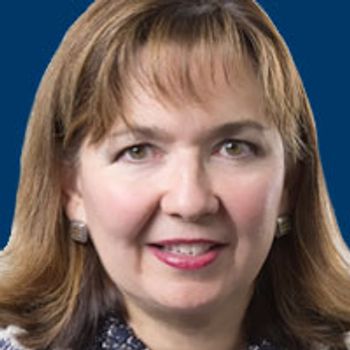
Denise A. Yardley, MD, discusses the phase II tnAcity trial, the current role of nab-paclitaxel in triple-negative breast cancer, and the potential for using nab-paclitaxel in combination with immunotherapy in this setting.
The Fc-modified monoclonal antibody margetuximab in combination with chemotherapy may offer a new treatment option for patients with HER2-positive metastatic breast cancer.
Anti-HER2 DC1 vaccination was demonstrated to be a safe and immunogenic treatment to induce tumor-specific T-cell responses in patients with HER2-positive breast cancer.
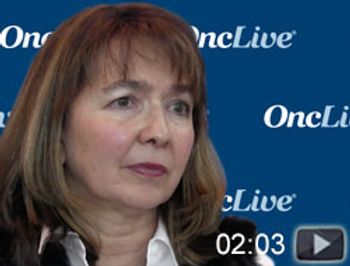
Denise Yardley, MD, senior investigator at the Sarah Cannon Research Institute, discusses the tNACity trial for patients with triple-negative breast cancer.

Researchers are seeking to determine whether adding the PARP inhibitor veliparib to a chemotherapy combination will improve outcomes for patients with HER2-negative, germline BRCA-associated metastatic or locally advanced breast cancer.
Eleftherios (Terry) P. Mamounas, MD, medical director of the Comprehensive Breast Program at the University of Florida Health Cancer Center, discusses the phase III trial for extended letrozole (Femara) therapy for patients with breast cancer.
Advertisement
Advertisement
Trending on OncLive
1
FDA Approves Tucatinib Plus Trastuzumab/Pertuzumab as First-Line Maintenance in Advanced HER2+ Breast Cancer
2
FDA Grants Breakthrough Device Designation to Natera’s Multi-Cancer Early Detection Assay
3
VIR-5500 Receives FDA Fast Track Designation in mCRPC
4
FDA Approves Atezolizumab Plus Chemo for Stage III dMMR Colon Cancer
5