


Breast Cancer
Latest News
Advertisement
Latest Videos


































































Advertisement
More News
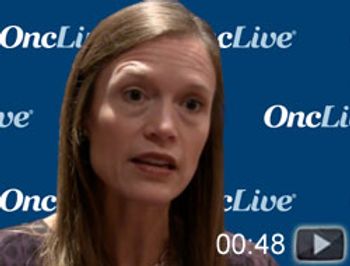
Carey Anders, MD, assistant professor for the Department of Medicine, Division of Hematology and Oncology, at UNC-Chapel Hill, UNC Linebarger Comprehensive Cancer Center, discusses why brain metastases is such a prominent issue in patients with breast cancer in an interview during the 2016 OncLive State of the Science Summit on Metastatic Breast Cancer.

A novel HER2-targeting antibody-drug conjugate showed promising antitumor activity across multiple tumor types, including HER2-postive breast cancer.
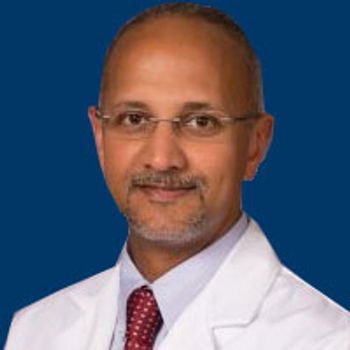
Abemaciclib plus tamoxifen, trastuzumab, or one of many endocrine-based therapies demonstrated significant antitumor activity and clinical benefit in patients with advanced breast cancer.
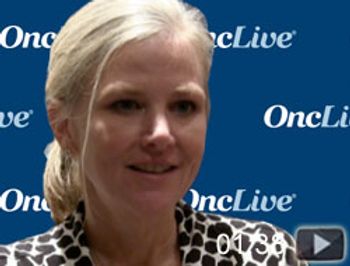
Kimberly L. Blackwell, MD, medical oncologist, Duke Cancer Institute, discusses the available treatments for patients with HER2-positive breast cancer, as well as other agents that are in development.
Kandace McGuire, MD, associate professor of Surgery, UNC Department of Surgery, Division of Surgical Oncology, UNC School of Medicine, discusses the evolving role of surgery in the treatment of patients with metastatic breast cancer.

Tara Sanft, MD, assistant professor of medicine, medical director of adult survivorship for the Yale Cancer Center Survivorship Clinic, discusses standard treatment options for patients with HER2-positive breast cancer.
Gabriel N. Hortobagyi, MD, professor of Medicine at The University of Texas MD Anderson Cancer Center, discusses findings from the phase III MONALEESA-2 trial, which looked at the addition of the CDK 4/6 inhibitor ribociclib to endocrine therapy in postmenopausal women with hormone receptor (HR)-positive metastatic breast cancer.
Monica Arnedos, MD, assistant professor, Department of Medical Oncology, Institut de Cancérologie Gustave Roussy, shares some of her thoughts regarding next steps following the Preoperative Palbociclib (POP) Randomized Trial for early-stage breast cancer.

Hope Rugo, MD, a professor of Medicine and director of the Breast Oncology Clinical Trials Program at the UCSF Helen Diller Family Comprehensive Cancer Center, discusses MYL-1401O, a proposed biosimilar for trastuzumab (Herceptin), in patients with HER2-positive metastatic breast cancer.
A dual approach to overcoming resistance to endocrine therapy in patients with advanced hormone receptor-positive breast cancer is under investigation in a phase III trial that adds the novel drug entinostat to standard exemestane therapy after disease progression.
Sunil Verma, MD, department head, Clinical Department of Oncology, Calgary Zone, medical director, Tom Baker Cancer Centre, discusses the overall treatment paradigm in the neoadjuvant setting of HER2-positive breast cancer.

While tomosynthesis has been described by the oncology community as one of the biggest improvements in breast cancer screening, the technology that renders 3D-like images of the breast does carry limitations.

Richard S. Finn, MD, associate professor of Medicine at the UCLA David Geffen School of Medicine, discusses the phase III PALOMA-2 trial during an interview at the 2016 ESMO Congress.
PARP inhibitors still have a place in the treatment paradigm of triple-negative breast cancer, but the role of these agents are significantly evolving.

First-line treatment with fulvestrant led to significantly better progression-free survival compared with anastrozole for patients with HR-positive advanced breast cancer.
Postmenopausal women with hormone receptor-positive metastatic breast cancer had significant slowing of disease progression with the addition of the investigational cyclin-dependent kinase 4/6 inhibitor ribociclib to endocrine therapy.
Antonio Llombart-Cussac, MD, PhD, medical oncologist, chairman, Medical Oncology Service, University Hospital Arnau de Vilanova in Valencia, Spain, discusses the CASCADE study, which assessed declines in treatment efficacy over time in patients with metastatic breast cancer, during an interview at the 2016 ESMO Congress.
Howard A. “Skip” Burris, MD, president of Clinical Operations and chief medical officer at Sarah Cannon Research Institute, a 2014 Giant of Cancer Care in Drug Development, discusses the biggest remaining challenges in treating patients with HER2-positive breast cancer.
A strategy to stimulate an immune response in radiation-damaged tumor cells resulted in preliminary evidence of activity—including longer survival—in a small clinical trial of patients with metastatic breast cancer.
William J. Gradishar, MD, discusses the need for new strategies that could alter the landscape of HR-positive breast cancer for the better, and how these methods can overcome drug resistance and delay disease progression.
Erika P. Hamilton, MD, director, Breast and Gynecologic Cancer Research Program, principal investigator, Sarah Cannon Research Institute, discusses necessary research oncologists should begin conducting in the space of HER2-positive breast cancer.
Steven Katz, MD, professor, Internal Medicine, University of Michigan Health System, discusses the incorporation of precision medicine into the treatment paradigm of breast cancer.

Recent, promising data for androgen receptor antagonists could propel these agents into the treatment paradigm for a large subgroup of patients with triple-negative breast cancer.
Despite its substantial progress, much remains unknown about endocrine therapy as a treatment for breast cancer.

With several novel agents on the horizon, the treatment paradigm of triple-negative breast cancer is rapidly evolving and expanding its reach beyond the standard approaches.
Advertisement
Advertisement
Trending on OncLive
1
FDA Approves Tucatinib Plus Trastuzumab/Pertuzumab as First-Line Maintenance in Advanced HER2+ Breast Cancer
2
VIR-5500 Receives FDA Fast Track Designation in mCRPC
3
FDA Grants Breakthrough Device Designation to Natera’s Multi-Cancer Early Detection Assay
4
Iberdomide Plus Daratumumab/Dexamethasone Yields Significant PFS Benefit in R/R Myeloma
5