




Breast Cancer
Latest News
Advertisement
Latest Videos






































































Advertisement
More News
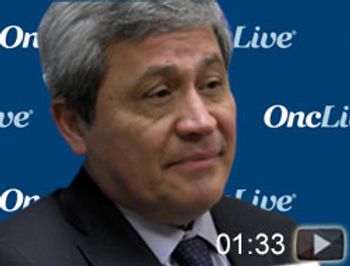
Carlos L. Arteaga, MD, associate director for Clinical Research, director, Center for Cancer Targeted Therapies, Vanderbilt-Ingram Cancer Center, discusses some of the ongoing trials exploring treatments for patients with metastatic breast cancer.
Constance D. Lehman, MD, PhD, professor of radiology and chief of Breast Imaging in the Department of Radiology at Massachusetts General Hospital, discusses how 3D mammography has been an efficient and beneficial screening tool in the field of breast cancer.

Harold J. Burstein, MD, PhD, Senior Physician, Associate Professor of Medicine, Harvard Medical School, Dana-Farber Cancer Institute discusses the results of MONARCH1, which looked at abemaciclib as monotherapy in patients with ER-positive breast cancer, after chemotherapy for advanced disease.
Henry M. Kuerer, MD, PhD, professor of Surgery, PH and Fay Etta Robinson Distinguished Professor in Research, Breast Surgical Oncology, executive director, Breast Programs, director, Breast Surgical Oncology Fellowship Training Program, Department of Surgical Oncology, Division of Surgery, The University of Texas MD Anderson Cancer Center, discusses de-escalating surgery in the treatment of patients with breast cancer.

The FDA has granted a breakthrough therapy designation to the CDK4/6 inhibitor ribociclib in combination with letrozole for its potential as a frontline therapy for patients with HR-positive, HER2-negative advanced breast cancer.
Denise A. Yardley, MD, senior investigator, Breast Cancer Research Program, principal investigator, Sarah Cannon Research Institute, discusses the unmet need for patients with HER2-positive breast cancer.

Jennifer Bellon, MD, radiation oncologist, Dana-Farber Cancer Institute, discusses some of the current ongoing trials looking at omitting radiation when it comes to the treatment of patients with breast cancer.
Treatment with anthracyclines was proven to be beneficial for patients with high-risk, HER2-negative, early-stage breast cancer, according to a joint analysis of the Anthracyclines in Early Breast Cancer (ABC) trials.

Cynthia Ma, MD, PhD, associate professor of Medicine, Washington University School of Medicine, discusses the METRIC trial in triple-negative breast cancer.

Cynthia Ma, MD, provides insight on the potential of glembatumumab vedotin (CDX-011) and immunotherapies on the horizon in the field of triple-negative breast cancer.
Collective findings from clinical trials show that, for women with early-stage breast cancer who have a low 21-gene recurrence score, adding chemotherapy to standard hormonal therapy does not show a difference in survival.

In terms of neoadjuvant therapies for patients with HER2-positive breast cancer, dual anti–HER2-directed agents seem to have the most benefit.
Joseph Sparano, MD, associate chairman, Clinical Research, Department of Oncology, Montefiore Medical Center, associate director, Clinical Research, Albert Einstein Cancer Center, discusses the ways in which the role of endocrine therapy has evolved over the years as a treatment for patients with breast cancer.

Although there has been in increase in promising novel regimens available for patients with breast cancer in recent years, oncologists should carefully consider whether each agent would provide a significant enough benefit to offset its associated toxicities, cost, and the time and commitment by the patient it requires.

Recent findings from clinical trials exploring neoadjuvant treatment in patients with triple-negative breast cancer may provide answers to several questions surrounding early-stage disease.

A 5-year assessment showed that neratinib reduced the risk of invasive disease recurrence or death by 26% compared with placebo as extended adjuvant therapy for patients with HER2-positive early stage breast cancer following 12 months of trastuzumab.

A team of researchers take a retrospective look at the patterns of how, when, and to whom palliative options are presented to patients with metastatic breast cancer, as an approach for gaining insight on how to improve care for patients with late-stage, terminal cancers.
A study of women treated with the mTOR inhibitor everolimus (Afinitor) plus exemestane for their advanced breast cancer found that daily use of a steroid-based mouthwash markedly decreased the incidence and severity of stomatitis.
Carlos Becerra, MD, physician, Texas Oncology, discusses a study examining the combination of ribociclib and letrozole in patients with ER-positive, HER2-negative advanced breast cancer.
Hope S. Rugo, MD, professor of Medicine and director of the Breast Oncology Clinical Trials Program at the UCSF Hellen Diller Family Comprehensive Cancer Center, discusses the results of the SWISH trial, which examined a dexamethasone-based mouthwash for the prevention of everolimus/exemestane stomatitis in postmenopausal women with hormone receptor (HR)-positive metastatic breast cancer.

Allison W. Kurian, MD, MSc, discusses 2 clinical trials utilizing multigene panels to uncover previously undetected risks in patients with breast and ovarian cancer.
Joanne Blum, MD, PhD, FACP, physician, Texas Oncology, discusses the key takeaways from the phase III ABC (anthracyclines in early breast cancer) trials, which compared docetaxel plus cyclophosphamide versus anthracycline/taxane-based chemotherapy regimens in patients with high-risk, HER2-negative breast cancer.

Nicholas J. Robert, MD, medical oncology, hematology, Virginia Cancer Specialists, US Oncology, discusses the MA.17R trial, which explored an extension of adjuvant letrozole for 5 years after completing an initial 5 years of aromatase inhibitor therapy alone or preceded by tamoxifen in postmenopausal women with early-stage breast cancer.

Erika P. Hamilton, MD, director, Breast and Gynecologic Cancer Research Program, principal investigator, Sarah Cannon Research Institute, discusses a phase Ib study examining ONT-380 in combination with trastuzumab emtansine (T-DM1) in patients with HER2-positive breast cancer, and what potential the combination has in the neoadjuvant setting.
Advertisement
Advertisement
Trending on OncLive
1
FDA Approves Tucatinib Plus Trastuzumab/Pertuzumab as First-Line Maintenance in Advanced HER2+ Breast Cancer
2
Iberdomide Plus Daratumumab/Dexamethasone Yields Significant PFS Benefit in R/R Myeloma
3
FDA Approves Atezolizumab Plus Chemo for Stage III dMMR Colon Cancer
4
VIR-5500 Receives FDA Fast Track Designation in mCRPC
5