


Breast Cancer
Latest News

Advertisement
Latest Videos






































































Advertisement
More News

Matthew P. Goetz, MD, discusses ongoing research in the setting of ESR1-mutant, ER–positive, HER2-negative metastatic breast cancer.

Ruta D. Rao, MD, associate professor in the Department of Medicine, Division of Hematology at Rush Medical College, as well as the director of the Coleman Foundation Comprehensive Breast Cancer Clinic and medical director of Rush University Cancer Center, discusses emerging treatments for patients with HER2-positive metastatic breast cancer.

Komal Jhaveri, MD, FACP, a medical oncologist at Memorial Sloan Kettering Cancer Center, discusses sequencing treatments for patients with metastatic HER2-positive breast cancer.

Massimo Cristofanilli, MD, highlights the introduction of CDK4/6 inhibitors, such as abemaciclib, ribociclib, and palbociclib, which has been a significant addition to the hormone receptor–positive, HER2-negative breast cancer armamentarium.

Sarah Sammons, MD, discusses clinical trials examining lasofoxifene in patients with ESR1-mutant breast cancer.

December 16, 2020 - The FDA has approved margetuximab-cmkb plus chemotherapy for use in adult patients with metastatic HER2-positive breast cancer who have previously received 2 or more anti-HER2 regimens, at least one of which was for metastatic disease.

December 16, 2020 - Eric P. Winer, MD, FASCO, 2019 OncLive Giants of Cancer Care® recipient in Breast Cancer, has been elected to serve as the president of ASCO for the 2022-2023 term, and will assume the president-elect position during the 2020 ASCO Annual Meeting.
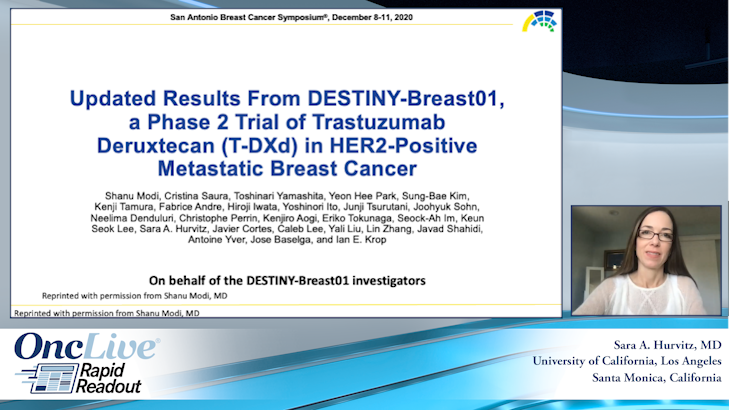
December 15, 2020 - The European Medicines Agency’s Committee for Medicinal Products for Human Use has adopted a positive opinion for fam-trastuzumab deruxtecan-nxki for use as a single agent in adult patients with unresectable or metastatic HER2-positive breast cancer who have previously received 2 or more anti-HER2–based regimens.

Neelima Vidula, MD, highlights some of the pivotal trials evaluating immunotherapy combination regimens in triple-negative breast cancer, some of the challenges faced in practice, and areas for further exploration.

Lajos Pusztai, MD, DPhil, discusses the role of circulating tumor DNA as a biomarker of response in patients with high-risk early-stage breast cancer.

December 14, 2020 - The combination of neratinib and capecitabine showed a 34% reduction in the risk of disease progression or death compared with lapatinib and capecitabine in patients with HER2-positive breast cancer who had central nervous system metastases at baseline.

Erika P. Hamilton, MD, discusses the mechanism of action of OP-1250 in patients with hormone receptor–positive, HER2-negative metastatic breast cancer.

Nadia Harbeck, MD, PhD, discusses Ki-67 as a biomarker for identifying patients with high-risk early breast cancer who received treatment on the monarchE trial.

December 11, 2020 - Tucatinib in combination with trastuzumab and capecitabine significantly prolonged the time to deterioration of health-related quality of life in patients with HER2- positive metastatic breast cancer with brain metastases.

December 11, 2020 - The addition of 1 year of palbociclib to endocrine therapy failed to improve invasive disease-free survival in patients with hormone receptor–positive, HER2-negative breast cancer who are at high risk of relapse following neoadjuvant chemotherapy.

The clinical tool RSClin™, which integrates the 21-gene expression assay and clinical pathologic features, was shown to provide more prognostic information than the 21-gene recurrence score or clinical pathologic features alone and a more precise prediction of absolute chemotherapy benefit in node-negative early breast cancer.

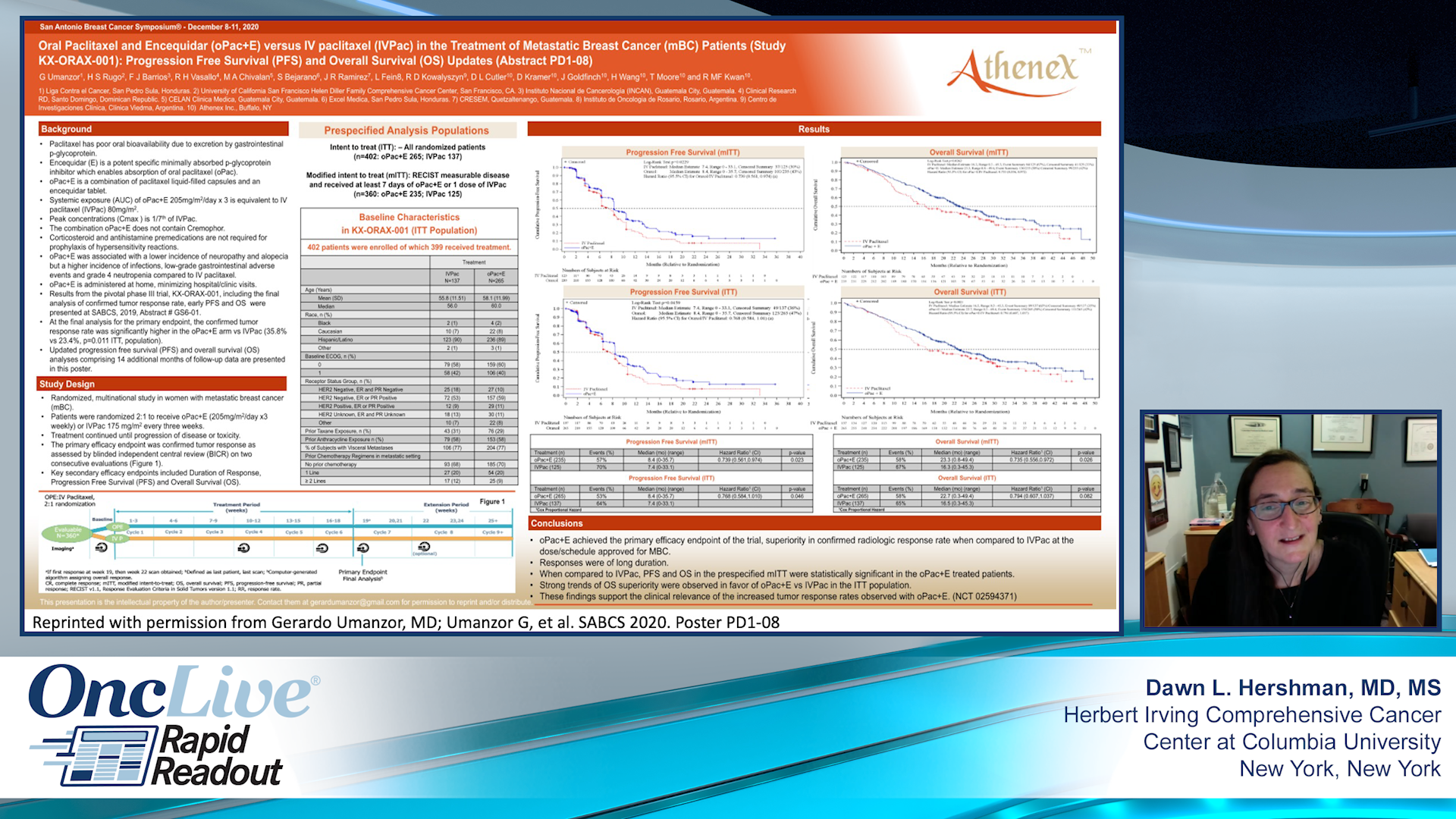
December 11, 2020 - Gastrointestinal adverse events that occurred in patients with metastatic breast cancer who were treated with oral paclitaxel and encequidar can be managed by the use of 5- HT3 inhibitors and early intervention with loperamide.
December 11, 2020 - Sacituzumab govitecan increased response rates and improved progression-free survival vs chemotherapy in patients with metastatic triple-negative breast cancer with stable brain metastases, although no overall survival improvement was observed.

December 11, 2020 - The presence of circulating tumor DNA following neoadjuvant chemotherapy with or without pembrolizumab was a biomarker for response and distant recurrence-free survival in patients with high-risk early-stage breast cancer.

December 11, 2020 - Patients with human epidermal growth factor receptor 2-negative, hormone receptor-positive metastatic breast cancer who were treated with tesetaxel and a reduced dose of capecitabine experienced improvements in progression-free survival compared with those treated with the FDA-approved dose of capecitabine alone.

December 11, 2020 - The European Medicines Agency’s Committee for Medicinal Products for Human Use has granted a positive opinion to tucatinib in combination with trastuzumab and capecitabine for use in adult patients with HER2-positive, locally advanced or metastatic breast cancer who had received at least 2 previous anti-HER2 therapies.

December 11, 2020 - The combination of plinabulin and pegfilgrastim was 53% more effective in reducing the incidence of profound neutropenia compared with pegfilgrastim alone in patients undergoing chemotherapy, according to full findings of the phase 3 PROTECTIVE-2 trial.

December 11, 2020 - Use of a novel HER2 quantitative continuous score was better able to provide an objective and quantitative assessment of HER2 expression to identify patients who are most likely to respond to fam-trastuzumab deruxtecan-nxki.
December 10, 2020 - The GP2 immunotherapy plus granulocyte-macrophage colony-stimulating factor demonstrated potent responses and a 100% disease-free survival in patients with HER2/neu 3–positive disease who received adjuvant trastuzumab.

December 10, 2020 - Amcenestrant elicited antitumor activity in heavily pretreated, postmenopausal women with advanced or metastatic estrogen receptor–positive breast cancer.
Advertisement
Advertisement
Trending on OncLive
1
Five Under 5: Top Oncology Videos for the Week of 10/5/2026
2
Guardant360 CDx Receives European Approval as Companion Diagnostic for Camizestrant in ESR1-Mutated Advanced Breast Cancer
3
GI Cancer Monthly Rewind: Key News and Expert Insights You May Have Missed in September 2026
4
The OncFive: Top Oncology Articles for the Week of 10/4/2026
5