
CAR T-Cell Therapy
Latest News
Advertisement
Latest Videos























































Advertisement
More News
Caron Jacobson, MD, discusses the safety profile of axicabtagene ciloleucel in relapsed/refractory indolent non-Hodgkin lymphoma.

The allogeneic CAR-T cell therapy ALLO-501, paired with the monoclonal antibody ALLO-647, demonstrated clinical responses and manageable toxicity in patients with pretreated large B-cell and follicular lymphomas.
The chimeric antigen receptor T-cell therapy, JNJ-4528, continued to demonstrate deep and durable responses in heavily pretreated patients with relapsed/refractory multiple myeloma, according to updated findings from the phase 1b/2 CARTITUDE-1 (NCT03548207) trial.
Tisagenlecleucel led to clinically meaningful and durable improvements in health-related quality of life in patients with relapsed/refractory diffuse large B-cell lymphoma who achieved a complete or partial response to the CD19-directed CAR T-cell therapy in the phase 2 JULIET trial.

The FDA has extended the review period for a biologics license application for lisocabtagene maraleucel for the treatment of adult patients with relapsed/refractory large B-cell lymphoma.
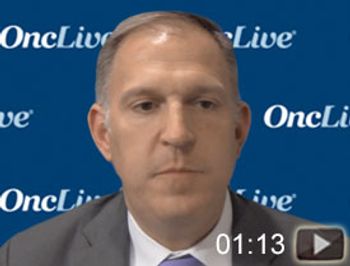
Peter Voorhees, MD, discusses the evolution of idecabtagene vicleucel (ide-cel; bb2121) in the phase 2 KarMMa study in relapsed/refractory multiple myeloma.
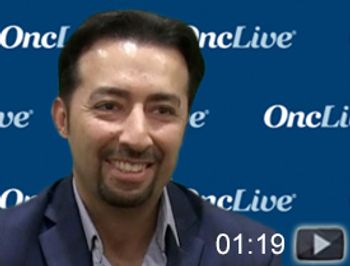
Bob Valamehr, PhD, chief development officer at Fate Therapeutics, discusses the advantages of off-the-shelf CAR NK therapy in B-cell malignancies.
A manageable safety profile was observed for the combination of atezolizumab and the anti-CD19 chimeric antigen receptor T-cell therapy, axicabtagene ciloleucel, in patients with refractory diffuse large B-cell lymphoma.
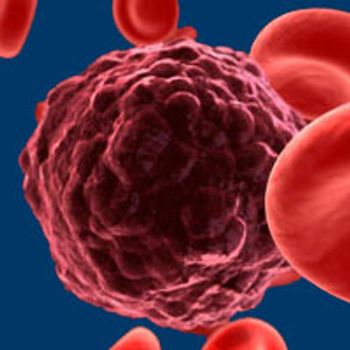
The first-in-clinic universal CAR T-cell therapy TruUCAR GC027 induced promising early response rates and demonstrated a manageable safety profile with no evidence of neurotoxicity events or graft-versus-host disease in adult patients with relapsed/refractory T-cell acute lymphoblastic leukemia.
Treatment with CD19/22 chimeric antigen receptor CAR T cells induced a promising response in patients with relapsed/refractory B-cell precursor acute lymphoblastic leukemia.

Bob Valamehr, PhD, discusses the process by which a targeted CAR natural-killer cell product is engineered as well as how it will be examined in future research efforts.

Investigators at Montefiore showed that axicabtagene-ciloleucel can be used successfully in ethnically diverse patients with high-risk, relapsed/refractory diffuse large B-cell lymphoma at an inner-city hospital.
The FDA has granted a Regenerative Medicine Advanced Therapy designation to tisagenlecleucel for the treatment of patients with relapsed/refractory follicular lymphoma.
Dylan Essner, discusses the utility of novel electronic documentation tools developed by technicians at Epic Beacon, among others, in the documentation, grading, and treatment of patients receiving CAR T-cell therapy.
This OncLive® webinar series will focus on the continued impact of the COVID-19 pandemic on the delivery of cellular therapeutics, particularly chimeric antigen receptor T cells. Join us Tuesday, June 2, 2020 at 8 PM EST.
This OncLive® webinar series will focus on the continued impact of the COVID-19 pandemic on the delivery of cellular therapeutics, particularly chimeric antigen receptor T cells. Join us Tuesday, May 26, 2020 at 8 PM EST.
This OncLive® webinar series will focus on the continued impact of the COVID-19 pandemic on the delivery of cellular therapeutics, particularly chimeric antigen receptor T cells. Join us Tuesday, May 19, 2020 at 8 PM EST.
This OncLive® webinar series will focus on the continued impact of the COVID-19 pandemic on the delivery of cellular therapeutics, particularly chimeric antigen receptor T cells. Join us Tuesday, May 19, 2020 at 8 PM EST.
Jae Park, MD, a hematologist oncologist at Memorial Sloan Kettering Cancer Center, discusses the use of CAR T-cell therapies in patients with acute lymphocytic leukemia.
Farrukh Awan, MD, discusses novel approaches under investigation in relapsed/refractory chronic lymphocytic leukemia.
Bruce L. Levine, PhD, discusses engineered anticancer immunity with T-cell and natural killer–cell therapies.
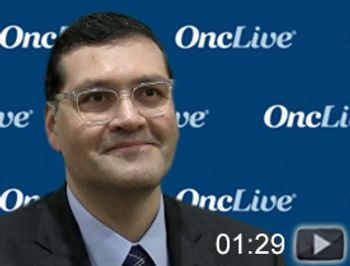
Jesus Berdeja, MD, the director of Multiple Myeloma Research at Sarah Cannon Research Institute, discusses updated data with bb21217 in multiple myeloma.
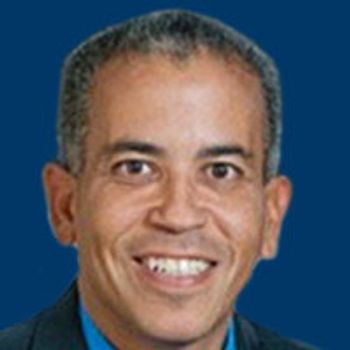
Carlos R. Bachier, MD, discusses the use of CAR T-cell therapy in the outpatient setting. He also shared insight on the evolving paradigm of graft-versus-host disease.
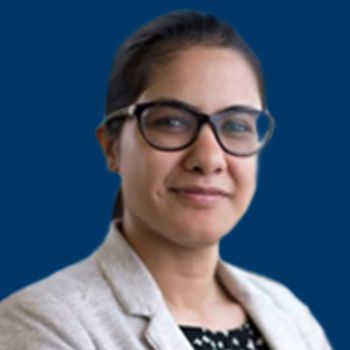
Tania Jain, MBBS, discusses blood count recovery in patients with hematology malignancies who receive CAR T-cell therapy.
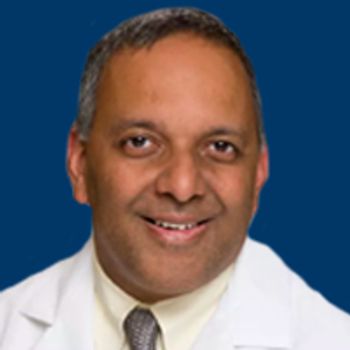
Sameer Desai, MD, discusses his experience in the hematology field and how CAR T-cell therapy has evolved and its potential integration into community centers.
Advertisement
Advertisement
Trending on OncLive
1
FDA Approval of Dostarlimab Brings Potential Organ-Sparing Approach in dMMR Locally Advanced Rectal Cancer
2
Casdatifan Demonstrates Activity in Advanced Clear Cell RCC
3
Treatment Tailoring and Weighing Alternative Formulations Support Optimal TKI Deployment in CML
4
HER2+ Maintenance Therapy Approvals and Innovative Brain Metastasis Care Reshape Breast Cancer Management
5