

CAR T-Cell Therapy
Latest News

Advertisement
Latest Videos
























































Advertisement
More News
CAR T-cell therapies are associated with a risk for second primary cancers, and mitigation strategies for these toxic effects are warranted and under examination.
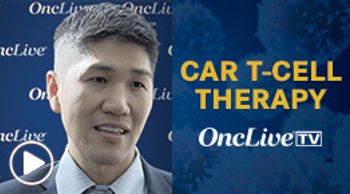
Andrew Ip, MD, discusses the importance of making informed clinical decisions when selecting CAR T-cell therapy in older vs younger patients with LBCL.
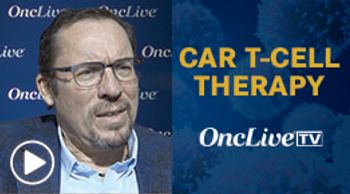
Renier Brentjens, MD, PhD, discusses the current landscape of CAR T-cell therapy and ongoing efforts to expand its application beyond B-cell malignancies.
Marco Davila, MD, PhD, explains the role of intrinsic tumor drivers in CD19 CAR T-cell therapy resistance in aggressive large B-cell lymphoma.
The FDA granted breakthrough therapy designation to lete-cel for patients with unresectable or metastatic myxoid/round cell liposarcoma.
Armin Ghobadi, MD, discusses the efficacy and safety of WU-CART-007 in heavily pretreated patients with relapsed/refractory T-ALL and LBL.
Dasom (Caroline) Lee, MD, discusses real-world data for second-line axi-cel in relapsed/refractory large B-cell lymphoma.
Tom van Meerten, MD, PhD, discusses the efficacy and safety of brexucabtagene autoleucel in BTK inhibitor–naive relapsed/refractory MCL.
Anitocabtagene autoleucel generated durable response in patients with relapsed/refractory multiple myeloma.
Andrew Ip, MD, discusses comparative real-world outcomes of commercial CD19-directed CAR T-cell therapies in large B-cell lymphoma.
Cilta-cel without induction therapy in high-risk smoldering myeloma marked the first study of CAR T-cell therapy in a precursor cancer setting.
Real-world data showed ide-cel was active in patients with central nervous system manifestations of multiple myeloma.
Brexu-cel led to an ORR of 91% in patients with relapsed/refractory MCL who were naive to BTK inhibitors, according to new data from the ZUMA-2 trial.

Cilta-cel boosted MRD-negativity rates in lenalidomide-refractory multiple myeloma, according to updated results from CARTITUDE-4.
Tisagenlecleucel maintained long-term efficacy and safety in relapsed/refractory follicular lymphoma.
Brexucabtagene autoleucel demonstrated similar efficacy across age groups of patients with relapsed/refractory B-cell acute lymphoblastic leukemia
Treatment with bicistronic CD19/CD22 CAR T-cell therapy led to high 1-year EFS and OS rates among children with relapsed/refractory B-ALL.

Jennifer Amengual, MD, discusses real-world outcomes with CAR T-cell therapy and bispecific antibodies in patients with DLBCL.
Here is your snapshot of all treatment options that the FDA cleared in November 2024 spanning tumor types.
In case you missed any, read a recap of every episode of OncLive On Air that aired in November 2024.

Hematologic oncologists offer their perspective on the current and potential future standing of CAR T-cell therapies in the relapsed/refractory ALL treatment landscape.

Elias Jabbour, MD, highlights the significance of obecabtagene autoleucel’s approval for patients with B-cell precursor ALL and data from the FELIX trial.

Syed Abbas Ali, MBBS, discusses how CAR T-cell therapies and bispecific antibodies have altered treatment in relapsed/refractory multiple myeloma.

David R. Oveisi, MD, discusses how the expanded indications for ide-cel and cilta-cel are affecting treatment decision-making in multiple myeloma.
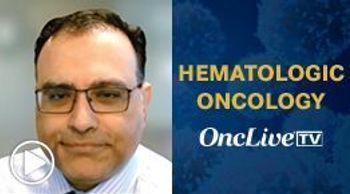
Minoo Battiwalla, MD, MS, discusses how emerging therapies contribute to the management of aggressive variants of follicular lymphoma.
Advertisement
Advertisement
Trending on OncLive
1
FDA Approval of Dostarlimab Brings Potential Organ-Sparing Approach in dMMR Locally Advanced Rectal Cancer
2
Casdatifan Demonstrates Activity in Advanced Clear Cell RCC
3
Treatment Tailoring and Weighing Alternative Formulations Support Optimal TKI Deployment in CML
4
HER2+ Maintenance Therapy Approvals and Innovative Brain Metastasis Care Reshape Breast Cancer Management
5