





CAR T-Cell Therapy
Latest News

Advertisement
Latest Videos





























































Advertisement
More News

Experts discuss the FDA's call for a boxed warning for secondary T-cell malignancies on all approved CAR T-cell agents in late January 2024.

Simulation-based education can improve health care professionals’ understanding and confidence regarding the treatment of patients with CAR T-cell therapy.

In case you missed it, these were the key regulatory decisions made by the FDA in March 2024.

Francesco Di Meo, PhD, discusses the rationale for targeting LILRB4 through CAR T-cell therapy in multiple myeloma.
The FDA has approved cilta-cel for select patients with relapsed/refractory multiple myeloma who have received at least 1 line of therapy, and who are lenalidomide refractory.
The FDA has approved ide-cel (Abecma) for adult patients with relapsed or refractory multiple myeloma after two or more prior lines of therapy.
Jay Spiegel, MD, discusses some of the challenges of using CAR T-cell therapy in patients with solid tumors.
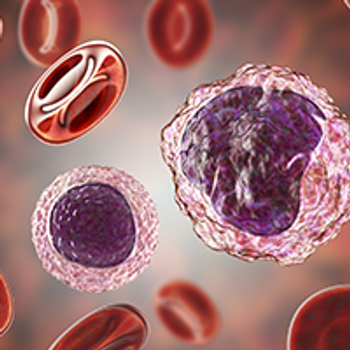
CTL019 CAR T-cell therapy plus time-limited ibrutinib resulted in high complete response rates in relapsed/refractory mantle cell lymphoma.

Saad J. Kenderian, MB, CHB, expands on the significance of liso-cel’s approval in chronic lymphocytic leukemia or small lymphocytic lymphoma.

The European Commission has approved idecabtagene vicleucel for triple-class–exposed relapsed/refractory multiple myeloma.

Treatment with a next-generation CAR T-cell agent displayed early efficacy in a small group of patients with glioblastoma.

The FDA’s Oncologic Drugs Advisory Committee voted in favor of idecabtagene vicleucel for patients with early relapsed/refractory myeloma.
The FDA’s Oncologic Drugs Advisory Committee voted in favor of ciltacabtagene autoleucel for patients with early relapsed/refractory myeloma.
The FDA has granted accelerated approval to lisocabtagene maraleucel for the treatment of select patients with relapsed/refractory CLL or SLL.

A CAR T-cell therapy directed toward 2 brain tumor–associated proteins displayed preliminary activity in recurrent glioblastoma.
David L. Porter, MD, discusses the decision by the FDA to call for a boxed warning for secondary malignancies on all approved CAR T-cell agents.
Tatyana Feldman, MD, discusses the TRANSCEND CLL 004 trial in patients with relapsed/refractory chronic lymphocytic leukemia or small lymphocytic lymphoma.

Rahul Banerjee, MD FACP, discusses the FDA’s decision to add a class-wide boxed warning for secondary malignancies on all approved CAR T-cell therapies.
China’s NMPA has approved zevor-cel for the treatment of adult patients with relapsed/refractory multiple myeloma after at least 3 lines of therapy.

Andre H. Goy, MD, discusses how the ZUMA-18 trial data support the benefit of earlier-line use of brexucabtagene autoleucel in mantle cell lymphoma.
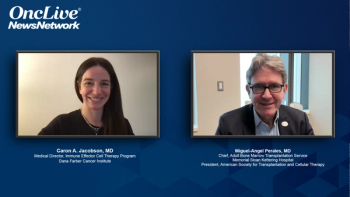
Miguel-Angel Perales, MD, and Caron A. Jacobson, MD, share insights regarding the context and implications of the recent actions by the FDA to add boxed warnings to CAR T-cell therapies.
Caron A. Jacobson, MD, and Miguel-Angel Perales, MD, look at both the regulatory and clinical components that will shape future research and utilization of CAR T-cell therapy in oncology and beyond.
Tatyana Feldman, MD, highlights updated data for liso-cel in relapsed/refractory chronic lymphocytic leukemia/small lymphocytic lymphoma.
Caron A. Jacobson, MD, and Miguel-Angel Perales, MD, discuss different uses for CAR T-cell therapy, particularly a trial in which a CAR T-Cell therapy is being evaluated in MRD-positive patients treated with chemotherapy.
Thought leaders discuss patient scenarios and different factors to consider when deciding how to select and utilize bridging therapy in the management of patients with LBCL.
Advertisement
Advertisement
Trending on OncLive
1
FDA Approval of Dostarlimab Brings Potential Organ-Sparing Approach in dMMR Locally Advanced Rectal Cancer
2
Casdatifan Demonstrates Activity in Advanced Clear Cell RCC
3
Treatment Tailoring and Weighing Alternative Formulations Support Optimal TKI Deployment in CML
4
HER2+ Maintenance Therapy Approvals and Innovative Brain Metastasis Care Reshape Breast Cancer Management
5