



CAR T-Cell Therapy
Latest News
Advertisement
Latest Videos
























































Advertisement
More News

MB-106, a first-in-class, CD20-targeted autologous CAR T-cell therapy, led to durable clinical responses with low-grade cytokine release syndrome in patients with indolent lymphoma.

The FDA has lifted the partial clinical hold placed on the clinical program evaluating the investigational new drug, CART-ddBCMA, in the treatment of patients with relapsed/refractory multiple myeloma.
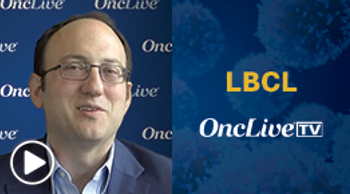
Matthew J. Frank, MD, PhD, discusses remaining questions regarding treatment sequencing following preliminary results from a phase 1 trial of a CD22-directed CAR-T therapy in relapsed/refractory large B-cell lymphoma.

Matthew Frank, MD, PhD, discusses the rationale for evaluating CD22 CAR T cells in heavily pretreated patients with large B-cell lymphoma, important safety and efficacy data with this approach, next steps for this research, and how continued efforts may shed needed light on sequencing in this space.
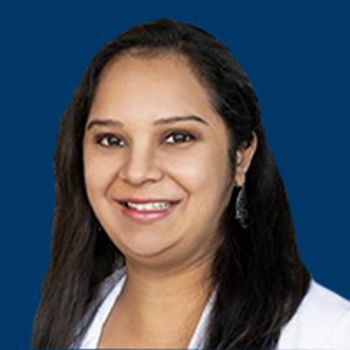
Swetha Kambhampati, MD, explains the need for real-world data on responses to brexu-cel in patients with relapsed/refractory MCL, compares safety and efficacy data from the subgroup analysis with prior results from ZUMA-2, and discusses how these findings support more long-term follow-up in this population.
The allogeneic natural killer cell therapy NKX019 was found to have an acceptable toxicity profile and to induce deep and durable responses in patients with relapsed or refractory B-cell non-Hodgkin lymphomas.

Jeffrey V. Matous, MD, discusses future directions of CAR T-cell therapy in multiple myeloma, highlighting the potential promise of novel targets beyond BCMA.

The allogeneic CAR T-cell therapy CB-010 demonstrated early signs of durable antitumor activity and favorable safety in patients with relapsed/refractory B-cell non-Hodgkin lymphoma.

Jeffrey V. Matous, MD, discusses potential strategies to overcome barriers to receiving CAR T-cell therapy for patients with multiple myeloma, and how the potential use of these agents in earlier lines could improve infusion wait times and rates of disease progression.
huCART19-IL8 had acceptable safety and induced durable responses in patients with lymphoma who were refractory or relapsed following second-generation CD19-targeted CAR T-cell therapies, according to data from a first-in-human phase 1 trial.
Joshua P. Sasine, MD, PhD, discusses the potential role of cilta-cel in earlier lines of therapy for patients with multiple myeloma.

Chimeric antigen receptor T-cell therapy has proven to be an effective adoptive cellular therapy against relapsed/refractory B-cell lymphoma.
Treatment with NKX101 led to a best composite complete response rate of 67% in patients with relapsed/refractory acute myeloid leukemia, according to updated data from a dose-expansion cohort of an ongoing phase 1 trial.
Nikhil C. Munshi, MD, discusses the significance of the FDA approval of cilta-cel in patients with multiple myeloma, shares the long-term findings from the pivotal CARTITUDE-1 trial, and highlights future directions for CAR T-cell therapy in this disease.
The CAR T-cell therapy AUTO4 was not associated with dose-limiting toxicities and led to early indications of efficacy in patients with relapsed/refractory TRBC1-positive peripheral T-cell lymphoma.
The novel, autologous, anti-CD19 CAR T-cell therapy anbalcabtagene autoleucel produced durable responses and was well tolerated in patients with relapsed/refractory large B-cell lymphoma.
The FDA has placed a hold on the clinical program for the investigational new drug CART-ddBCMA for the treatment of patients with relapsed/refractory multiple myeloma.
A single administration of lisocabtagene maraleucel provided deep and durable remissions when used as third-line treatment in patients with relapsed or refractory follicular lymphoma, including those with high-risk features.

The CAR T-cell therapy lisocabtagene maraleucel produced rapid and durable responses in heavily pretreated patients with relapsed/refractory mantle cell lymphoma.

Claire Roddie, MD, discusses the rationale for investigating obecabtagene autoleucel in patients with relapsed/refractory B-cell acute lymphoblastic leukemia, details the key topline findings from the FELIX trial, and provides insights on unmet needs that remain for this patient population.

The real-world efficacy and safety of brexucabtagene autoleucel were similar to the outcomes seen in the phase 2 ZUMA-2 trial, regardless of patients’ treatment history, according to results from a real-world subgroup analysis of patients with relapsed/refractory mantle cell lymphoma.
Swetha Kambhampati, MD, discusses key findings from an analysis of real-world efficacy outcomes with brexucabtagene autoleucel in heavily pretreated patients with relapsed/refractory mantle cell lymphoma.
Mary “Nora” Disis, MD, discusses the results of a phase 1/1b study of PRGN-3005 autologous UltraCAR T cells in patients with advanced stage platinum-resistant ovarian cancer.
The FDA has granted priority and standard review designations to the biologics license applications for exagamglogene autotemcel for the treatment of patients with sickle cell disease and transfusion-dependent beta thalassemia, respectively, marking the first CRISPR gene editing filings to be accepted for review by the FDA.
A supplemental biologics license application seeking the approval of ciltacabtagene autoleucel for use in adult patients with relapsed and lenalidomide-refractory multiple myeloma who have previously received at least 1 line of therapy, including a proteasome inhibitor and an immunomodulatory agent, has been submitted to the FDA.
Advertisement
Advertisement
Trending on OncLive
1
FDA Approval of Dostarlimab Brings Potential Organ-Sparing Approach in dMMR Locally Advanced Rectal Cancer
2
Casdatifan Demonstrates Activity in Advanced Clear Cell RCC
3
Treatment Tailoring and Weighing Alternative Formulations Support Optimal TKI Deployment in CML
4
HER2+ Maintenance Therapy Approvals and Innovative Brain Metastasis Care Reshape Breast Cancer Management
5