



CAR T-Cell Therapy
Latest News

Brexu-cel Shows Survival Benefit in Relapsed/Refractory B-cell ALL, Regardless of Prior Treatment
By Gina Mauro

ADI-001 Produces Responses, Favorable Safety in Relapsed/Refractory B-Cell NHL
By Chris Ryan
Advertisement
Latest Videos





























































Advertisement
More News
A renewed focus on dismantling the barriers and closing gaps in care will aid in the mission to drive down the rate of cancer mortality and incidence across disease states.
Andre H. Goy, MD, discusses key findings from an assessment of durable responses in the phase 2 ZUMA-2 trial in relapsed/refractory mantle cell lymphoma.
A discussion on which patients with relapsed/refractory follicular lymphoma are good candidates for CAR T-cell therapy.
Dr Marc S Hoffman reviews the currently available treatment options for relapsed/refractory follicular lymphoma.

Idecabtagene vicleucel improved progression-free survival compared with standard combination regimens in patients with relapsed/refractory multiple myeloma after 2 to 4 prior lines of therapy and who were refractory to their last regimen, according to results from the phase 3 KarMMa-3 trial.
The CAR T-cell therapy brexucabtagene autoleucel produced a median overall survival of 26 months in patients with relapsed/refractory B-cell acute lymphoblastic leukemia.
In this first episode of OncChats: Traveling Through the Lung Cancer Treatment Paradigm, Aaron Franke, MD, discusses the exploration of cellular therapies in non–small cell lung cancer.
Marc S. Hoffman, MD, explains how to select the appropriate CAR T-cell therapy for each patient, and the barriers patients with R/R LBCL face in receiving CAR T-cell therapy, despite its high efficacy rate.
Experts discuss data on a novel form of CAR T-cell therapy, rapcabtagene autoleucel, for the second-line treatment of R/R LBCL with a faster manufacturing process.

An economic analysis showed that neither polatuzumab vedotin-piiq added to standard of care chemotherapy nor CD19-directed chimeric antigen receptor T-cell therapy is likely to be the most cost-effective for patients with diffuse large B-cell lymphoma.
Closing out this discussion of post-ASH 2022 perspectives, Matthew Lunning, DO, FACP, shares important clinical practice pearls for physicians considering CAR T-cell therapy for patients with LBCL.
Experts discuss the role of clinical and real-world data in informing treatment sequencing in patients with large B-cell lymphoma (LBCL) in the academic and community setting,
Experts highlight additional data updates from the ASH 2022 annual meeting regarding the treatment of patients with LBCL.
Dr Lunning, DO, FACP, shares his impressions on the toxicity profile of axi-cel and liso-cel, and how he approaches treatment decision making for patients with relapsed-refractory (R/R) large B-cell lymphoma (LBCL).
Matthew Lunning, DO, FACP, discusses the role of CAR T-cell therapy in the second-line treatment of large B-cell lymphoma (LBCL).
In this fourth episode of OncChats: Unpacking Data From Pivotal Trials in Multiple Myeloma, Hamza Hashmi, MD, explains the optimal use of CAR T-cell therapy and common symptoms of adverse effects, including cytokine release syndrome and immune effector cell–associated neurotoxicity syndrome in relapsed/refractory multiple myeloma.
Loretta J. Nastoupil, MD, reviews data from the ZUMA-7 trial investigating the use of axicabtagene ciloleucel as a second-line therapy for large b-cell lymphoma.
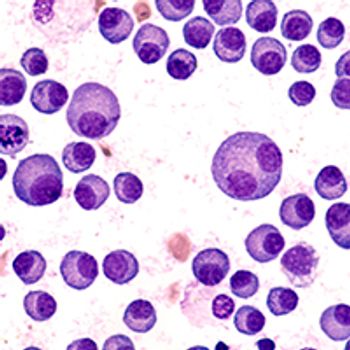
Ciltacabtagene autoleucel demonstrated a significant improvement in progression-free survival in patients with relapsed/lenalidomide-refractory multiple myeloma who received 1 to 3 prior lines of therapy.

The CAR T-cell therapy lisocabtagene maraleucel induced complete responses in patients with relapsed/refractory chronic lymphocytic leukemia or small lymphocytic leukemia.
Experts provide their perspective on the treatment landscape for patients with relapsed-refractory (R/R) large B-cell lymphoma (LBCL).
In the context of CAR T-cell therapy, Manali Kamdar, MD, reviews TRANSFORM, ZUMA-7, and PILOT trials in the treatment of patients with relapsed-refractory (R/R) large B-cell lymphoma (LBCL).
Experts discuss Large B-Cell Lymphoma (LBCL) and treatment strategies for patients with LBCL.

David Siegel, MD, PhD, discusses the evaluation of idecabtagene vicleucel in cohort 2C of the KarMMa-2 trial and what these data could mean for this population and others with multiple myeloma.
Drs Loretta J. Nastoupil and Marc S Hoffman explain the available treatment options for relapsed/refractory diffuse large B-cell lymphoma and what to consider when selecting a therapy in the second-line setting.
Marc S. Hoffman, MD, provides an overview of recent updates in the treatment of relapsed/refractory diffuse large B-cell lymphoma.
Advertisement
Advertisement
Trending on OncLive
1
FDA Approval of Dostarlimab Brings Potential Organ-Sparing Approach in dMMR Locally Advanced Rectal Cancer
2
Casdatifan Demonstrates Activity in Advanced Clear Cell RCC
3
Treatment Tailoring and Weighing Alternative Formulations Support Optimal TKI Deployment in CML
4
HER2+ Maintenance Therapy Approvals and Innovative Brain Metastasis Care Reshape Breast Cancer Management
5