




CAR T-Cell Therapy
Latest News
Advertisement
Latest Videos






























































Advertisement
More News

When manufactured via automated process the CLDN6-directed CAR T-cell therapy, BNT211, demonstrated encouraging signs of activity and a manageable safety profile with or without the addition of CLDN6-encoding mRNA vaccine in patients with CLDN6-positive relapsed/refractory advanced solid tumors.

Brexucabtagene autoleucel elicited high rates of complete remission with minimal residual disease negativity in real-world patients with relapsed or refractory B-cell acute lymphoblastic leukemia who received the CAR T-cell product as post-approval, standard-of-care treatment, according to data from a retrospective study.

Obecabtagene autoleucel was associated with a 76% complete response (CR)/CR with incomplete count recovery rate in adult patients with relapsed/refractory B-cell acute lymphoblastic leukemia.

A Type II variation application seeking the approval of ciltacabtagene autoleucel in adult patients with relapsed and lenalidomide-refractory multiple myeloma has been submitted to the European Medicines Agency.

The investigational CAR T-cell therapy GD2-CART01 showed preliminary antitumor activity and safety in pediatric patients with relapsed or refractory high-risk neuroblastoma, according to data from a phase 1/2 trial.
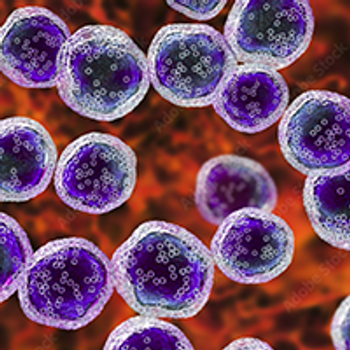
The European Commission has approved lisocabtagene maraleucel for the treatment of adult patients with diffuse large B-cell lymphoma, high-grade B-cell lymphoma, primary mediastinal large B-cell lymphoma, and follicular lymphoma grade 3B who relapsed within 12 months from completion of, or are refractory to, first-line chemoimmunotherapy.

Looking to replicate the impressive findings with CAR T-cell therapies observed in patients with hematologic malignancies, investigators have initiated the BASECAMP-1 trial, with the hope of identifying patients with advanced solid tumors who will be suitable candidates for treatment in a subsequent trial evaluating the investigational agent A2B530.
Leaked data from an abstract scheduled to be presented at the 2023 EHA Hybrid Congress showed that ciltacabtagene autoleucel demonstrated a 74% reduction in the risk of disease progression or death compared with standard therapy in patients with relapsed/refractory multiple myeloma who received 1 to 3 prior lines of therapy.

The allogeneic anti-CD70 CAR T-cell therapy ALLO-316 elicited signals of antitumor activity and showed a tolerable safety profile in patients with advanced or metastatic clear cell renal cell carcinoma.
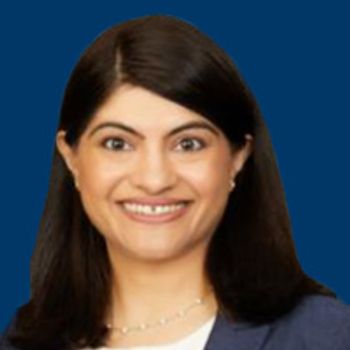
Surbhi Sidana, MD, discusses the real-world safety and efficacy of ide-cel in patients with multiple myeloma and renal impairment, and emphasizes the importance of including this population in future clinical trials examining novel therapies in this disease.

CAR T-cell therapies have transformed the treatment landscape of multiple hematologic malignancies since they first rose to prominence, but they are associated with a high financial cost, both for the patient and the health care institution that provides them.
The FDA has granted a fast track designation to CB-011, a CRISPR-edited allogeneic CAR T-cell therapy developed by Caribou Biosciences, for the treatment of patients with relapsed/refractory multiple myeloma.

The FDA has granted a fast track designation to SynKIR-110 for the treatment of patients with mesothelioma.

The European Medicines Agency’s Committee for Medicinal Products for Human Use has recommended the approval of lisocabtagene maraleucel for the treatment of select patients with large B-cell lymphoma who relapsed within 12 months from completion of or developed refractory disease to frontline chemoimmunotherapy.
Craig Sauter, MD, discussed the common limitations of CAR T-cell therapy through timely referral and the existing questions for patients with LBCL who progress on CAR T-cell therapy.
Jeffery Zonder, MD, discusses the need for expanding the armamentarium of targeted therapies for patients with relapsed/refractory multiple myeloma.
Investigators identified a set of microbiome-based biomarkers that may be used to optimize patient selection or increase personalization of treatment for patients with B-cell lymphoma receiving CAR T-cell therapy.
Jeffery Zonder, MD, discusses the process of choosing between CAR T-cell therapy and bispecific antibody approaches for the treatment of patients with relapsed/refractory multiple myeloma.
Abhinav Deol, MD, discusses the current limitations of CAR T-cell therapy in the treatment of patients with relapsed/refractory multiple myeloma.
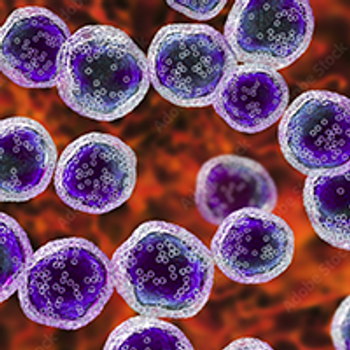
Axicabtagene ciloleucel produced a statistically significant improvement in overall survival compared with standard-of-caretherapy in patients with relapsed/refractory large B-cell lymphoma, according to data from the ZUMA-7 trial.

A real-world analysis exploring the outcomes of inpatient vs outpatient administration of CAR T-cell therapy in patients with mantle cell lymphoma and follicular lymphoma demonstrated both similarities and some differences between the 2 patient populations.

Mayur Narkhede, MD, discusses the early findings for the use of siltuximab to manage cytokine release syndrome and immune effector cell–associated neurotoxicity syndrome in patients following CAR T-cell therapy and expands on the next steps for investigating this agent during the phase 2 trial.

Nirav N. Shah, MD, explains the choice to evaluate LV20.19 CAR in MCL, key efficacy and safety data from the follow-up study of this agent, and ongoing efforts to potentially expand its use across other B-cell malignancies.
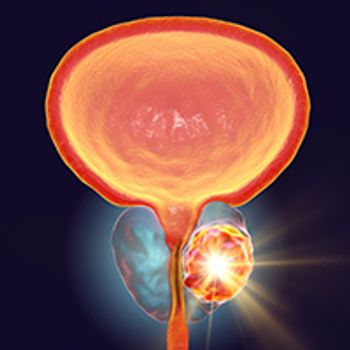
Bellicum Pharmaceuticals has discontinued 2 phase 1/2 trials evaluating the safety and preliminary efficacy of the GoCAR T-cell products BPX-601 and BPX-603 in combination with rimiducid in heavily pretreated patients with advanced solid tumors following an assessment of the risk/benefit profile of the combination of BPX-601 and rimiducid.
Matthew Frank, MD, PhD, discusses the rationale for investigating CD22-directed CAR-T cell therapy in adult patients with large B-cell lymphoma who relapsed after or were refractory to CD19-directed CAR T-cell therapy.
Advertisement
Advertisement
Trending on OncLive
1
FDA Approval of Dostarlimab Brings Potential Organ-Sparing Approach in dMMR Locally Advanced Rectal Cancer
2
Casdatifan Demonstrates Activity in Advanced Clear Cell RCC
3
Treatment Tailoring and Weighing Alternative Formulations Support Optimal TKI Deployment in CML
4
HER2+ Maintenance Therapy Approvals and Innovative Brain Metastasis Care Reshape Breast Cancer Management
5