


CAR T-Cell Therapy
Latest News


FDA’s ODAC to Review Data for Ide-Cel in Triple-Class Exposed R/R Myeloma
By Chris Ryan

CAR-M Therapy CT-0508 Shows Promise in HER2-Overexpressing Recurrent/Metastatic Solid Tumors
By Kyle Doherty
Advertisement
Latest Videos























































Advertisement
More News
The FDA has granted priority review to the supplemental biologics license application seeking approval to expand the indication of lisocabtagene maraleucel to include patients with chronic lymphocytic leukemia or small lymphocytic lymphoma who had prior exposure to a BTK inhibitor and a BCL-2 inhibitor.

Mark Leick, MD, discusses the varying role of CAR T-cell therapy across various hematologic malignancies, elaborating on the cause of its effectiveness in these disease spaces.

Mark Leick, MD, discusses how the emergence of CAR T-cell therapies have affected the treatment paradigms in various hematologic malignancies, expands on how persisting challenges with the use of this type of treatment are being addressed, and details research into the use of CAR T-cell therapy in patients with solid tumors.
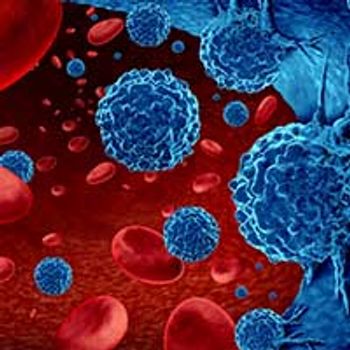
The FDA has cleared the investigational new drug application for CHM 2101, a novel CDH17-targeted CAR T-cell therapy, for the treatment of patients with gastrointestinal cancers.

The Claudin-6–directed CAR T-cell therapy, BNT211, showed signs of clinical activity in patients with CLDN6-positive relapsed or refractory solid tumors.

Hemant S. Murthy, MD, discusses the evolving use of CAR T-cell therapy for elderly or frail patients with relapsed/refractory B-cell lymphomas.

Hemant S. Murthy, MD, emphasizes the importance of an accelerated manufacturing process for CAR T-cell therapy, discusses the use of CAR T-cell therapy in older and frail patients, and highlights toxicity management strategies that have implemented and are under evaluation for patients receiving CAR T-cell therapy.
Loretta J. Nastoupil, MD, discusses the rationale for launching the phase 2 TRANSCEND FL trial evaluating lisocabtagene maraleucel in patients with relapsed/refractory follicular lymphoma, highlighting the background for investigating this treatment approach.

J. Randolph (Randy) Hecht, MD, discusses barriers to enrollment in the observational BASECAMP-1 study and the phase 1/2 EVEREST-1 study, which will investigate HLA-A*02 as a target for the novel CAR T-cell therapy A2B530 in patients with solid tumors.
Qian (Janie) Qin, MD, discusses the investigation and use of CAR T-cell therapy in patients with advanced clear cell renal cell carcinoma.
Mary “Nora” Disis, MD, discusses the rationale for investigating the efficacy and optimal delivery of PRGN-3005 autologous UltraCAR T cells in patients with advanced stage platinum-resistant ovarian cancer.
J. Randolph (Randy) Hecht, MD, discusses the observational BASECAMP-1 study and the investigation of HLA-A*02 as a target for the novel CAR T-cell therapy A2B530 in the phase 1/2 EVEREST-1 study, which will investigate A2B530 in patients with solid tumors.

J. Randolph (Randy) Hecht, MD, discusses barriers to treatment with CAR T-cell therapy in patients with solid tumors, highlighting various efforts that investigators are spearheading to address these unmet needs.

Ajai Chari, MD, discusses selecting between CAR T-cell therapies and bispecific antibodies in multiple myeloma, expands on the factors that can help inform these decisions, and highlights the need for additional data to help inform sequencing and potential combinations for these therapies.
The FDA has granted orphan drug designation to the next generation BCMA-directed CAR T-cell therapy NXC-201 for the treatment of patients with amyloid light chain amyloidosis.
Ajai Chari, MD, discusses the evolving role of bispecific antibodies and CAR T-cell therapies, such as ciltacabtagene autoleucel, in the treatment of patients with multiple myeloma.
Loretta J. Nastoupil, MD, discusses the rationale for investigating the use of lisocabtagene maraleucel in patients with relapsed/refractory follicular lymphoma.
Ajai Chari, MD, discusses the use of the CAR T-cell therapies idecabtagene vicleucel and ciltacabtagene autoleucel in the treatment of patients with multiple myeloma.
Patient preferences should be considered when selecting the optimal treatment regimen for patients with relapsed/refractory follicular lymphoma, as both CD19-directed CAR T-cell therapies and CD20-targeted bispecific antibodies can be efficacious in this population, according to a presentation by Caron A. Jacobson, MD, MMSc, at the 2023 SOHO Annual Meeting.
Without a plethora of randomized and historic data to compare treatments, selection and sequencing strategies for patients with relapsed/refractory multiple myeloma must balance a multitude of factors, including adverse effect profiles, disease resistance mechanisms, and more.
Minimal residual disease negativity sustained for 6 months or longer with ciltacabtagene autoleucel prolonged duration of response and progression-free survival compared with minimal residual disease negativity sustained for less than 6 months in patients with heavily pretreated relapsed/refractory multiple myeloma.
Abhinav Deol, MD, discusses the sequencing of CAR T-cell therapies with other readily available agents in multiple myeloma.
Mazyar Shadman, MD, MPH, discusses the evolution of BTK inhibitors in CLL, highlights how treatment patterns have evolved with the continued emergence of data on ibrutinib, acalabrutinib, and zanubrutinib, and expands on how pirtobrutinib and liso-cel could address unmet needs for this patient population.
Matthew Frank, MD, PhD, discusses findings from prior research investigating a CD22-directed CAR T-cell therapy that informed the rationale for launching a phase 1 trial with this agent in patients with relapsed/refractory large B-cell lymphoma.
Martin E. Gutierrez, MD, and Lori A. Leslie, MD, discuss common barriers to implementing CAR T-cell therapy programs, early successes that John Theurer Cancer Center in New Jersey has seen with outpatient CAR T-cell therapy administration, and developments on the horizon for administering this approach in solid tumors
Advertisement
Advertisement
Trending on OncLive
1
FDA Approval of Dostarlimab Brings Potential Organ-Sparing Approach in dMMR Locally Advanced Rectal Cancer
2
Casdatifan Demonstrates Activity in Advanced Clear Cell RCC
3
Treatment Tailoring and Weighing Alternative Formulations Support Optimal TKI Deployment in CML
4
HER2+ Maintenance Therapy Approvals and Innovative Brain Metastasis Care Reshape Breast Cancer Management
5