





Gastrointestinal Cancer
Latest News
Advertisement
Latest Videos




















































Advertisement
More News
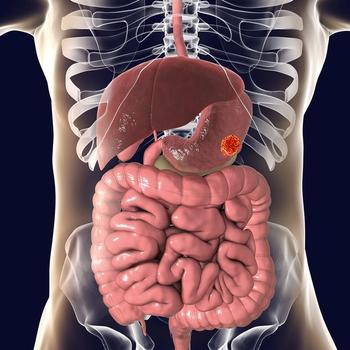
The safety and tolerability of TST001 is under investigation as a potential treatment option for patients with gastric/gastroesophageal junction cancer and other locally advanced or metastatic solid tumors as part of a phase 1 trial.

The addition of nivolumab to mFOLFOX6 and bevacizumab failed to demonstrate a statistically significant improvement in progression-free survival vs mFOLFOX6 and bevacizumab alone in previously untreated patients with metastatic colorectal cancer, according to findings from the phase 2/3 CheckMate 9X8 trial.

Trastuzumab deruxtecan demonstrated durable responses and a safety profile that was consistent with findings from the primary analysis of the phase 2 DESTINY-CRC01 trial in pretreated patients with HER2-expressing metastatic colorectal cancer, according to updated results of the study.

The addition of nivolumab to encorafenib and cetuximab elicited a high response rate and an acceptable safety profile in patients with refractory microsatellite stable, BRAF V600E–mutant metastatic colorectal cancer, according to findings from a phase 1/2 trial.

Pembrolizumab plus regorafenib failed to demonstrate a significant improvement in progression-free survival in pretreated patients with microsatellite stable colorectal cancer (MSSCRC), missing the primary end point of the phase 1/2 trial.
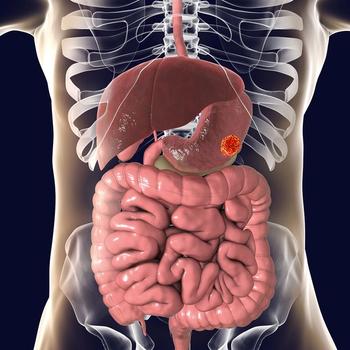
The use of pembrolizumab plus binimetinib and bevacizumab in patients with microsatellite-stable, treatment-refractory metastatic colorectal cancer induced a median progression-free survival of 5.8 months, according to preliminary findings from a phase 2 trial.
Onvansertib in combination with irinotecan, fluorouracil, and folinic acid, plus bevacizumab, demonstrated encouraging efficacy and was well-tolerated in patients with KRAS-mutated metastatic colorectal cancer.

Transarterial chemoembolization plus lenvatinib led to a significant improvement in overall survival vs lenvatinib alone as frontline therapy in patients with advanced hepatocellular carcinoma, according to findings from the phase 3 LAUNCH trial.

Do-Youn Oh, MD, PhD, discusses the results of the phase 3 TOPAZ-1 trial in advanced biliary tract cancer.

Tanios S. Bekaii-Saab, MD, FACP, discusses the updated results of the ongoing phase 1/2 KRYSTAL-1 trial in KRAS G12C-mutated gastrointestinal cancers, including pancreatic ductal adenocarcinoma.
The combination of olaparib and pembrolizumab demonstrated acceptable safety and an manageable adverse effect profile in patients with advanced cholangiocarcinoma who had received prior gemcitabine-based therapy, according to findings from a phase 2 trial.
Updated findings from the KEYNOTE-590 study confirmed the clinical benefit of the combination of pembrolizumab and chemotherapy as a treatment for patients with locally advanced and metastatic esophageal cancer.
Transarterial chemoembolization combined with lenvatinib plus sintilimab was safe and effective for patients with unresectable hepatocellular carcinoma.
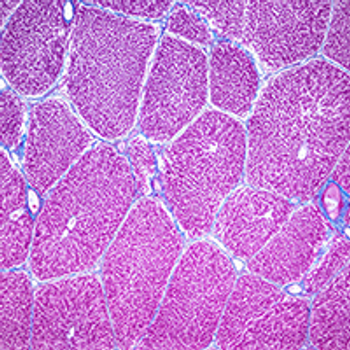
Lenvatinib was effective in treating patients with recurrent hepatocellular carcinoma after liver transplantation and demonstrated manageable toxicities.

Nivolumab plus chemotherapy demonstrated a durable survival benefit for patients with gastric or gastroesophageal junction cancer, according to updated findings from the CheckMate 649 trial.
Sintilimab plus standard-of-care chemotherapy failed to demonstrate a significant improvement in overall survival and progression-free survival vs standard-of-care chemotherapy alone but did result in an improved objective response rate in patients with metastatic or recurrent pancreatic adenocarcinoma, according to findings from the phase 3 CISPD3 trial.

The oral fluoropyrimidine derivative S-1 led to improved survival when used as adjuvant therapy compared with surgery alone in patients with biliary tract cancers.

Adagrasib monotherapy demonstrated encouraging clinical activity in patients with previously treated pancreatic ductal adenocarcinoma and other non–colorectal gastrointestinal tumors that harbor KRAS G12C mutations.
The FDA has granted an orphan drug designation to silmitasertib for use as a potential therapeutic option in patients with biliary tract cancer.
Although pembrolizumab monotherapy showed noninferiority to chemotherapy for overall survival in patients with advanced gastric or gastroesophageal junction adenocarcinoma and a PD-L1 combined positive score of 1 or higher, and a clinically meaningful benefit over chemotherapy in those with a CPS of 10 or higher, pembrolizumab plus chemotherapy failed to show superiority over chemotherapy alone in either subset.

Key Markers in Gut Microbiome May Predict Skin-Related AEs With Nivolumab in Advanced Gastric Cancer
The presence of Arthrobacter and fatty acid metabolism pathways in gut microbiomes may be linked to an increased risk of skin-related adverse events in patients with advanced gastric cancer who are receiving single-agent nivolumab.

Neoadjuvant nivolumab plus ipilimumab followed by adjuvant nivolumab elicited a pathologic complete response rate of 59% in patients with resectable microsatellite instable or mismatch repair deficient oeso-gastric junction adenocarcinoma.
The FDA’s Office of Orphan Products Development has granted an orphan drug designation to the multitumor-associated antigen-specific T-cell therapy, MT-601, for the treatment of patients with pancreatic cancer.

The combination of durvalumab and tremelimumab demonstrated a significant improvement in overall survival vs sorafenib as frontline therapy in patients with unresectable hepatocellular carcinoma, according to findings from the phase 3 HIMALAYA trial.

Treatment with the PD-L1 inhibitor durvalumab in combination with gemcitabine and cisplatin resulted in significantly improved overall survival vs placebo plus chemotherapy in patients with advanced biliary tract cancer.
Advertisement
Advertisement
Trending on OncLive
1
Epcoritamab Plus R-CHOP Meets PFS End Point in Newly Diagnosed DLBCL
2
‘Our Impact Will Be Broad and Transformative’: Wells Messersmith, MD, Takes the Reins at CU Anschutz Cancer Center
3
FDA Approves Pirtobrutinib for Previously Untreated CLL/SLL
4
INBRX-106 Plus Pembrolizumab Improves Responses and PFS in First-Line PD-L1–Positive HNSCC
5