

Gastrointestinal Cancer
Latest News
Advertisement
Latest Videos

















































Advertisement
More News

Sponsored Content
This content was developed in collaboration with Servier Pharmaceuticals and Onc Live
Daneng Li, MD, discusses the interim analysis results of a phase 1 trial evaluating surufatinib in United States patients with neuroendocrine tumors.
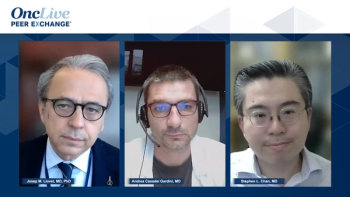
Andrea Casadei Gardini, MD, presents the case of a 63-year-old man diagnosed with advanced HCC, and the panel reviews available first-line treatment options for patients with advanced HCC.
Gastroenterology experts discuss whether there a is a role for systemic therapy for the management of intermediate HCC.
The FDA granted an orphan drug designation to toripalimab for the treatment of patients with esophageal cancer.
Dr. Ku underscores key takeaways from the CheckMate649 and DESTINY-Gastric02 trials in gastric/GEJ cancer and highlights ongoing research that has the potential to further inform treatment selection and sequencing in the field
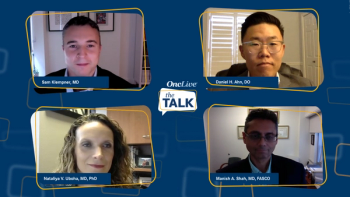
Experts in gastrointestinal cancers review recent updates and clinical implications from phase 3 trials presented at ESMO 2021 in metastatic esophageal squamous cell carcinoma (ESCC).
The combination of pembrolizumab (Keytruda) and irinotecan- or paclitaxel-based chemotherapy was not found to be effective in pretreated, biomarker-unselected patients with extrapulmonary poorly differentiated neuroendocrine carcinomas.
Patients with carcinoid syndrome reported improved symptoms following treatment with telotristat ethyl.
The combination of surufatinib and toripalimab demonstrated promising clinical activity with a manageable safety profile when used as second-line treatment for patients with advanced neuroendocrine carcinoma.
Surufatinib demonstrated strong antitumor activity along with a manageable safety profile in heavily treated US patients with progressive extrapancreatic neuroendocrine tumors or pancreatic NETs, according to interim phase 1 data.
Heloisa P. Soares, MD, PhD, discusses the standard of care in metastatic pancreatic cancer.

It is crucial to understand and interpret the results from the landmark clinical trials in the context of recent FDA approvals in gastroesophageal cancers.
The FDA has granted an orphan drug designation to LYT-200, a fully human IgG4 monoclonal antibody targeting galectin-9, for use as a potential therapeutic option for patients with pancreatic cancer.
Lanreotide autogel/depot administered at 120 mg every 28 days may be an appropriate treatment for patients with advanced bronchopulmonary neuroendocrine tumors.
Saif Shares Insights on Single-Agent PARP Inhibitors and Combination Therapies for Pancreatic Cancer
Wasif M. Saif, MD, discusses the evolving role of PARP inhibitors and anticipated trends for research in pancreatic cancer.
Wasif M. Saif, MD, MBBS, discusses the rationale to utilize PARP inhibitors in BRCA-mutated pancreatic cancer.
The small molecule drug conjugate PEN-221 was generally well tolerated and elicited significant clinical benefit in patients with pretreated gastrointestinal neuroendocrine tumors.
Andrea Casadei Gardini, MD, and Stephen L. Chan, MD, examine the use of TACE and TARE-Y90 for the treatment of HCC.
Stephen L. Chan, MD, reviews the case of a 72-year-old woman with mild alcoholic cirrhosis and provides insight on the potential role of adjuvant and neoadjuvant therapy for the treatment of HCC.
Several breakthroughs in recent years have rapidly shifted the treatment landscape for advanced HCC.
The FDA has granted an orphan drug designation to the HER2-targeted natural killer cell engager therapy, DF1001, as a potential therapeutic option for patients with esophageal cancer.
Sarbajit Mukherjee, MD, MS, discusses considerations to inform when to initiate immunotherapy in gastroesophageal cancer.
Sameek Roychowdhury, MD, PhD, discusses the efficacy and safety data reported with infigratinib in FGFR2-positive cholangiocarcinoma, nuances to treatment with the agent, and ongoing research efforts to further improve outcomes in this population.
Gastrointestinal cancer is increasingly viewed through a multidisciplinary lens, and the 2021 International Society of Gastrointestinal Oncology Annual Meeting produced intriguing developments in the armamentarium.
Advertisement
Advertisement
Trending on OncLive
1
Epcoritamab Plus R-CHOP Meets PFS End Point in Newly Diagnosed DLBCL
2
‘Our Impact Will Be Broad and Transformative’: Wells Messersmith, MD, Takes the Reins at CU Anschutz Cancer Center
3
FDA Approves Pirtobrutinib for Previously Untreated CLL/SLL
4
INBRX-106 Plus Pembrolizumab Improves Responses and PFS in First-Line PD-L1–Positive HNSCC
5