



Gastrointestinal Cancer
Latest News

Advertisement
Latest Videos


















































Advertisement
More News
David J. Pinato, MD, discusses combination strategies in HCC, how to manage associated toxicities, and how safety profiles can help to inform treatment decisions for this patient population.

The risk of cancer-specific death was significantly higher than the risk of noncancer death in patients with neuroendocrine tumors, despite the reported heterogeneity by primary tumor site.

Nivolumab elicited a prolonged clinical benefit in patients with advanced hepatocellular carcinoma regardless of prior sorafenib.
E. Gabriela Chiorean, MD, discusses some of the recent developments in pancreatic cancer, HCC, and NETs, as well as multidisciplinary approaches for treating these patients.

Triplet regimens leveraging novel agents targeted at overcoming mechanisms of resistance in combination with immune checkpoint inhibitors and anti-angiogenic therapies represent the next frontier in hepatocellular carcinoma.
David J. Pinato, MD, discusses guidelines for toxicity management in hepatocellular carcinoma (HCC).
The combination of atezolizumab and bevacizumab elicited an improved overall survival benefit compared with sorafenib in patients with albumin-bilirubin grade 1 hepatocellular carcinoma, according to findings from an exploratory subgroup analysis of the phase 3 IMbrave150 trial.

Biomarkers of response to immunotherapy, characterized by high interferon signaling and expression of MHC-II related genes, predicted for improved survival in patients with advanced hepatocellular carcinoma following immediate treatment with a PD-1 inhibitor but not in those who had first received treatment with a TKI.
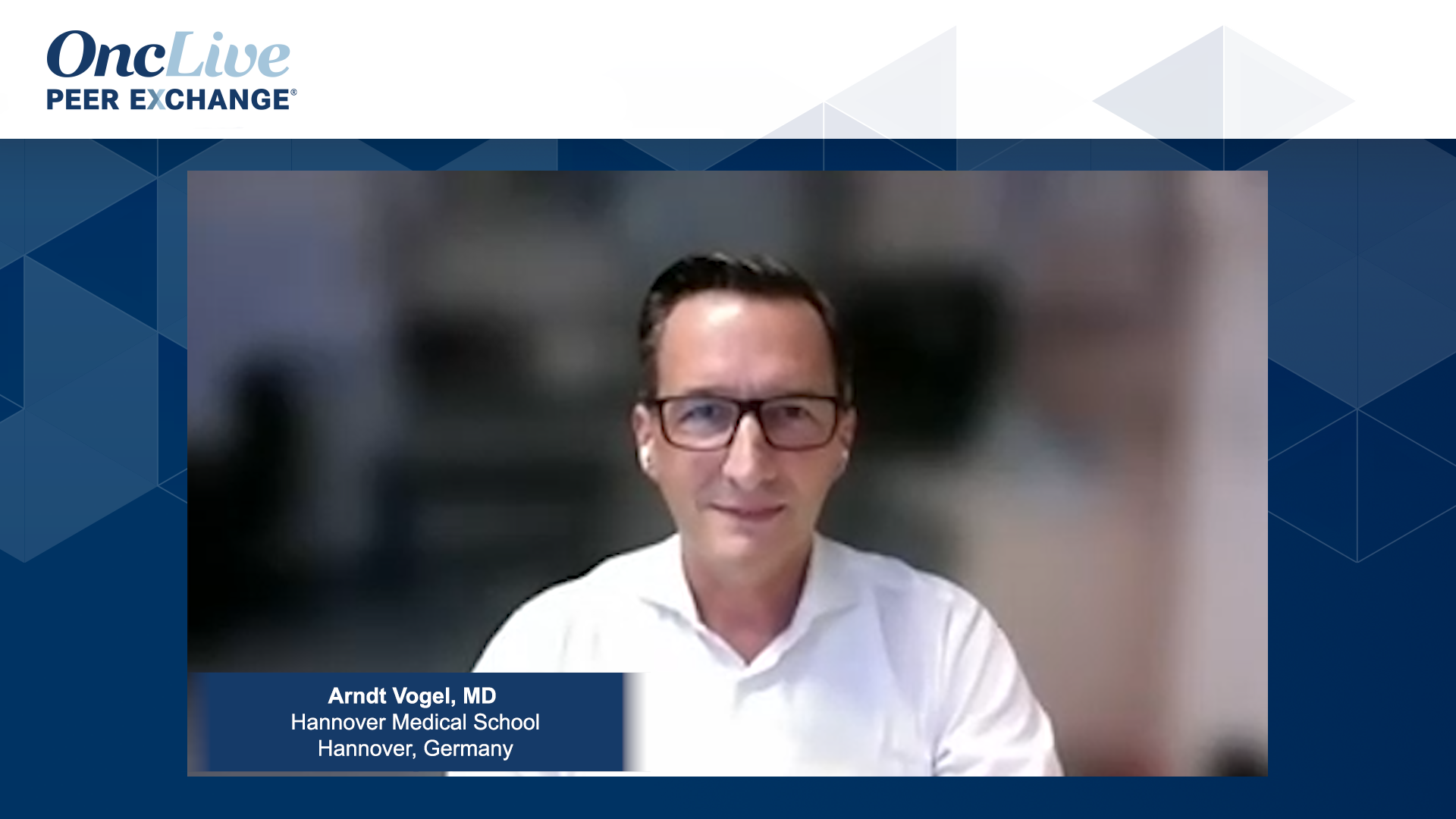
Arndt Vogel, MD, discusses the utility of frontline lenvatinib or sorafenib in hepatocellular carcinoma.

Amit Singal, MD, discusses the results of a study evaluating the utilization of a mailed surveillance outreach program in hepatocellular carcinoma.

Nicole Rich, MD, discusses the prevalence of cachexia in hepatocellular carcinoma.

The addition of selective internal radiation therapy with Y90 resin microspheres to gemcitabine/cisplatin resulted in a median overall survival of 21.6 months for patients with inoperable intrahepatic cholangiocarcinoma, according to prospective phase 2 data.

Combining durvalumab and tremelimumab plus transcatheter arterial chemoembolization or radiofrequency ablation was found to be both efficacious and safe as a treatment for patients with advanced hepatocellular carcinoma, according to results of a pilot study.
Josep M. Llovet, MD, discusses the importance of identifying biomarkers of response to checkpoint inhibitors for patients with hepatocellular carcinoma, as well as future research directions.

Devimistat in combination with gemcitabine and cisplatin has moved into the phase 2 portion of a phase 1b/2 trial studying the regimen as a first-line treatment for patients with locally advanced unresectable or metastatic biliary tract cancer.

William P. Harris, MD, discusses updated data from the phase 3 IMbrave150 study in hepatocellular carcinoma.
Systemic Treatment Advances for Advanced HCC
ByTanios S. Bekaii-Saab, MD, FACP, Mayo Clinic,Edward Kim, MD, Mount Sinai Medical Center,Anjana Pillai, MD, University of Chicago Medicine Comprehensive Cancer Center,Amit Singal, MD, UT Southwestern Medical Center,Rachna Shroff, MD, University of Arizona,Arndt Vogel, MD, Hannover Medical School,Mark Yarchoan, MD
Exciting developments using novel therapies as systemic treatment for advanced hepatocellular carcinoma.
Scoring/Classifying Patients With Advanced HCC
ByTanios S. Bekaii-Saab, MD, FACP, Mayo Clinic,Edward Kim, MD, Mount Sinai Medical Center,Anjana Pillai, MD, University of Chicago Medicine Comprehensive Cancer Center,Amit Singal, MD, UT Southwestern Medical Center,Rachna Shroff, MD, University of Arizona,Arndt Vogel, MD, Hannover Medical School,Mark Yarchoan, MD
Best practices using available scoring systems to evaluate and treat patients with advanced hepatocellular carcinoma.

E. Gabriela Chiorean, MD, discusses the role of molecular testing in pancreatic cancer.

The combination of cabozantinib and nivolumab as a neoadjuvant regimen led to encouraging margin-negative resection and major pathological response rates in patients with hepatocellular carcinoma, according to results of a single-arm, phase 1b study that were published in Nature Cancer.
The FDA has granted an orphan drug designation to gavocabtagene autoleucel as a potential treatment for patients with cholangiocarcinoma.
Adjuvant Treatment Advances in Operable HCC
ByTanios S. Bekaii-Saab, MD, FACP, Mayo Clinic,Edward Kim, MD, Mount Sinai Medical Center,Anjana Pillai, MD, University of Chicago Medicine Comprehensive Cancer Center,Amit Singal, MD, UT Southwestern Medical Center,Rachna Shroff, MD, University of Arizona,Arndt Vogel, MD, Hannover Medical School,Mark Yarchoan, MD
Perspectives regarding treatment advances using adjuvant approaches that include immunotherapy to treat early-stage hepatocellular carcinoma.
Hepatic Arterial Infusion Chemotherapy for HCC
ByTanios S. Bekaii-Saab, MD, FACP, Mayo Clinic,Edward Kim, MD, Mount Sinai Medical Center,Anjana Pillai, MD, University of Chicago Medicine Comprehensive Cancer Center,Amit Singal, MD, UT Southwestern Medical Center,Rachna Shroff, MD, University of Arizona,Arndt Vogel, MD, Hannover Medical School,Mark Yarchoan, MD
Reactions to recent clinical abstracts that support the use of hepatic arterial infusions for chemotherapy delivery in hepatocellular carcinoma.
Dr. Janjigian discusses the FDA approval of nivolumab plus chemotherapy in advanced or metastatic gastric cancer, gastroesophageal junction cancer, and esophageal adenocarcinoma, key findings from the pivotal CheckMate-649 trial, and future directions with immunotherapy in the field.

The FDA has approved the Oncomine Dx Target Test, developed by Thermo Fisher Scientific, for use as a companion diagnostic to identify patients with IDH1-mutated cholangiocarcinoma who may be eligible to receive the newly approved IDH1 inhibitor ivosidenib.
Advertisement
Advertisement
Trending on OncLive
1
Epcoritamab Plus R-CHOP Meets PFS End Point in Newly Diagnosed DLBCL
2
‘Our Impact Will Be Broad and Transformative’: Wells Messersmith, MD, Takes the Reins at CU Anschutz Cancer Center
3
FDA Approves Pirtobrutinib for Previously Untreated CLL/SLL
4
Berzosertib Plus Carboplatin Fails to Improve Responses in Pretreated mCRPC
5