


Gastrointestinal Cancer
Latest News

Advertisement
Latest Videos


















































Advertisement
More News
Throughout 2021, investigators of several pivotal trials presented findings that may result in shifting standards for the treatment of patients across tumor types.
Syma Iqbal, MD, shares the main highlights from an IPC meeting, which centered on the evolving landscapes and importance of implementing best practices for patients with hepatobiliary cancers, locally advanced and advanced pancreatic cancer, advanced gastric/gastroesophageal junction cancer, and metastatic colorectal cancer.
With the rapid uptake of novel therapies, including immunotherapy and targeted therapy, shifts in treatment strategies are anticipated in hepatobiliary cancers, locally advanced and advanced pancreatic cancer, gastric/gastroesophageal junction cancers, and metastatic colorectal cancer.

A biologics license application has been submitted to the FDA seeking the approval of a proposed biosimilar for trastuzumab, a monoclonal antibody that is utilized in the treatment of patients with HER2-positive breast cancer and metastatic gastric cancers.
Dr. Hochster provides insight into the current gastric/GEJ landscape, spotlighting molecular testing approaches, the roles of chemoimmunotherapy combinations, ongoing research with biomarkers of response, and optimal treatment sequencing for patients with HER2-positive disease.

Ulka Nitin Vaishampayan, MBBS, discusses the utility of FGFR inhibitors in metastatic urothelial cancer.
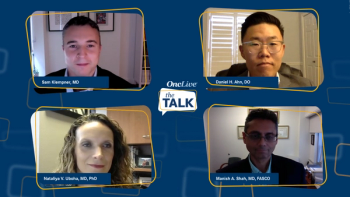
Sam Klempner, MD; Daniel H. Ahn, DO; Nataliya V. Uboha, MD, PhD; and Manish A. Shah, MD, FASCO, review recent updates in second-line gastric cancer, CAR T-cell therapy in solid tumors, and colorectal cancer presented at ESMO 2021.
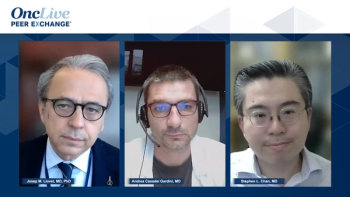
Drs Josep Llovet, Stephen L. Chan, and Andrea Casadei Gardini discuss the future treatment landscape for HCC.
Stephen L. Chan, MD, leads the discussion on the prevalence and management of advanced HCC in patients with NASH.
A panel of experts in gastroenterology review the case of a 65-year-old man with advanced HCC associated with NASH and comment on treatment with TKIs and immunotherapy.

Investigators have known about hereditary diffuse gastric cancer syndrome for decades, but only identified its molecular causes in the 1990s, said gastrointestinal oncologist Bryson Katona, MD, PhD.
The Japan Pharmaceuticals and Medical Devices Agency has approved the PD-1 inhibitor pembrolizumab for frontline use in combination with 5-fluorouracil plus cisplatin chemotherapy in patients with radically unresectable, advanced, or recurrent esophageal carcinoma.
Experts in gastrointestinal cancers review the role of genomic testing in metastatic colorectal cancer and its impact on informing treatment decisions.
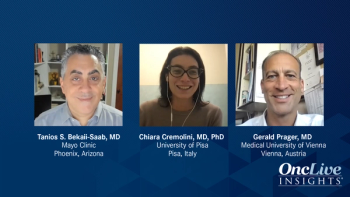
Tanios S. Bekaii-Saab, MD, Gerald Prager, MD, and Chiara Cremolini, MD, PhD, provide insight on the treatment landscape and international screening guidelines of colorectal cancer.
Howard S. Hochster, MD, discusses molecular markers for patients with gastric cancer, using gene expression profiles as biomarkers, and choosing between anti–PD-1 and anti–CTLA-4 agents.
Sameek Roychowdhury, MD, PhD, discusses the pivotal phase 2 trial with infigratinib in FGFR-positive cholangiocarcinoma, the safety and efficacy achieved with infigratinib, and the next steps for this agent.
Several leading experts discussed a variety of tumor types set to influence the next wave of investigative directions and change the standard of care for patients in abstracts at the European Society for Medical Oncology Congress 2021.
Key opinion leaders in gastric cancers comment on ESMO 2021 updates in metastatic HER2+ esophagogastric adenocarcinoma and metastatic HER2+ gastric or gastroesophageal junction cancer.

The combination of cabozantinib and atezolizumab led to a statistically significant improvement in progression-free survival and a numerical improvement in overall survival vs sorafenib as frontline treatment in patients with advanced hepatocellular carcinoma, according to findings from the first planned analysis of the phase 3 COSMIC-312 trial.
Bryson Katona, MD, discusses the hallmarks of hereditary diffuse gastric cancer.
Andrea Casadei Gardini, MD, leads the discussion on the optimal sequencing of systemic therapy for advanced HCC.
Experts in gastroenterology share their approaches to first-line single-agent and combination TKI therapies for the treatment of advanced HCC.

Wasif M. Saif, MD, MBBS, discusses recommendations for germline testing in patients with pancreatic cancer.

Syma Iqbal, MD, discusses the emergence of checkpoint inhibitors in upper gastrointestinal cancers.
AGEN1181, a next-generation CTLA-4 inhibitor, exhibited clinical activity both as a monotherapy and in combination with balstilimab in heavily pretreated patients with advanced solid tumors.
Advertisement
Advertisement
Trending on OncLive
1
Epcoritamab Plus R-CHOP Meets PFS End Point in Newly Diagnosed DLBCL
2
‘Our Impact Will Be Broad and Transformative’: Wells Messersmith, MD, Takes the Reins at CU Anschutz Cancer Center
3
FDA Approves Pirtobrutinib for Previously Untreated CLL/SLL
4
INBRX-106 Plus Pembrolizumab Improves Responses and PFS in First-Line PD-L1–Positive HNSCC
5