
Gastrointestinal Cancer
Latest News
March 23rd 2022
Temozolomide Followed by Low-Dose Ipilimumab/Nivolumab Shows Potential in MSS and MGMT-Silenced mCRC
By Kristi Rosa
Temozolomide priming followed by the combination of low-dose ipilimumab and nivolumab may produce durable clinical benefit in microsatellite stable and MGMT-silenced metastatic colorectal cancer.
Advertisement
Latest Videos



















































Advertisement
More News

The combination of cabozantinib and atezolizumab was not found to result in an improvement nor a detriment in overall survival vs sorafenib when used in previously untreated patients with advanced hepatocellular carcinoma, according to data from the phase 3 COSMIC-312 trial.

Experts in the field of upper gastrointestinal cancers discuss recent data from the European Society for Medical Oncology Congress 2021 that may bolster the uptake of HER2 as a guide for treatment decisions in the second line.

Since most diagnoses of esophageal squamous cell carcinoma are made when the disease is in advanced stages, investigators have initiated studies to evaluate the efficacy of immunotherapy in earlier lines of therapy, including in combination with chemoradiotherapy.
Daneng Li, MD, evaluates the use of cabozantinib plus atezolizumab in first-line advanced unresectable HCC as seen in the COSMIC-312 study.
Anthony B. El-Khoueiry, MD, provides insight on the evolution of care for frontline systemic therapy in advanced HCC and discusses currently approved first-line standard of care options.
The phase 3 NuTide:121 trial examining the first-in-class nucleotide analogue NUC-1031 in combination with cisplatin vs gemcitabine plus cisplatin in patients with advanced biliary tract cancer is being discontinued.
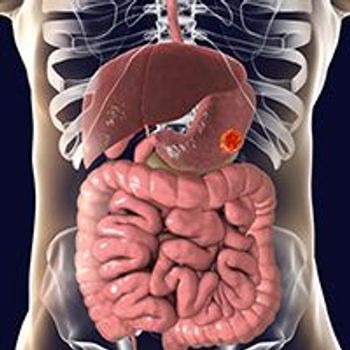
Liver cancer is a highly vascularized and one of the most drug resistant forms of solid tumors.

The European Medicines Agency’s Committee for Medicinal Products for Human Use has recommended the approval of nivolumab and ipilimumab for use in the frontline treatment of adult patients with unresectable advanced, recurrent or metastatic esophageal squamous cell carcinoma with a PD-L1 expression of 1% or higher.

The European Medicines Agency’s Committee for Medicinal Products for Human Use has granted a positive opinion to the use of nivolumab in combination with chemotherapy in the first-line treatment of adult patients with unresectable advanced, recurrent, or metastatic esophageal squamous cell carcinoma with a PD-L1 expression of 1% or higher.
New agents for rare cancers make up approximately 35% of drugs in the pipeline for all rare diseases, according to a report from the Pharmaceutical Research and Manufacturers of America.

Sotorasib had clinically meaningful activity in heavily pretreated patients with KRAS G12C–mutated advanced pancreatic cancer, according to findings from the phase 1/2 CodeBreaK 100 trial.

An overview of the ctDNA testing platforms and the potential clinical applications of ctDNA testing across the colorectal cancer disease continuum.
The present role of minimal residual disease in solid tumor cancers, and current evaluations further exploring its potential in pancreatic and colorectal cancer.
Daniel G. Haller, MD, says he has relied on “cheerful serendipity” throughout his life and career.

Michael A. Choti, MD, MBA, FACS, discusses the progress made in gastrointestinal cancers, plus the need to coordinate care between patients, oncologists, and surgeons.
In 2021, 13 novel agents were approved across hematology/oncology. Additionally, there were many other notable approvals—whether they were new formulations, expanded indications, or biosimilar approvals—across tumor types that expanded accessibility for varying patient populations.

The 3-patient safety run-in for the pancreatic cancer cohort of the ongoing phase 1/2 GOBLET study did not reveal any safety concerns with the novel combination of pelareorep and atezolizumab.

Sam Klempner, MD, discusses the results of the ongoing phase 2a DisTinGuish trial in advanced gastroesophageal adenocarcinoma.

Manish A. Shah, MD, discusses the potential clinical implications of the ongoing phase 3 GLOW trial in Claudin 18.2-positive, HER2-negative gastric/gastroesophageal junction adenocarcinoma.

Reviewing some of the most talked about abstracts that were presented at the 2022 Gastrointestinal Cancers Symposium.
Gerald Prager, MD; Chiara Cremolini, MD, PhD; and Tanios S. Bekaii-Saab, MD, review emerging strategies and the future treatment landscape for metastatic colorectal cancer.
Gerald Prager, MD, leads the discussion on sequencing strategies for patients with relapsed mCRC, including those not previously treated with anti-EGFR inhibitors.
Gerald Prager, MD, and Chiara Cremolini, MD, PhD, share their approach to managing the case of a 72-year-old man with mCRC disease progression and provide insight on rechallenging patients with anti-EGFR regimens.
Chiara Cremolini, MD, PhD, discusses dosing strategies and the optimal management of adverse events with regorafenib for patients with mCRC.
Chiara Cremolini, MD, PhD; Gerald Prager, MD; and Tanios S. Bekaii-Saab, MD, share their approach to maintenance therapy, including with EGFR inhibitors, for the management of advanced CRC.
Advertisement
Advertisement
Trending on OncLive
1
Epcoritamab Plus R-CHOP Meets PFS End Point in Newly Diagnosed DLBCL
2
‘Our Impact Will Be Broad and Transformative’: Wells Messersmith, MD, Takes the Reins at CU Anschutz Cancer Center
3
FDA Approves Pirtobrutinib for Previously Untreated CLL/SLL
4
INBRX-106 Plus Pembrolizumab Improves Responses and PFS in First-Line PD-L1–Positive HNSCC
5