





Gastrointestinal Cancer
Latest News
Advertisement
Latest Videos


















































Advertisement
More News

The FDA has granted an orphan drug designation to the novel autophagy/palmitoyl protein thioesterase-1 inhibitor ezurpimtrostat for the treatment of patients with cholangiocarcinoma.

Evidence-based decisions have leveraged the use of immunotherapy combination atezolizumab plus bevacizumab for patients who receive a diagnosis of hepatocellular carcinoma.
The FDA has granted an orphan drug designation to the CDK7 inhibitor SY-5609 for use as a potential therapeutic option in patients with relapsed metastatic pancreatic cancer.

Patients with hepatocellular carcinoma who developed treatment-related adverse effects associated with atezolizumab plus bevacizumab had improved overall survival and progression-free survival outcomes.
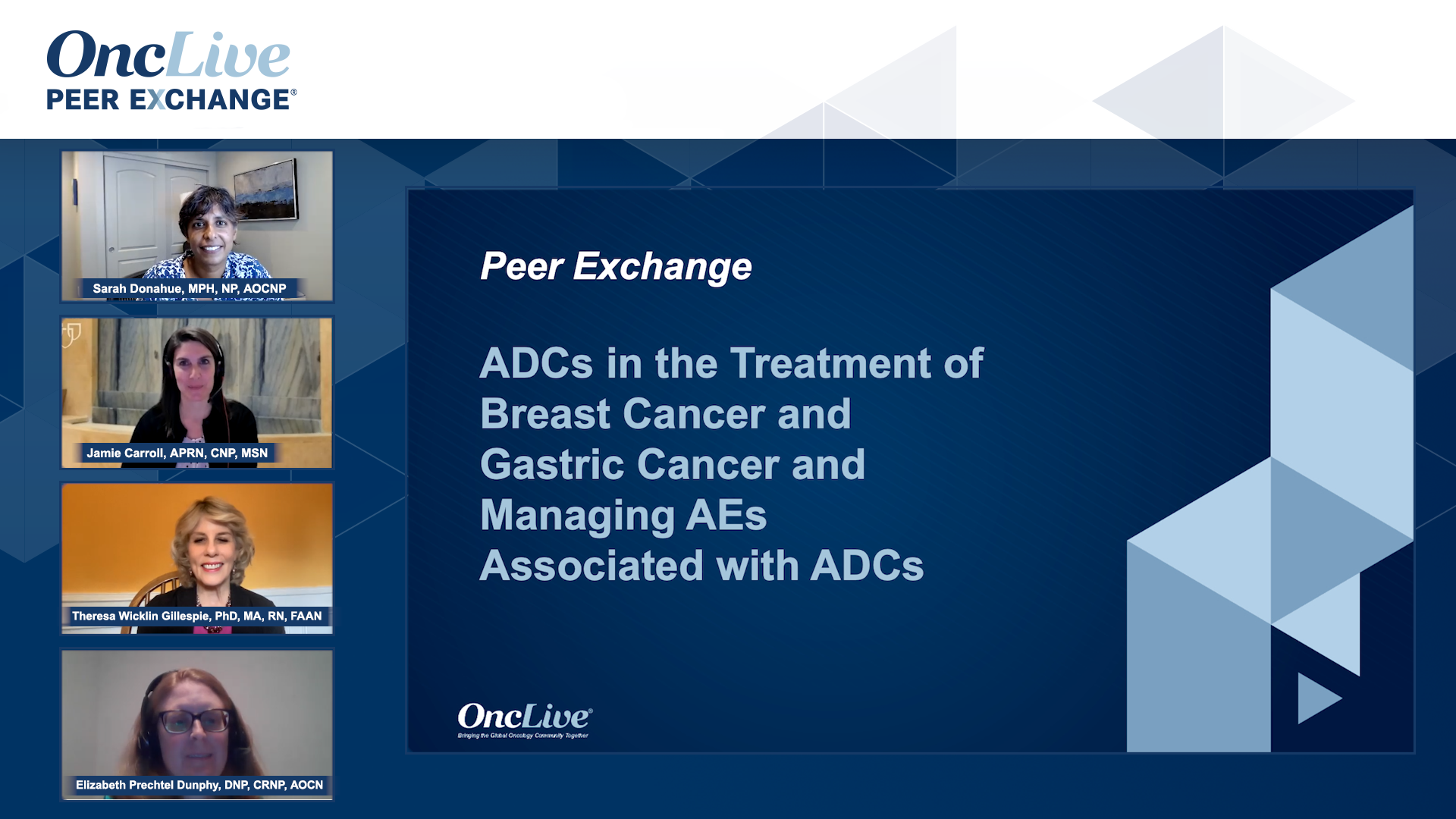
Centering discussion on a patient profile of HER2+ gastric cancer, experts in oncology discuss the occurrence of neutropenia with trastuzumab deruxtecan therapy.
Before closing out their discussion on antibody drug conjugate use in breast cancer management, panelists consider ongoing clinical trials in this setting.

Four weeks of treatment with nivolumab plus ipilimumab elicited major pathologic responses in 95% of patients with mismatch repair–deficient colon cancer.

OncLive® will be LIVE with OncLive® News Network: On Location at the 2022 ESMO Congress. Each day, we will broadcast a series of interviews with top thought leaders, to learn their thoughts and reactions to data presented across oncology during the conference.

Tislelizumab monotherapy provided a clinically meaningful overall survival benefit that was noninferior to sorafenib and showcased a favorable toxicity profile when used as a frontline treatment for patients with unresectable hepatocellular carcinoma.

Trastuzumab deruxtecan continued to demonstrate a clinical benefit and tolerable safety profile for patients with locally advanced or metastatic HER2-positive gastric or gastroesophageal junction adenocarcinoma who have received a trastuzumab-based regimen.

Although the primary end points of the phase 3 LEAP-002 trial did not meet prespecified statistical significance with regard to survival benefit achieved with lenvatinib plus pembrolizumab, the median overall survival observed with lenvatinib monotherapy supports its role as a standard of care in frontline advanced hepatocellular carcinoma treatment.

First-line treatment with camrelizumab plus rivoceranib resulted in a significant improvement in progression-free survival and overall survival compared with sorafenib in patients with unresectable hepatocellular carcinoma.

OncLive® will be LIVE with OncLive® News Network: On Location at the 2022 ESMO Congress. Each day, we will broadcast a series of interviews with top thought leaders, to learn their thoughts and reactions to data presented across oncology during the conference.
Expert perspectives on how to best manage adverse events associated with trastuzumab emtansine while treating patients with breast or gastric cancers.
Shared insight on the clinical utility of trastuzumab emtansine in the second- and third-line settings of breast and gastric cancers.
Second-line treatment with ramucirumab produced an overall survival benefit vs placebo in Chinese patients with hepatocellular carcinoma, irrespective of the presence of extrahepatic spread, according to findings from an exploratory analysis of the phase 3 REACH and REACH-2 trials.

Data from a recent analysis revealed that nearly 1 in 7 patients with hepatocellular carcinoma experience treatment delays, with higher odds observed in Black patients and those living in high poverty neighborhoods.

The sequential treatment of regorafenib followed by nivolumab was found to have an acceptable toxicity profile in patients with hepatocellular carcinoma who progressed on and tolerated first-line sorafenib, according to early data from the phase 1/2a GOING trial.

The FDA has approved durvalumab (Imfinzi) in combination with gemcitabine and cisplatin in adult patients with locally advanced or metastatic biliary tract cancers.
Shifting focus to a patient profile of HER2+ metastatic breast cancer treated with trastuzumab emtansine, oncology nurse experts review risk of peripheral neuropathy and its management.
Closing out their conversation on the first patient profile, oncology nurse experts consider sequencing therapy following trastuzumab deruxtecan in both breast and GI cancers.

Several inroads have been made in the realm of gastrointestinal cancers, with novel immunotherapy combinations representing a significant advance spanning several tumor types.

Larotrectinib produced durable responses in patients with NTRK fusion–positive locally advanced or metastatic gastrointestinal cancer, particularly in those with colorectal cancer.
Comprehensive insight to the selection and education of patients for whom ADC therapy is an option in breast or gastric cancers, with regard for pulmonary risk status.
Focused conversation on the occurrence of interstitial lung disease in patients on antibody drug conjugate therapy for breast or gastric cancers.
Advertisement
Advertisement
Trending on OncLive
1
Epcoritamab Plus R-CHOP Meets PFS End Point in Newly Diagnosed DLBCL
2
INBRX-106 Plus Pembrolizumab Improves Responses and PFS in First-Line PD-L1–Positive HNSCC
3
FDA Approves Pirtobrutinib for Previously Untreated CLL/SLL
4
‘Our Impact Will Be Broad and Transformative’: Wells Messersmith, MD, Takes the Reins at CU Anschutz Cancer Center
5