





Gastrointestinal Cancer
Latest News
Advertisement
Latest Videos















































Advertisement
More News
Thoughtful discussion of existing and emerging second-line treatment options for patients with metastatic ESCC
Focusing on metastatic ESCC, John Marshall, MD, discusses selecting appropriate first-line treatment strategies for patients.
Dr Hua talks about the unmet need in neuroendocrine tumors (NETs), explains the difficulty of detecting NETs, and highlights his study findings evaluating anti-CDH17 CAR T cells in this disease.
Shared insights on contemporary approaches to treating localized ESCC and existing racial disparities in treatment.
Broad discussion from expert John Marshall, MD, on the current standards of diagnosis care in esophageal squamous cell carcinoma (ESCC).
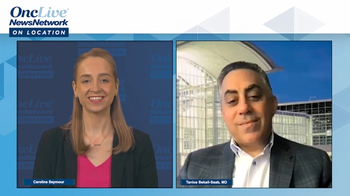
OncLive® will be LIVE with OncLive® News Network: On Location at the 2022 ASCO Annual Meeting. Each day, we will broadcast a series of interviews with top thought leaders, to learn their thoughts and reactions to data presented across oncology during the conference.
CT041, a Claudin18.2–specific CAR T-cell therapy, demonstrated a manageable safety profile in patients with previously treated, CLDN18.2-positive advanced gastric/gastroesophageal junction cancer, with a majority of patients achieving partial response or stable disease.


Jaffer A. Ajani, MD, discusses how the FDA approvals of first-line nivolumab plus chemotherapy and nivolumab plus ipilimumab in advanced or metastatic esophageal squamous cell carcinoma will improve treatment in this setting.
For the 10th consecutive year, OncLive® is honored to recognize oncology leaders whose innovations have contributed to immeasurable improvements in outcomes for countless patients.

Second-line treatment with pemigatinib may be linked with prolonged progression-free survival compared with other systemic therapies in patients with cholangiocarcinoma harboring FGFR2 fusions or rearrangements.
Kelsey Klute, MD, discusses the importance of frontline checkpoint inhibitors in advanced gastric cancer, the need for predictive biomarkers in hepatocellular carcinoma, and research investigating immunotherapy in HER2-negative gastric and esophagus cancer and esophagus and gastroesophageal junction cancer.
To date, oncologists have not seen much success with immunotherapy for neuroendocrine tumors.
The FDA has approved nivolumab in combination with fluoropyrimidine- and platinum-containing chemotherapy and nivolumab plus ipilimumab as a first-line treatment for adult patients with unresectable advanced or metastatic esophageal squamous cell carcinoma, irrespective of PD-L1 status.
A panel of hepatobiliary tumor experts discuss several pivotal phase 3 clinical trials examining combination approaches that have expanded or are anticipated to expand the treatment armamentarium for treatment-naïve patients with unresectable hepatocellular carcinoma.

The FDA has granted an orphan drug designation to XMT-2056 for use as a potential therapeutic option for patients with gastric cancer.
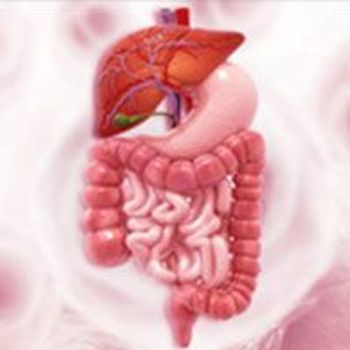
Stereotactic body radiation therapy in combination with nivolumab and ipilimumab demonstrated clinically meaningful antitumor activity with a favorable toxicity profile in difficult-to-treat patients with refractory metastatic pancreatic cancer, although the contribution of SBRT is still unclear.
Jonathan Mizrahi, MD, discusses updates from the meeting in pancreatic cancer and hepatocellular carcinoma, the growing role of immunotherapy in GI cancer, and the ‘watch and wait’ protocol seen in rectal cancer
Rates of negative surgical margins and adequate lymphadenectomies were lower in Black patients with gastrointestinal tract cancer compared with White patients, according to data from a retrospective cohort study published in JAMA Network Open.
Eric Liu, MD, FACS, reviews treatment options, pitfalls of diagnoses, and the importance of involving specialists and advocates early in neuroendocrine tumors.
Sajid A. Khan MD, FACS, FSSO, discusses findings from the study on racial disparities in surgical outcomes and quality of care for GI tract cancer, plus what issues need to be addressed to close the gap in care.
Pharmaceutical giant Novartis has temporarily halted radioligand therapy production at sites in Millburn, New Jersey, and Ivrea, Italy, citing potential quality issues in its manufacturing processes.
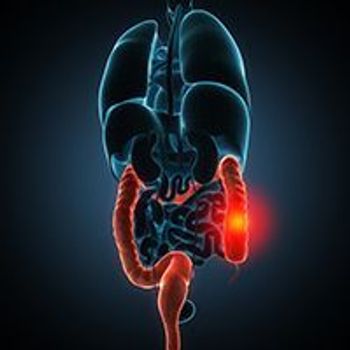
A novel combination comprised of the investigational bispecific antibody CTX-009 and paclitaxel was found to produce responses in 4 subtypes of biliary tract cancer with favorable safety and tolerability, according to interim results from an ongoing phase 2 trial.
The FDA has accepted a supplemental biologics license application and granted priority review to durvalumab in combination with standard gemcitabine and cisplatin for the treatment of patients with locally advanced or metastatic biliary tract cancer.
The FDA has issued a complete response letter to the new drug application seeking the approval of surufatinib for the treatment of patients with pancreatic and extra-pancreatic neuroendocrine tumors.
Advertisement
Advertisement
Trending on OncLive
1
Epcoritamab Plus R-CHOP Meets PFS End Point in Newly Diagnosed DLBCL
2
‘Our Impact Will Be Broad and Transformative’: Wells Messersmith, MD, Takes the Reins at CU Anschutz Cancer Center
3
FDA Approves Pirtobrutinib for Previously Untreated CLL/SLL
4
INBRX-106 Plus Pembrolizumab Improves Responses and PFS in First-Line PD-L1–Positive HNSCC
5