



Gastrointestinal Cancer
Latest News
Advertisement
Latest Videos























































Advertisement
More News

Sam Klempner, MD, and Daniel Catenacci, MD, discuss the KEYNOTE-811 study of pembrolizumab plus trastuzumab in combination with chemotherapy in patients with HER2-positive disease.

Bristol Myers Squibb has decided to voluntarily withdraw the indication for nivolumab as a monotherapy for patients with hepatocellular carcinoma who were previously treated with sorafenib from the US market.

Nivolumab plus chemotherapy or ipilimumab showcased superior overall survival over chemotherapy alone in previously untreated patients with advanced esophageal squamous cell carcinoma.

A new experimental treatment arm examining pamrevlumab in combination with gemcitabine and nab-paclitaxel as a first- or second-line treatment for patients with metastatic pancreatic cancer has been added to the novel clinical trial platform Precision Promise, which is being conducted by the Pancreatic Cancer Action Network.

Wen Wee Ma, MBBS, discusses first-line treatment considerations in metastatic pancreatic cancer.

Thought leaders in gastric and GEJ cancers review safety outcomes from the CHECKMATE649 trial presented at the 2021 ASCO annual meeting.
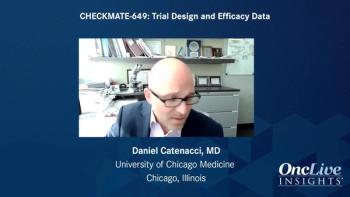
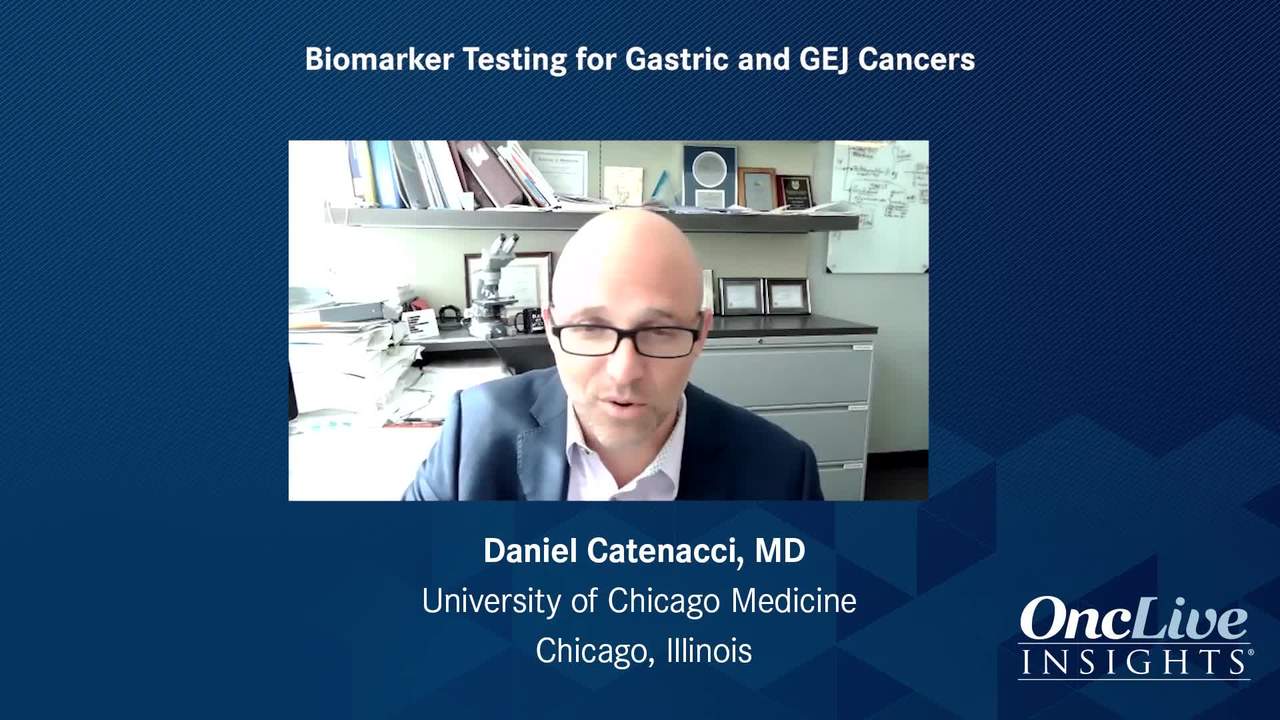
Key opinion leader in gastric cancer, Daniel Catenacci, MD, leads a discussion on the study design, patient population, and results from the CHECKMATE649 trial of nivolumab and chemotherapy in patients with gastric or GEJ cancers.

Dr. Wainberg discusses factors that help steer treatment selection in HER2-positive gastrointestinal malignancies, advances on the horizon, and more.

Daniel Catenacci, MD, and Sam Klempner, MD, consider the overall impact of recently approved immunotherapy-based regimens for gastric and gastroesophageal junction cancers.

Experts in the management of gastric cancer provide a historical perspective on available treatment options.
Tanios Bekaii-Saab, MD, spotlights the recent developments made in gastrointestinal cancers.

Jimmy Hwang, MD, discusses the frontline indications for checkpoint inhibitors in gastric cancer and their effect on subsequent treatment decisions, the growth of targeted therapy across gastrointestinal cancers, and expectations for future research and development.

Therapeutic breakthroughs for patients with metastatic pancreatic cancer have eluded investigators for decades, with chemotherapeutic combination strategies serving as the insurmountable standard of care.
Merck has announced plans to withdraw the accelerated approval indication for pembrolizumab in the treatment of select patients with recurrent locally advanced or metastatic gastric or gastroesophageal junction adenocarcinoma whose tumors express a PD-L1 combined positive score of 1 or more, and who have progressed on or after 2 or more previous lines of therapy, including fluoropyrimidine- and platinum-containing chemotherapy, and HER2-/neu-targeted therapy, if appropriate.
The incidental identification of pancreatic cysts has become more common with the increasing use of imaging modalities in clinical practice.

The novel PI3Kß inhibitor GSK2636771 plus paclitaxel led to encouraging clinical activity as well as a tolerable safety profile in patients with PTEN-deficient advanced gastric cancer who progressed following frontline chemotherapy.

The optimal sequence of therapies in the second- or later-line settings for patients with hepatocellular carcinoma remains unclear.
Single-agent pemigatinib is being compared with gemcitabine plus cisplatin in patients with unresectable and/or metastatic cholangiocarcinoma whose tumor harbor FGFR2 fusions or rearrangements in the ongoing, phase 3 FIGHT-302 trial.

Jimmy Hwang, MD, discusses considerations for second-line treatment in gastric/gastroesophageal junction cancer.

Lenvatinib can continue to be administered in patients with unresectable hepatocellular carcinoma that has Child-Pugh class B liver function, as they experienced a similar tumor size reduction as their Child-Pugh class A counterparts in a post-hoc analysis of the phase 3 REFLECT trial.

Frontline pembrolizumab plus lenvatinib, and chemotherapy is being tested against chemotherapy alone in patients with advanced gastroesophageal adenocarcinoma, as part of the international, 2-part, phase 3 LEAP-015 trial.
The FDA has accepted the filing of the new drug application for surufatinib as a potential therapeutic option for patients with pancreatic and extra-pancreatic neuroendocrine tumors.

Lenvatinib demonstrated superiority to sorafenib in the first-line setting for patients with unresectable hepatocellular carcinoma, according to results of a propensity score matching analysis.

The debate continues as to how to define oligometastatic disease and whether it represents a unique stage between limited-stage and widely metastatic disease.

Rondell Graham, MBBS, discusses utilizing biomarkers to guide treatment for patients with intrahepatic cholangiocarcinoma.
Advertisement
Advertisement
Trending on OncLive
1
Epcoritamab Plus R-CHOP Meets PFS End Point in Newly Diagnosed DLBCL
2
‘Our Impact Will Be Broad and Transformative’: Wells Messersmith, MD, Takes the Reins at CU Anschutz Cancer Center
3
FDA Approves Pirtobrutinib for Previously Untreated CLL/SLL
4
Berzosertib Plus Carboplatin Fails to Improve Responses in Pretreated mCRPC
5